



Iranian Influence Networks: Tools of Impact Across Continents
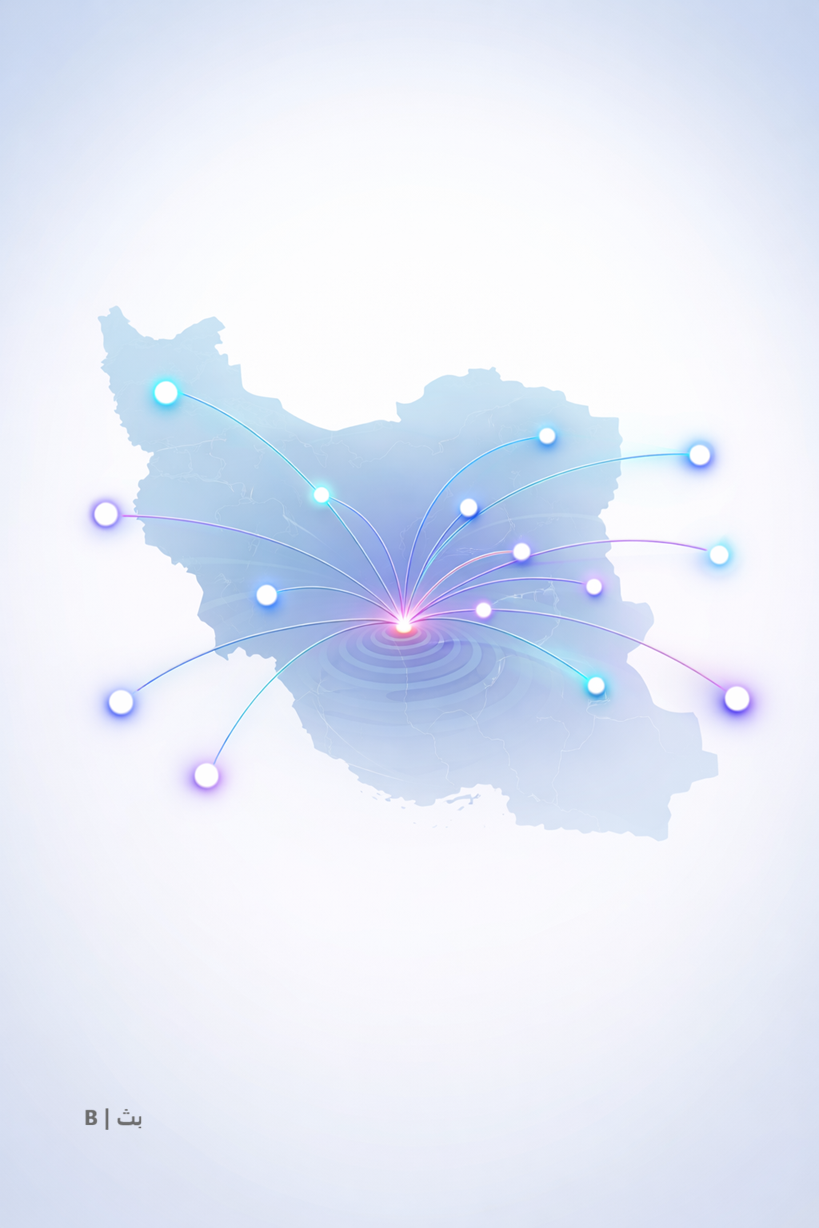
From Diplomacy to Proxies: A Multi-Layered Influence System
Political Lobbies and Economic Networks Under International Scrutiny
Legal Frameworks Confronting Transnational Influence
Between Soft Power and Security Extension: A Reading of Iran’s Strategy
Prepared & Analyzed by
Strategic Media Department – B News Agency
Introduction
Amid accelerating geopolitical transformations, Iran has emerged as a regional and international actor relying on a complex network of influence that transcends traditional geographical boundaries. This influence is not limited to military dimensions; it extends to political, economic, media, and cultural spheres, enabling Tehran to impact decision-making centers in Europe, the United States, and the Arab world.
This report aims to provide a comprehensive strategic reading of these networks, analyzing their mechanisms and objectives while assessing their implications for regional and international security. The analysis is presented within a balanced professional framework grounded in reliable data and in-depth strategic insight.
Overview
Political Influence and Lobbies
Iran employs a range of political tools to influence decision-making circles, including lobbying groups operating within legal frameworks in Western countries, as well as think tanks and academic and media figures who adopt perspectives aligned with Iranian policies or advocate for diplomatic engagement with Tehran. These activities aim to enhance Iran’s international image and defend its positions on regional issues, particularly those related to its nuclear program and economic sanctions.
These lobbying and influence networks are present in several Western and some Arab capitals, benefiting from open political and media environments. Their presence is particularly notable in major European countries such as Germany and France, while the United States represents the most active and influential arena, given the significance of its decision-making institutions and the existence of regulatory frameworks governing lobbying activities, such as the Foreign Agents Registration Act (FARA), which ensures greater transparency for entities associated with foreign governments.
Economic Influence
The economic dimension represents one of Iran’s most significant tools of influence. Commercial networks and intermediary companies are often utilized to circumvent international sanctions. These networks benefit from the open nature of certain global trade hubs, allowing the movement of goods and financial transfers through indirect channels while maintaining the appearance of legitimate commercial activity.
Media and Cultural Influence
Iran seeks to strengthen its media presence through multilingual platforms and the use of digital space and social media to shape public opinion. It also leverages cultural and religious ties to build connections with various communities, supporting its political narrative and enhancing its soft power.
Security and Military Influence
In parts of the Middle East, Iran’s influence relies on supporting local groups commonly referred to as proxies. This approach allows Tehran to shape regional power balances without direct military engagement. Such a strategy is often viewed as part of Iran’s “forward defense” doctrine aimed at protecting its strategic interests.
Geographical Distribution of Influence
1. Europe
- Activity of lobbying groups and think tanks.
- Economic and commercial networks used to circumvent sanctions.
- Increasing security oversight by European governments.
2. United States
- Lobbying groups operating within legal frameworks and subject to the FARA regulations.
- Academic and media activities influencing public debate on policies toward Iran.
3. The Arab World
- Political and military extensions in certain countries.
- Economic and commercial networks.
- Media and cultural presence reinforcing regional influence.
B Analysis
1. A Multi-Dimensional Strategy
Iranian influence networks reflect an integrated approach combining both soft and hard power, granting Tehran significant flexibility to operate across diverse environments.
2. Legal Legitimacy vs. Security Concerns
While some influence tools operate within legal frameworks, host countries remain concerned about the potential exploitation of these frameworks for political or security objectives.
3. Influence as a Tool to Counter Pressure
These networks serve as mechanisms for mitigating international isolation and economic sanctions, enabling Iran to maintain its presence within the global system.
4. Challenges for the International Community
Countries face the challenge of distinguishing between legitimate and illicit activities, necessitating stronger legal and regulatory frameworks to ensure transparency.
5. Growing Importance of Legal and Regulatory Responses
States increasingly rely on legal instruments such as FARA in the United States and FATF standards globally to monitor activities related to foreign influence.
Outcomes
- Tightened International Oversight
Nations are expected to enhance monitoring mechanisms concerning foreign influence, particularly in financial and media sectors. - Reshaping Influence Tools
International pressure may drive Iran to adopt more flexible and covert methods to sustain its networks. - Escalating Geopolitical Competition
Iranian influence will remain a key element of regional and international competition, especially in the Middle East. - Enhanced International Cooperation
Greater coordination among countries is anticipated to address challenges associated with transnational influence. - Impact on Regional Stability
Regional stability will continue to depend on the ability of various actors to manage this influence within balanced political and diplomatic frameworks.
Concluding Reading: Questions Beyond Influence
1. How Did Iran Succeed in Its Strategies?
Iran’s success in building its influence networks stems from long-term strategic vision, effective use of political, economic, media, and security tools, and the exploitation of geopolitical vacuums and regional conflicts. Tactical flexibility and reliance on proxies have further strengthened its transnational presence.
2. Why Do Other Actors Appear Less Effective?
This often results from the absence of unified long-term strategies, differing national priorities, and a tendency to react rather than act proactively. Adherence to international legal constraints and domestic political considerations may also limit responsiveness.
3. Why Is the “Snowball” Allowed to Grow?
Major powers frequently opt to manage crises rather than decisively resolve them, aiming to maintain strategic balance and avoid broader conflicts. This approach can allow influence to expand before decisive action is taken.
4. Is Allowing Iran to Expand and Then Containing It a Deliberate Strategy?
Interpretations vary. Some analysts view Iran’s expansion as part of a broader containment strategy, while others attribute it to political miscalculations rather than a deliberate plan. In this context, some observers draw upon a moral reflection inspired by the Qur’anic verse:
“Indeed, those who disbelieve spend their wealth to avert people from the way of Allah. So they will spend it; then it will be a source of regret for them; then they will be overcome.”
(Surah Al-Anfal, 8:36)
This reference is invoked as a philosophical reflection on recurring historical patterns rather than a definitive political interpretation.
5. Or Does This Reflect Complacency and a Failure to Act?
Alternatively, the expansion of Iranian influence may be attributed to insufficient proactive deterrence by other actors. Achieving regional balance requires not only strategic awareness but also practical measures of political, economic, and security engagement.
The Impact of Lobbies on Public Opinion Polls
Lobbies play an indirect yet influential role in shaping public opinion trends in the United States and the Western world in general, which is subsequently reflected in the outcomes of public opinion polls. This influence is typically not exercised through direct manipulation of polling results, but rather through shaping the media and intellectual environment in which public perceptions are formed.
These lobbies rely on a range of tools, most notably setting the media agenda, framing the issues under discussion, supporting think tanks and experts, as well as funding studies and media and digital campaigns. They also contribute to guiding public discourse by highlighting specific issues or presenting them from particular analytical perspectives, thereby influencing public perceptions and responses when participating in opinion polls.
Conclusion
Iranian influence represents a complex, multi-dimensional network spanning continents and integrating political, economic, media, and security tools. While Iran seeks to strengthen its position within the international system through these networks, other states are developing legal and regulatory mechanisms to ensure transparency and safeguard their national security. Understanding these networks is therefore essential for interpreting contemporary geopolitical dynamics and anticipating their future trajectory.