


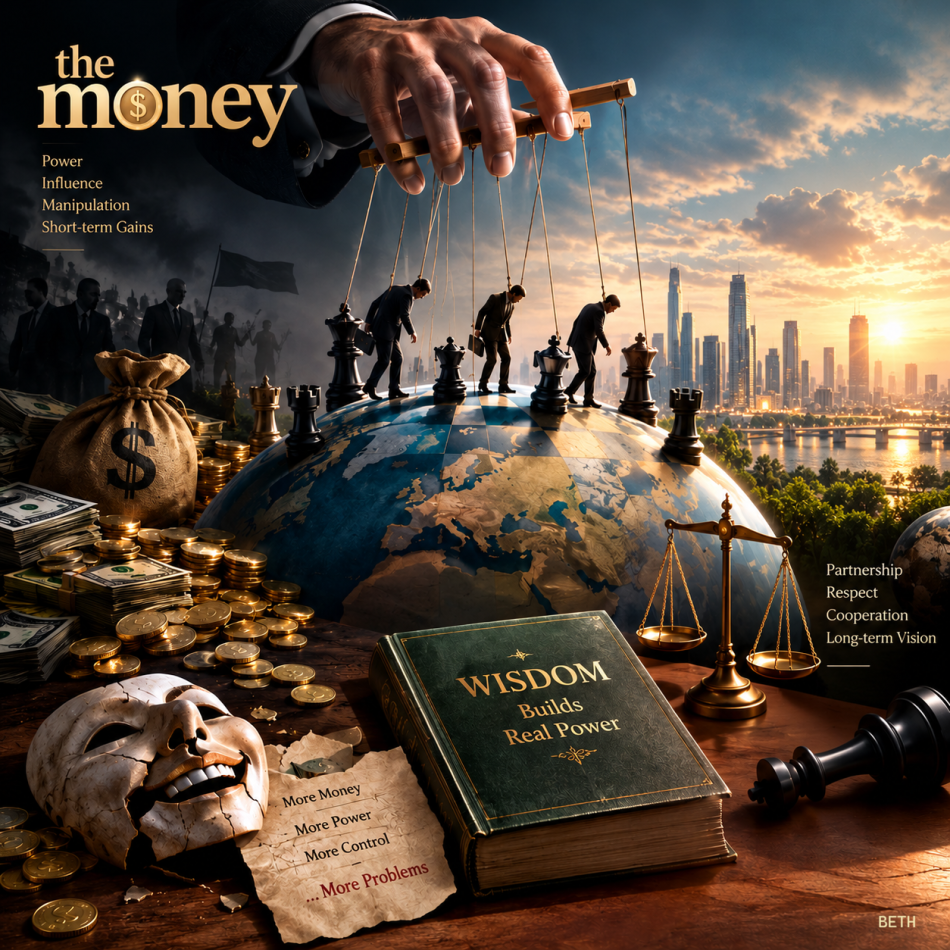
Advanced Minds .. Outdated Discourse

A Mindless Narrative: When Politicians and Media Underestimate Public Intelligence
By: Abdullah Al-Omairah
In an era where knowledge is accelerating and minds are shaped by the rhythm of the digital revolution and artificial intelligence, political and media discourse in many parts of the world remains trapped in traditional methods that time has long surpassed. The same phrases are repeated, and old narratives are recycled, as if audiences were still living in a pre-information age. This paradox raises a fundamental question: Why do some politicians and media outlets continue to treat the public as naïve recipients despite the remarkable evolution of human awareness?
First: The Return of Traditional Political Discourse in Europe
The practices of both the United Kingdom and France in various international crises indicate a clear return to traditional political discourse, characterized by duality and linguistic maneuvering. Instead of presenting transparent visions aligned with contemporary awareness, repetitive diplomatic terminology is often employed to manage crises in the media rather than resolve them effectively. This approach reflects an adherence to a political legacy that no longer persuades an audience equipped with unprecedented analytical and informational tools.
Second: Iranian Discourse… Between Taqiyya and Audience Obfuscation
Iranian political and media discourse continues to rely on traditional propaganda narratives, proclaiming “victory” even in moments of setback. This pattern is rooted in psychological and ideological mechanisms aimed at maintaining the cohesion of the regime’s support base by obscuring awareness and reproducing the official narrative regardless of its distance from reality.
Reasons for the Persistence of This Discourse:
- Preserving internal legitimacy through the illusion of victory.
- Controlling public opinion via directed and closed media.
- Utilizing ideology to justify failures.
- Fear of exposure to both domestic and international audiences.
Third: Arab Media Between Silence and Superficiality
Arab media faces two primary challenges: silence regarding critical issues or superficial coverage that merely describes events without analyzing their implications. Additionally, some media platforms are influenced by narrow political agendas, shaping the nature of the discourse presented to the public.
Another manifestation of media dysfunction is the neglect of primary sources closest to the event in favor of intermediary agencies that merely recycle information. The issue here is not simply the transmission of news, but rather a weakness in editorial judgment that confuses the prominence of a media outlet with the credibility of the source.
In this context, a clear disparity in media performance can be observed. Some channels succeed in delivering professional and insightful content through programs led by skilled journalists who carefully select guests and foster meaningful dialogue. In contrast, others resort to featuring superficial or controversial figures to boost ratings, thereby undermining the intellectual value of media content.
Fourth: International Media and Political Bias
Despite the presumed professionalism of global media, certain platforms—such as Russian media—demonstrate clear bias in their coverage, particularly in support of the Iranian regime. While such bias may be understood within the context of political interests, the absence of balanced reporting raises questions about these outlets’ adherence to professional standards and their ability to persuade an increasingly aware and critical global audience.
Fifth: Why Does Discourse Still Fail to Respect the Audience?
The persistence of this pattern of discourse can be attributed to several intertwined factors:
- The historical legacy of political propaganda.
- Political and strategic interests influencing media narratives.
- The gap between technological advancement and the evolution of political thinking.
- Reliance on ideologically aligned audiences.
- Fear of losing control over public opinion.
Today’s world is no longer what it once was. Audiences have become more aware and capable of critical analysis thanks to technological and informational openness. Yet, some political and media discourse continues to operate with a mindset rooted in the past, ignoring the profound transformations in human awareness.
Respecting the audience’s intellect is no longer optional—it is essential for credibility and sustainability. Media that fail to evolve alongside their audiences are destined to lose their influence, regardless of their technological or financial resources.
In the age of artificial intelligence, the question is no longer: What do we say?
Rather, it is: Do we respect the minds we address?
The Solution… The Remedy
The real challenge no longer lies in the level of public awareness, but in the quality of the political and media discourse directed at it. The remedy can be achieved through clear and actionable measures:
1. Qualifying Political and Media Leaders
- Establish mandatory training programs in strategic communication and crisis management.
- Select professional official spokespersons based on competence rather than position.
- Utilize media simulations to prepare for press conferences and sensitive statements.
- Regularly evaluate performance through media impact assessment indicators.
2. Building Effective Media Institutions
- Establish unified government communication centers to coordinate messaging.
- Develop a national media discourse guide outlining key terminology and messages.
- Create media operations rooms for crisis management and rapid response.
- Strengthen the professional independence of media institutions to ensure credibility.
3. Leveraging Technology Effectively
- Employ data analytics and artificial intelligence to understand public sentiment.
- Establish media monitoring platforms for real-time tracking of local and international coverage.
- Develop direct digital communication channels with the public to enhance transparency.
- Measure impact through digital indicators such as engagement, trust, and reach.
4. Developing Political and Media Discourse
- Transition from promotional rhetoric to fact- and data-based communication.
- Embrace transparency and clarity instead of ambiguity or contradiction.
- Ensure consistency in institutional messaging.
- Focus on future-oriented narratives rather than reactive communication.
- Adopt realistic and positive storytelling that builds trust and avoids exaggeration.
Executive Summary
The remedy is achievable through the qualification of leadership, the establishment of unified media institutions, the effective use of technology, and the adoption of a discourse grounded in credibility and data.
Symbolic Interpretation of the Images
Main Image: The Eye Against a Black Background
- The Eye: Symbolizes awareness, perception, and the ability to distinguish truth from misinformation.
- The Crossing Line: Represents attempts at media blackout, censorship, or the suppression of awareness.
- The Black Background: Reflects an environment of closure and manipulation fostered by traditional discourse.
- Black-and-White Contrast: Symbolizes the struggle between truth and illusion, awareness and ignorance.
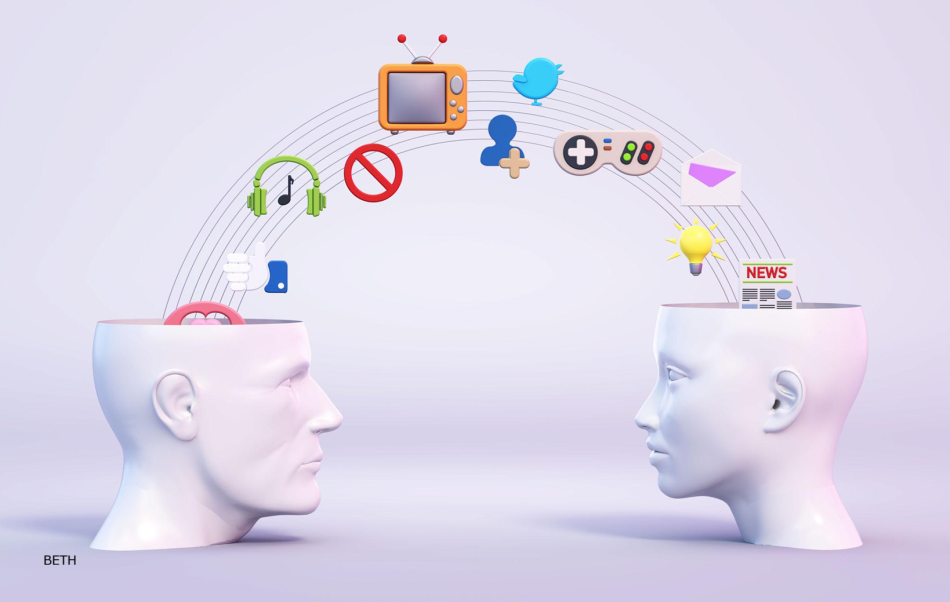
Internal Image: Minds Communicating Through Media
- Opposing Heads: Represent the relationship between sender and receiver.
- Media Icons (TV, news, social platforms): Illustrate the flow of information across various channels.
- The Illuminated Light Bulb: Symbolizes knowledge and critical thinking.
- Visual Transition Between Minds: Reflects the media’s role in shaping public awareness.
“When awareness is obscured, misinformation becomes the dominant language.”