



Day 45: Blockade and Escalation

Monitoring & Analysis | BETH
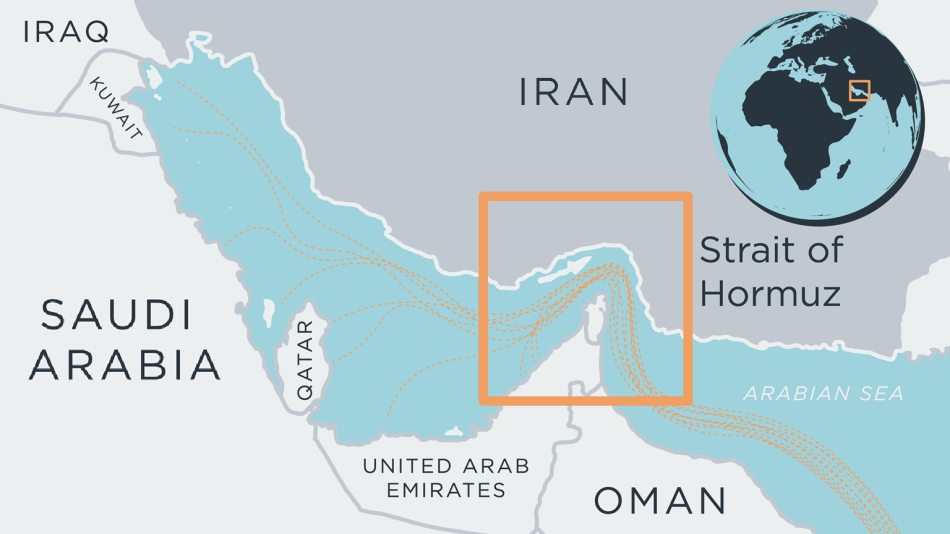
As the U.S. maritime blockade on Iran enters its second day, within the context of the ongoing war involving the United States, Israel, and Iran, regional dynamics are accelerating on multiple fronts. The military escalation in the Strait of Hormuz is unfolding alongside diplomatic efforts aimed at containing the crisis, as well as parallel developments in Lebanon that reflect the widening scope of tensions across the region.
Details
Preliminary estimates indicate that the maritime blockade could cost Iranian authorities approximately $435 million per day, including around $276 million in export losses, primarily from crude oil and petrochemicals. This underscores the scale of economic pressure resulting from restrictions on maritime traffic.
According to a senior U.S. official, more than 15 U.S. warships are participating in enforcing the blockade in the Strait of Hormuz. These include an aircraft carrier, several guided-missile destroyers, an amphibious assault ship, and other combat units capable of operating helicopters, significantly enhancing U.S. military readiness in the region.
On the diplomatic front, Pakistan has proposed hosting a second round of talks between the United States and Iran in Islamabad next Thursday, ahead of the expiration of the fragile ceasefire. Two U.S. officials, speaking on condition of anonymity, indicated that the meeting would depend on whether both parties agree to convene, with the possibility of selecting an alternative venue.
In a parallel development, Lebanon is preparing to hold its first direct negotiating meeting with Israel under U.S. mediation, marking 43 years since the last direct talks between the two sides, which led to the May 17, 1983 agreement. The meeting is scheduled to take place in Washington, with the participation of Israel’s ambassador to the United States and Lebanon’s ambassador Nada Hamadeh Maalouf, in the presence of U.S. Secretary of State Marco Rubio and the U.S. Ambassador to Lebanon Michel Issa.
Meanwhile, Israel has continued its airstrikes on southern and eastern Lebanon, signaling ongoing military escalation alongside diplomatic engagement and highlighting the complexity of the regional landscape and the interconnection of its political and military dimensions.
BETH Analysis
Developments on the forty-fifth day of the war reflect the intersection of military, economic, and diplomatic tracks within a highly complex regional environment. The U.S. maritime blockade extends beyond being a military pressure tool; it also represents a mechanism to constrain Iran’s economy and limit its ability to finance regional operations, potentially prompting Tehran to reassess its strategic calculations.
Conversely, Pakistan’s proposal to host a new round of talks indicates continued international efforts to contain the escalation and prevent the region from sliding into a broader conflict. At the same time, the Lebanese-Israeli negotiation track reflects attempts to reconfigure security balances in the Eastern Mediterranean.
The simultaneity of these developments with ongoing military operations confirms that the region is undergoing a phase of strategic reconfiguration, where military pressures intersect with diplomatic initiatives. This leaves the future of the conflict open to multiple scenarios, ranging from successful containment of tensions to a broader regional escalation.