


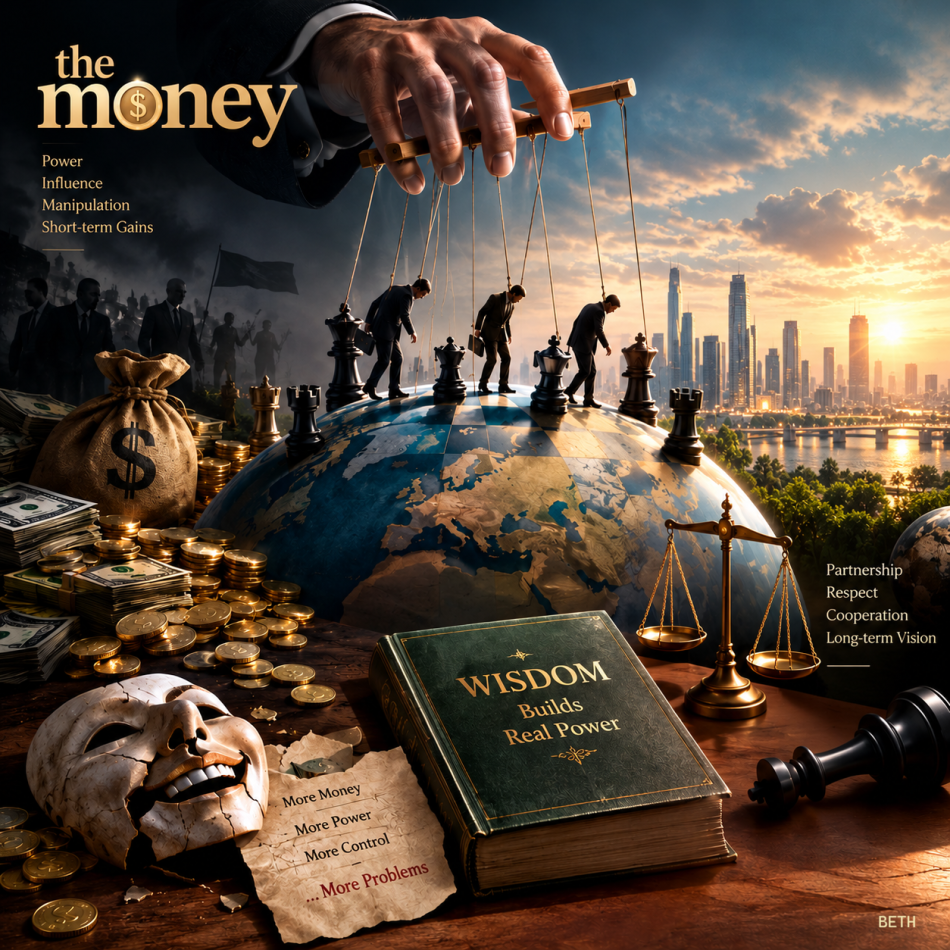
From Self-Centered Discourse to Global Media
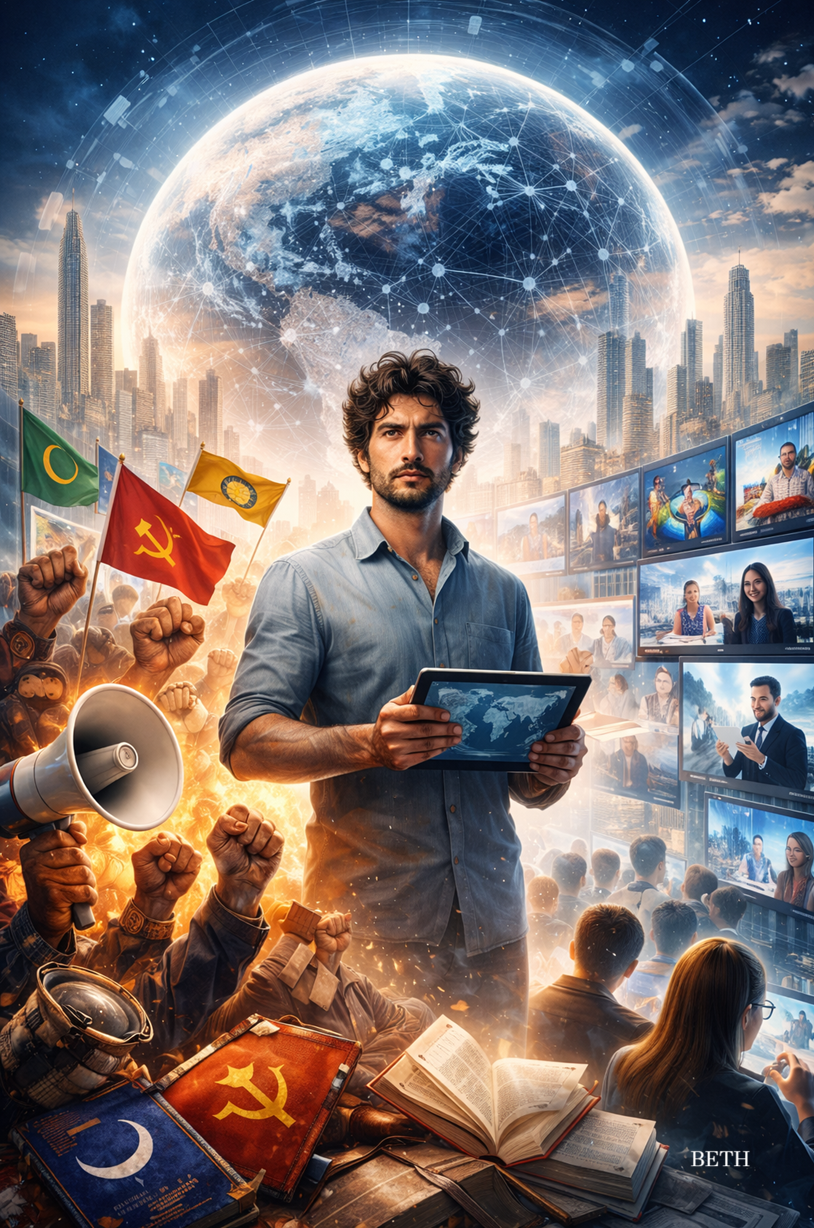
By: Abdullah Al-Omira
In an era where geographical boundaries are no longer an obstacle to the flow of information, and where the media space is no longer monopolized by a single voice, a fundamental question emerges: Has Arab media kept pace with global transformations, or does it remain captive to a traditional discourse that reflects the “self” more than it reflects reality?
Arab media emerged within historical and political contexts that made “self-centered discourse” a prominent feature of many of its practices. This discourse focused on affirming positions and championing the local narrative rather than striving to interpret events within their global context. While this approach was understandable in its early stages, its persistence in the age of open skies and digital technologies limits its ability to influence international public opinion.
The Discourse of Slogans: Between Ideology and the Illusion of Elitism
One of the most significant manifestations of this discourse is what can be described as the “discourse of slogans,” historically associated with certain nationalist, leftist, and political Islamist movements. This discourse has been characterized by an emphasis on emotional slogans and mobilizing rhetoric rather than objective analysis or realistic readings of events.
These movements contributed, at various stages, to the formation of what appeared to be intellectual elites. However, some of these elites remained captive to closed ideological visions, making their discourse more about reproducing the self than engaging with global transformations. Consequently, this discourse sometimes evolved into a mixture of intellectual isolation and rhetorical narcissism, where collective self-glorification overshadowed the acknowledgment of real challenges.
Backwardness and Narcissism: A Psychological Reading of the Discourse
A discourse that combines intellectual rigidity and narcissism exhibits specific characteristics reflecting deep psychological fragility masked by false grandeur. أبرز هذه الخصائص:
- Exaggeration of collective self-importance and claims of possessing absolute truth.
- Distortion of facts and interpretation of failures as external conspiracies.
- Failure to recognize that an absolute belief in conspiracy theories does not reflect strength or awareness, but rather constitutes an implicit admission of weakness and an inability to confront reality.
- Evasion of responsibility by blaming others.
- Rejection of criticism, perceiving it as a threat to identity or core beliefs.
- Reliance on slogans instead of data-driven analysis.
This pattern of discourse not only hinders the development of media but also limits its ability to communicate with the world, as it contradicts the requirements of modern media founded on objectivity, openness, and pluralism.
Towards Global Media
In contrast, contemporary media imposes a different approach based on deep analysis, objectivity, and foresight, recognizing that audiences are no longer merely local but have become global and culturally diverse. Hence, a media model emerges that transcends the mere transmission of news to provide a strategic reading that contributes to shaping a deeper understanding of events.
The comparison between this model and certain traditional practices of Arab media is not intended to establish superiority, but rather to highlight a natural transformation in the function of media—from a unilateral discourse directed at a local audience to an open discourse that addresses the world through the language of knowledge and analysis.
While traditional discourse relies on emotional vocabulary and rhetorical expressions, global media tends to employ analytical language grounded in data and context, emphasizing objectivity and balance. Modern media does not merely describe events; it seeks to interpret them, measure their impact, and anticipate their future implications.
BETH News Agency: A Model of Transformation
In this context, BETH News Agency represents a model of this transformation. It adopts a global media vision aimed at delivering content that transcends locality without losing its cultural roots. The agency does not claim superiority over others; rather, it seeks to contribute to the development of Arab media discourse in line with the demands of the modern era by providing professional content that combines accuracy, depth, and strategic analysis.
Openness to feedback and acceptance of criticism are also fundamental components of this approach, as genuine media can only be complete through dialogue with its audience and the correction of any misunderstandings arising from differing perspectives.
Conclusion
In the era of open skies, media is no longer merely a conveyor of events but has become an active partner in shaping awareness. Therefore, developing Arab media discourse is not a luxury but an imperative necessity to ensure its presence and influence on the global stage.
The transition from self-centered discourse to global media does not imply abandoning identity; rather, it reflects its maturity and ability to interact with the world. Media that addresses humanity through the language of knowledge and analysis is best positioned to build bridges, enhance mutual understanding, and contribute to shaping a more aware and balanced future.
A Message to Global Media
For years, we have been preoccupied with critiquing the shortcomings of Arab media and certain intellectual orientations adopted by groups and individuals who are often, and mistakenly, labeled as “elites.” At the same time, there is a growing need to call upon global media to open itself to the facts, to understand the true level of development of the countries and peoples of the region, and to distinguish between outdated orientations and emerging civilizational models.
In today’s world, the sky is open and communication tools have made access to information easier than ever. One of the fundamental principles of journalistic professionalism is verifying the truth before publishing information. Recent events, including wars and regional tensions, have revealed the level of sophistication achieved by the Gulf states, their resilience in defending their security, and their pivotal contribution to global stability.
The issue of the Strait of Hormuz has further highlighted the strategic importance of the Gulf states in safeguarding the global economy and ensuring the safety of nations. These countries are no longer merely exporters of oil; they have become sources of advanced developmental models that enhance quality of life and promote regional and international stability.
Accordingly, there is a pressing need to reshape the prevailing stereotypes found in some media outlets and replace them with an image that reflects reality—one that conveys strength, effective governance, and wisdom in implementing development projects with global impact.
The transformation required of Western media is not limited to reporting the news; rather, it entails a shift from a self-serving narrative to a balanced and professional discourse that enhances credibility and earns the respect of the world.
Closing Statement
BETH does not merely convey the news; it provides strategic reading, analysis, and impact assessment, thereby contributing to a deeper understanding of events.