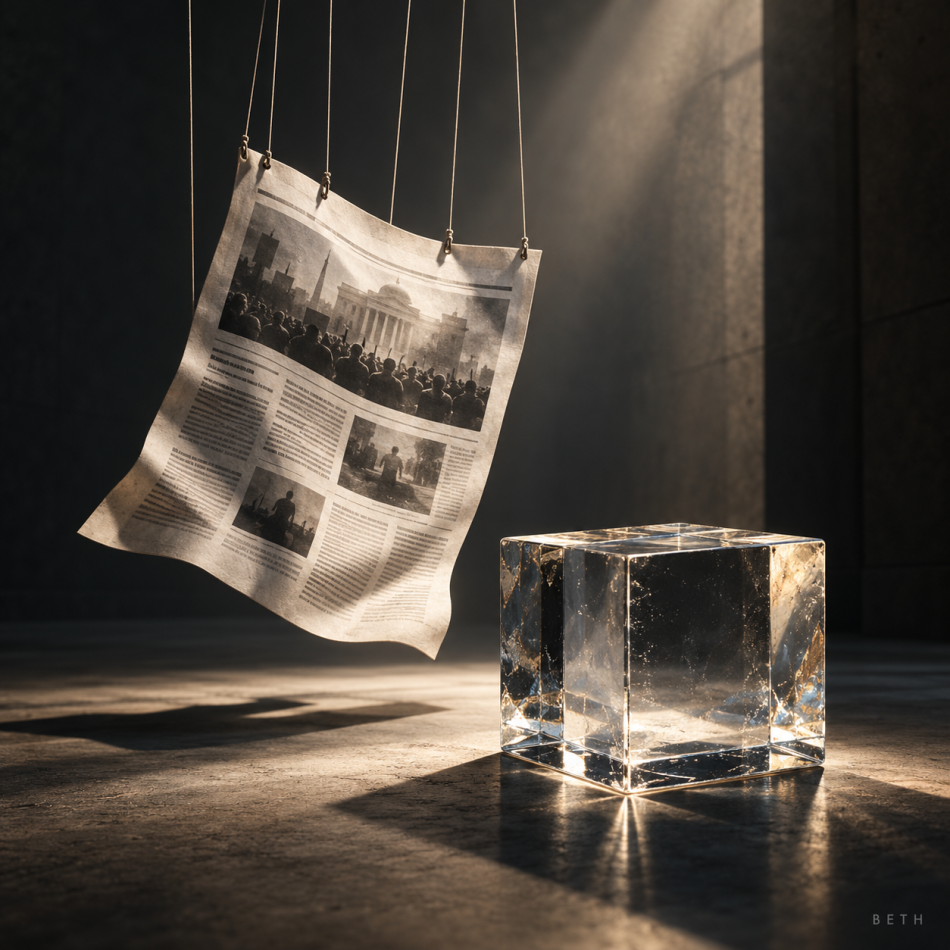



Iran: Approaching the End of a Dark Era
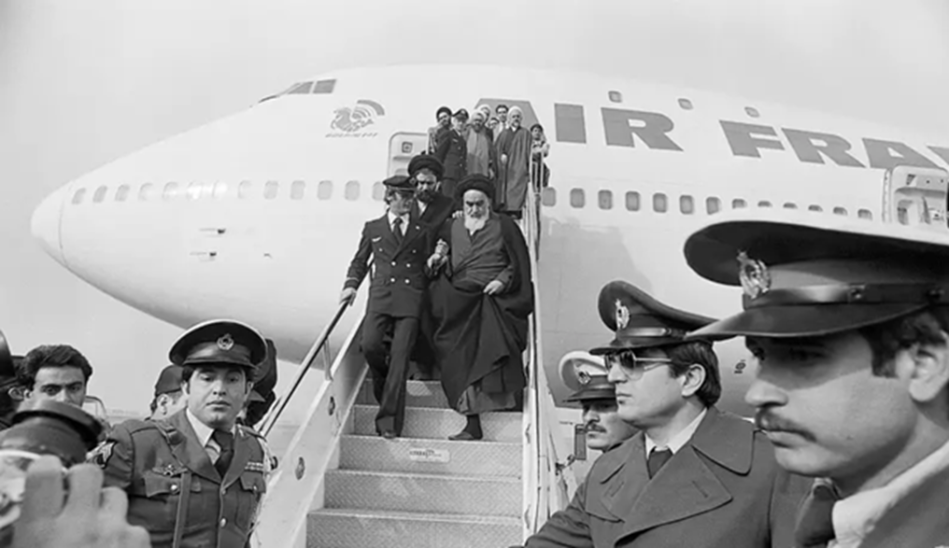
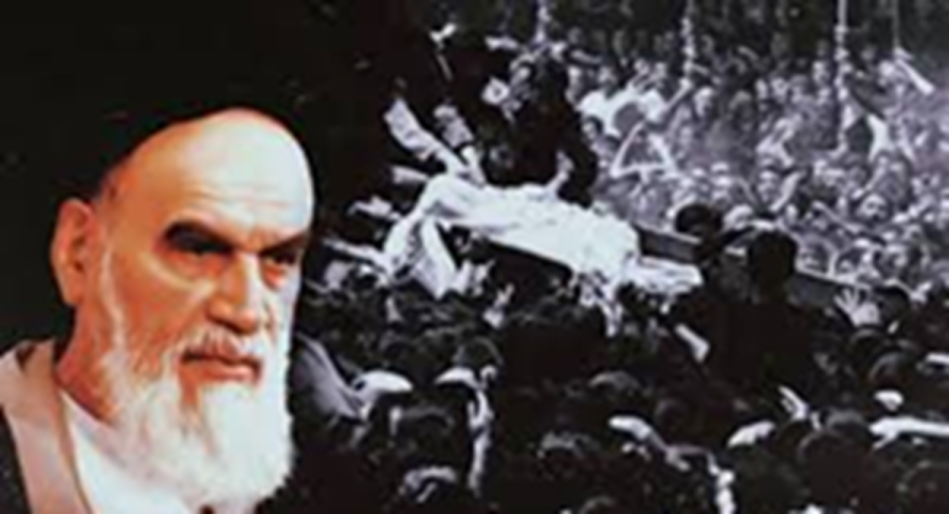
From Khomeini to Today: 47 Years of Turmoil and Isolation
Will a New Sun Rise Over the Land of the Aryans?
Prepared and Analyzed by | BETH
Supervised by: Abdullah Al-Omira
Introduction
When Khomeini returned to Tehran in 1979, it was not merely an internal political transformation, but the beginning of a new phase in the history of the region, characterized by the export of revolutionary ideology and the reshaping of regional balances of power. Since then, and for more than four decades, not a single year has passed without Iran being directly or indirectly involved in regional tensions or conflicts, making the Iranian Revolution a unique model of a state whose foreign policy is driven by an ideological logic that transcends its geographical borders.
Ideology as a Driver of Policy
The Islamic Republic of Iran, established in 1979, was founded on the principle of Wilayat al-Faqih (Guardianship of the Jurist), which granted the religious leadership absolute political authority. This ideological framework—often described as a form of political Islam introduced by Khomeini—became the primary driver of both domestic and foreign policies. This approach produced what can be described as a “reversed policy,” in which ideological considerations take precedence over traditional national interests, leading to continuous tensions with the regional and international environment.
Historical Evidence of “Revolutionary Turbulence”
Over the past 47 years, several key events have illustrated this approach:
- The U.S. Embassy Hostage Crisis (1979–1981)
This marked the first indication of Iran’s confrontational stance toward the international community and resulted in early political and economic isolation. - The Iran–Iraq War (1980–1988)
Despite the complexity of its causes, the war reinforced revolutionary rhetoric and prolonged the conflict, contributing to the entrenchment of a confrontational approach. - Support for Armed Groups in the Region
- Lebanon: Support for Hezbollah since the 1980s.
- Iraq: Support for armed militias after 2003.
- Syria: Direct military intervention since 2011 to support the regime.
- Yemen: Support for the Houthi group, impacting Gulf security and international maritime navigation.
- The Nuclear and Missile Programs
These led to recurring crises with the international community and the imposition of broad economic sanctions, deepening Iran’s isolation. - Attacks on Maritime Navigation in the Gulf and the Strait of Hormuz
These incidents reinforced Iran’s image as a persistent source of tension in one of the world’s most vital maritime corridors.
A Policy Without Friends
One of the most prominent features of Iranian foreign policy is the absence of stable alliances. The relationships established by Tehran have often been functional and temporary, based on converging interests rather than long-term strategic partnerships. Even its traditional partners, such as Russia or certain regional actors, engage with Iran from a purely pragmatic standpoint, reinforcing the notion that the Iranian system does not maintain permanent allies, but rather situational partners.
International Silence and Converging Interests
Notably, many international powers have turned a blind eye to certain Iranian policies at various stages due to geopolitical or economic considerations. This silence contributed to prolonging crises and granted Tehran the space to continue its approach without genuine reassessment, reflecting the reality that international interactions are governed more by interests than by values.
A Philosophical Comparison: Ideology vs. Human-Centered Development
While Iran adopted an ideological model focused on exporting the revolution and expanding influence, Gulf states pursued a developmental model that places the human being at the center of public policies through investments in education, healthcare, and the economy. This approach has been reflected in higher levels of stability and development.
BETH Insight
Iranian policy cannot be fully understood without recognizing that the revolution was not a transient historical event, but rather a continuous ideological project that has shaped the state’s identity and external behavior from its inception to the present day. Over 47 years, the ideology associated with Khomeini has become the organizing framework of Iranian policy, leading to what may be described as a form of “chaotic revolutionary continuity,” which has hindered the establishment of stable relations with the regional and international environment.
The Iranian experience also demonstrates that prioritizing ideology over political pragmatism often leads to isolation and persistent tension, whereas models that place human development at the core of their policies achieve more sustainable stability and influence.
Conclusion
Nearly half a century after the Iranian Revolution, it is evident that this event not only transformed Iran but also reshaped the entire regional landscape. It revealed an ideological project aimed at exporting influence, entrenching hostility in the region, supporting armed groups, and contributing to instability and underdevelopment.
In contrast, this period highlighted alternative developmental models, particularly in the Gulf Arab states, which focused on human well-being and investment in sustainable development, thereby achieving stability and enhancing their international presence.
This experience reveals the contours of two contrasting governance paths, making the study of the Iranian model essential for understanding the region’s present and anticipating its future.
Moreover, the policies of this regime have demonstrated the significant damage inflicted on regional stability and the economies of surrounding countries, with repercussions extending to the international system. Conversely, this experience underscores the importance of integration and cooperation among states as a more sustainable approach to achieving security and development, rather than traditional strategies based on expansion or interference in the affairs of others.
Acknowledgment
BETH News Agency expresses its appreciation to writer and media professional Ms. Ahdeya Ahmed Al-Sayed, former President of the Bahrain Journalists Association, for proposing the idea of this topic.