


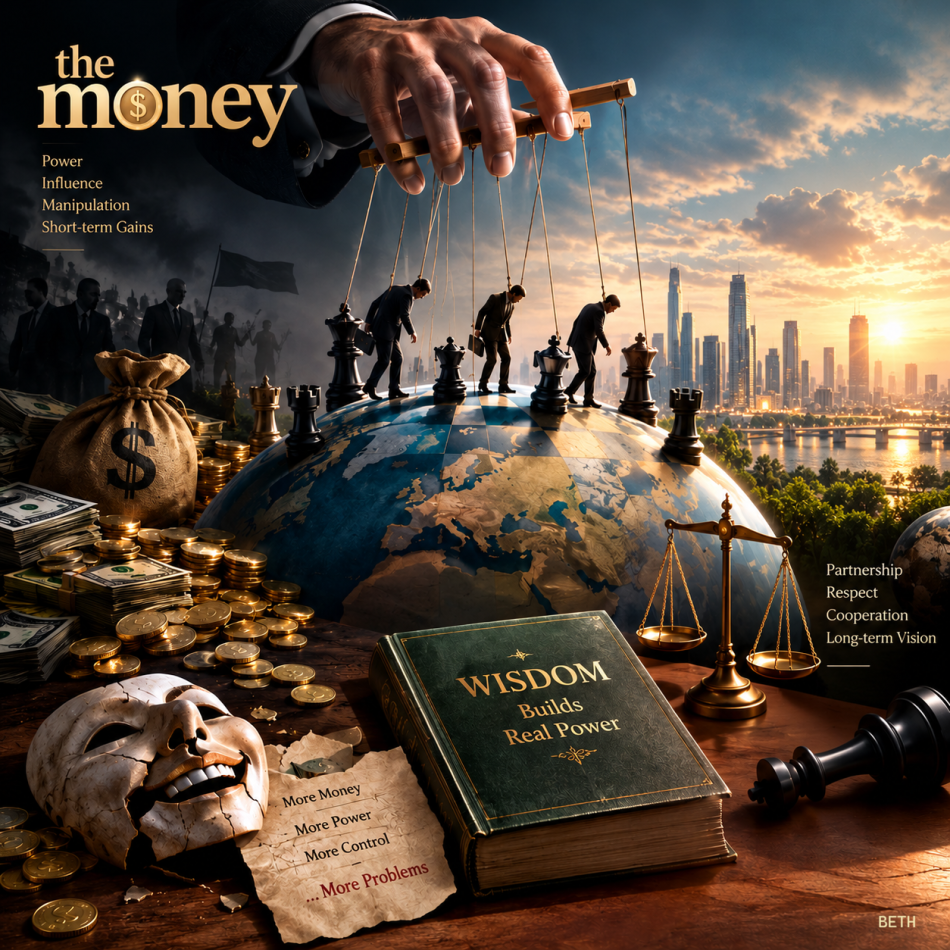
Hit Me.. But With Respect!
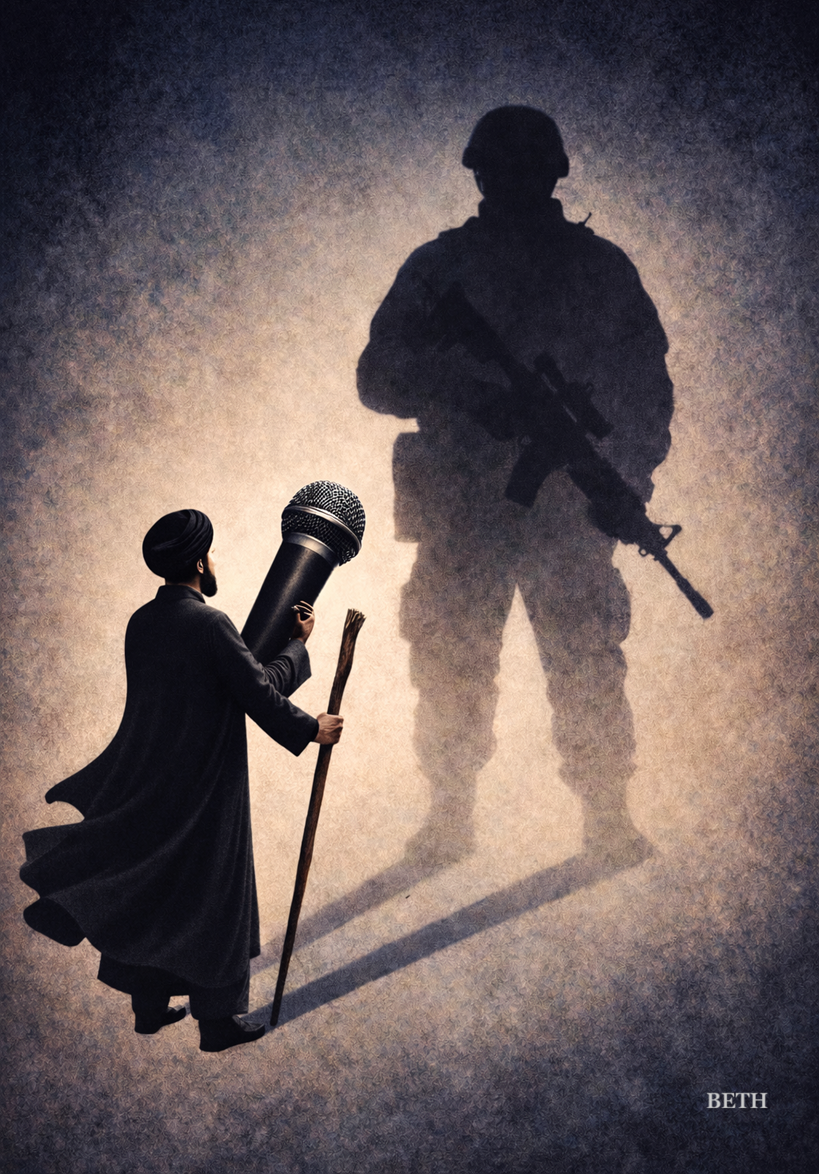
Microphoneand the Stick in the Hands of the Madman
Written by: Abdullah Al-Omira
In the world of politics, power is not measured by the volume of statements, but by the ability of their author to translate words into reality. Yet, some still believe that a microphone can substitute for the balance of power, and that loud headlines are capable of redrawing maps of influence.
An Iranian official recently declared that “the Strait of Hormuz will remain under the control of our military forces.” While this statement appears, on the surface, to be an expression of sovereignty, at its core it falls within what can be described as microphone heroics—where words are delivered with great confidence, while reality remains far more complex than the rhetoric suggests.
The issue does not lie in the statement itself, but in the way some Arab media outlets handle such headlines. Instead of analyzing the discourse and understanding its implications and political context, these statements are presented as absolute truths. This, intentionally or unintentionally, contributes to amplifying the speaker’s image and granting them a presence greater than their actual weight.
This scene brings to mind an unforgettable image I once saw on a news screen. It was not painful merely because of the parties involved, but because of the satirical symbolism it carried regarding the gap between rhetoric and reality. An unarmed man, dressed in worn clothes, was shouting and threatening, while a heavily armed soldier stood before him, silent and composed, observing the scene with cold detachment. In a moment of desperate defiance, the man picked up a stone and raised his hand to strike. The response was swift and decisive—a single pull of the trigger ended the scene, sending the stone to the ground before it could reach its target.
The lesson here lies not in the harshness of the scene, but in its symbolism: a loud voice does not create power, and verbal defiance does not alter the balance of reality. True power is built on capability, capacity, and strategy—not on resonant headlines.
The most dangerous aspect of such statements is not their content, but their psychological impact on the audience, especially within societies that may lack the tools to analyze political discourse. Here, the media bears significant responsibility; its role should not be limited to transmitting statements, but should extend to deconstructing and interpreting them within their proper context, so that it does not become a platform for amplifying illusion.
Ultimately, the entire scene can be summarized by a satirical phrase that encapsulates the idea:
“Hit me… but while I stand with dignity!”
It is the philosophy of those who believe that dignity is preserved through slogans rather than through the building of real power. Between the noise of statements and the silence of reality, the gap remains vast between a heroism that is spoken and a power that is exercised.
In politics, the appeasement of the weak by the strong does not necessarily signify weakness; rather, it reflects self-confidence and a careful calculation of outcomes. True power does not rush toward decisive confrontation; it understands that timing is part of victory, and that patience can often be more effective than impulsiveness.
Through numerous experiences, it becomes evident that dealing with certain regimes does not always conform to traditional deterrence logic. Instead, it requires an understanding of their unpredictable behavior. When a party possesses the ability to create chaos without carefully considering the consequences, dealing with it becomes akin to confronting someone waving a stick in every direction—it may strike adversaries, harm those closest to it, or even devastate its own country. Yet, its primary concern remains survival, regardless of the cost to national stability.
Two years ago, I described this scene with a symbolic phrase: “like a madman waving a stick,” referring to behavior driven less by rational political calculations and more by an obsession with survival at any cost. Consequently, any policy of de-escalation pursued by the United States or its allies should not be interpreted as weakness; rather, it often represents a strategy of containment aimed at minimizing risks and preventing uncontrolled escalation.
While wars may be theoretically decided by the balance of power, the continued presence of the “stick” in the hands of undisciplined actors makes immediate resolution a risky option. Therefore, dealing with such threats requires the calmness and patience of the confident, coupled with constant readiness to deter any reckless reaction.
In the end, power is not measured by the loudness of threats, but by the ability to manage conflict wisely and choose the right moment for decisive action. Between the noise of rhetoric and the silence of preparedness, the distinction remains clear between those who wave the stick and those who possess the ability to control the rhythm of the entire scene.
True power does not wave the stick… it knows when to drop it.
Not every act of appeasement is weakness; it may be patience preceding resolution.
Between those who wave the stick and those who control timing, the end of the scene is written.