

Global Pulse
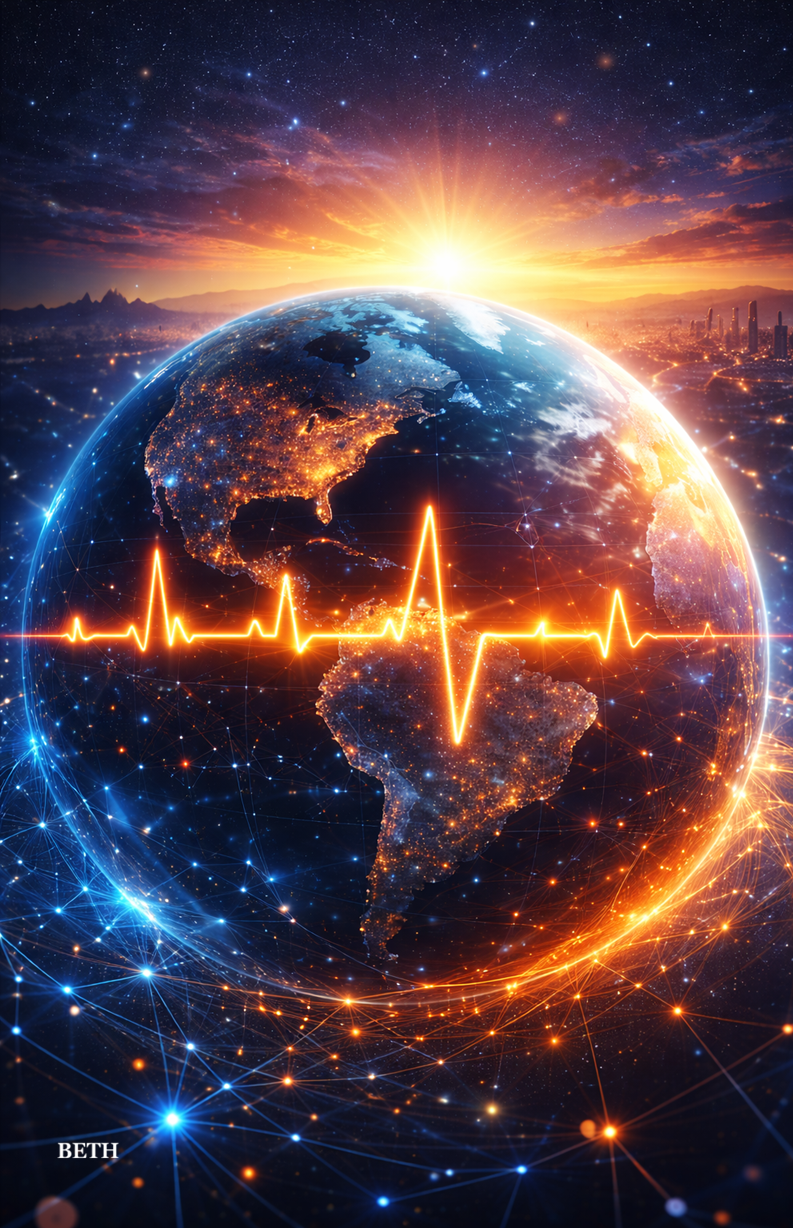
Global Pulse… Knowledge that Inspires Decisions, and Vision that Enhances Impact
Strategic Analytical Report | BETH
Supervised by: Abdullah Al-Omira
Introduction
The world is no longer understood through isolated events, nor through a single war here or crisis there. What is unfolding today is far deeper than that.
We are facing a world where politics moves under the pressure of force, markets react under the shadow of uncertainty, public opinion is shaped between traditional media and algorithms, and diplomacy operates in public with one language and in the shadows with another.
From this perspective, “Global Pulse” emerges not as a conventional news report, but as a periodic reading of the rhythm of the world:
- Where is it heading?
- What is the level of its stability?
- Who is raising the level of tension?
- And who is rearranging the stage behind the scenes?
This first edition does not aim to chase every event, but rather to establish the methodology through which the world will be interpreted in the future. It is an attempt to build BETH’s unique lens—one that does not merely observe the fire, but asks: Who ignited it? Why now? And what is being constructed in the shadows while the world is distracted by the smoke?
Beginning
Global Pulse Index
General Assessment: The World in a State of Controlled Tension
If we were to describe the international situation succinctly, the world today is neither experiencing true stability nor descending into uncontrolled chaos. Instead, it stands in a zone best described as:
“Controlled Tension”
Major powers do not seek a total explosion, yet they are not working seriously enough to produce sustainable peace. Everyone is exerting pressure, maneuvering, testing, signaling, and repositioning—without crossing the threshold of a definitive rupture in the rules of the game.
This condition creates a world that appears tense on the surface but remains relatively calculated at its core. It is often more dangerous than open war, as controlled tension prolongs crises and transforms them into tools for managing influence rather than issues seeking resolution.
Overall Findings – First Edition
- Global Stability: Fragile
- Geopolitical Tension: High
- Capacity for Containment: Present but uncertain
- Likelihood of Surprises: High
- Prospects for Sustainable Peace: Low in the near term
First: Politics Under the Pressure of Power
International politics is no longer driven primarily by principled understanding but by the logic of managing balances through power. Political decision-making in many capitals is now closely tied to:
- Military calculations
- Energy security
- Maritime routes
- Regional influence
- Media impact on domestic audiences
Consequently, many modern negotiations do not begin when solutions mature, but when the cost of conflict becomes uncomfortable.
In other words:
The world does not always negotiate because it seeks peace, but because it seeks to prevent escalation beyond an acceptable threshold.
BETH Insight
The world is no longer governed by the question, “Who is right?”
but rather by “Who possesses greater leverage?”
This shift is dangerous, as it weakens international law and allows battlefield realities to shape politics more than established principles.
Second: Beyond the News
Why Do Crises Occur in This Manner?
While the visible news speaks of wars, escalations, summits, threats, sanctions, and mediations, what lies beneath reveals a deeper reality: crises often erupt not merely due to direct disagreements, but because of accumulated unresolved tensions that resurface during moments of imbalance.
Who Benefits?
Not necessarily the party that fires the first shot or dominates the media narrative. Often, the true beneficiary is the one who succeeds in:
- Reshaping the psychological map of adversaries
- Adjusting deterrence rules
- Increasing the cost of confrontation for others
- Improving their negotiating position without engaging in full-scale war
What Happens Next?
The world is unlikely to move toward deep stability in the near future. Instead, it is expected to enter a prolonged phase of intermittent shocks, where crises are managed in waves—subsiding temporarily before re-emerging elsewhere.
BETH Insight
The most dangerous aspect of the current phase is that many crises are not moving toward resolution but toward recycling, potentially ushering in an era of permanent crisis rather than temporary disruption.
Third: Energy Is More Than an Economic Issue
Energy has evolved from being merely an economic commodity into a language of sovereignty and influence. Its movements reflect:
- The scale of global anxiety
- Confidence in maritime routes
- Fear of supply disruptions
- Investor sensitivity to political developments
BETH Insight
Oil and gas are no longer just commodities; they are instruments of geopolitical leverage. Viewing them solely through a financial lens overlooks half of the strategic picture.
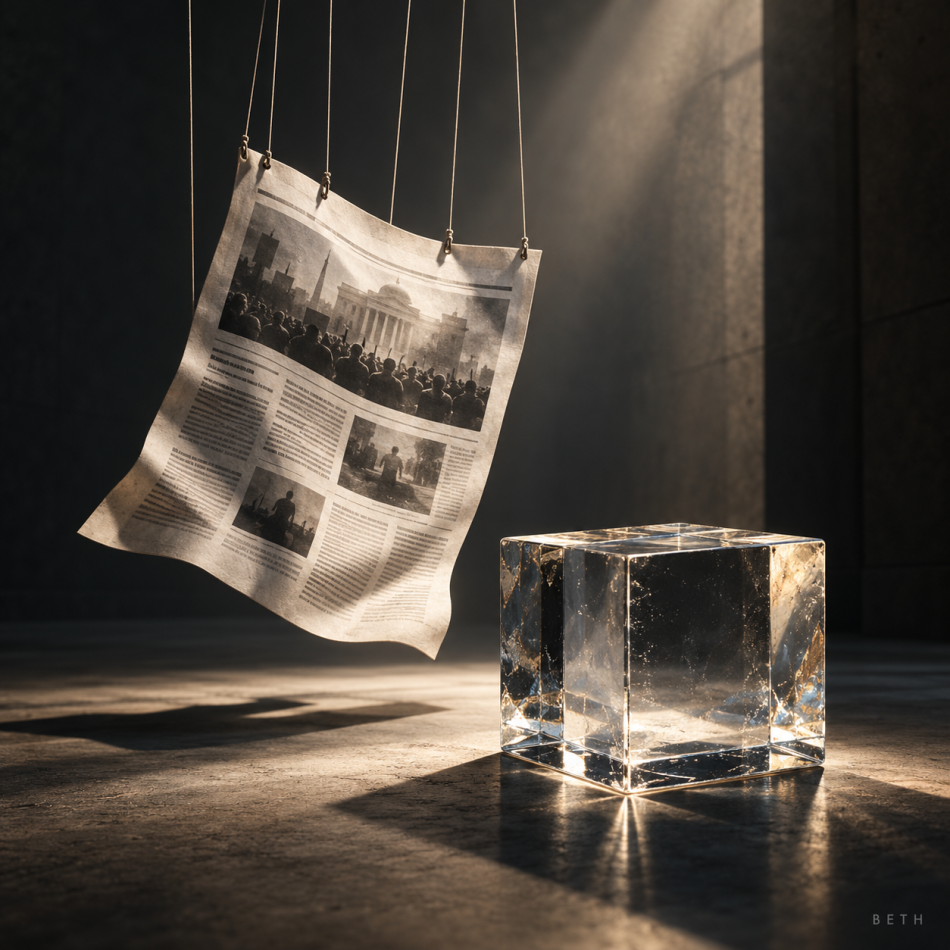
Fourth: Global Media… Reporting or Shaping Reality?
The world is not only witnessing wars on the ground but also battles over the interpretation of events. Increasingly, the most influential narrative is not the most truthful, but the one that is:
- Faster
- Better organized
- Repeated more frequently
- Aligned with pre-existing public fears
BETH Insight
The coming battle will not merely be between competing narratives, but between an independent mind and one shaped externally yet convinced of its own autonomy.
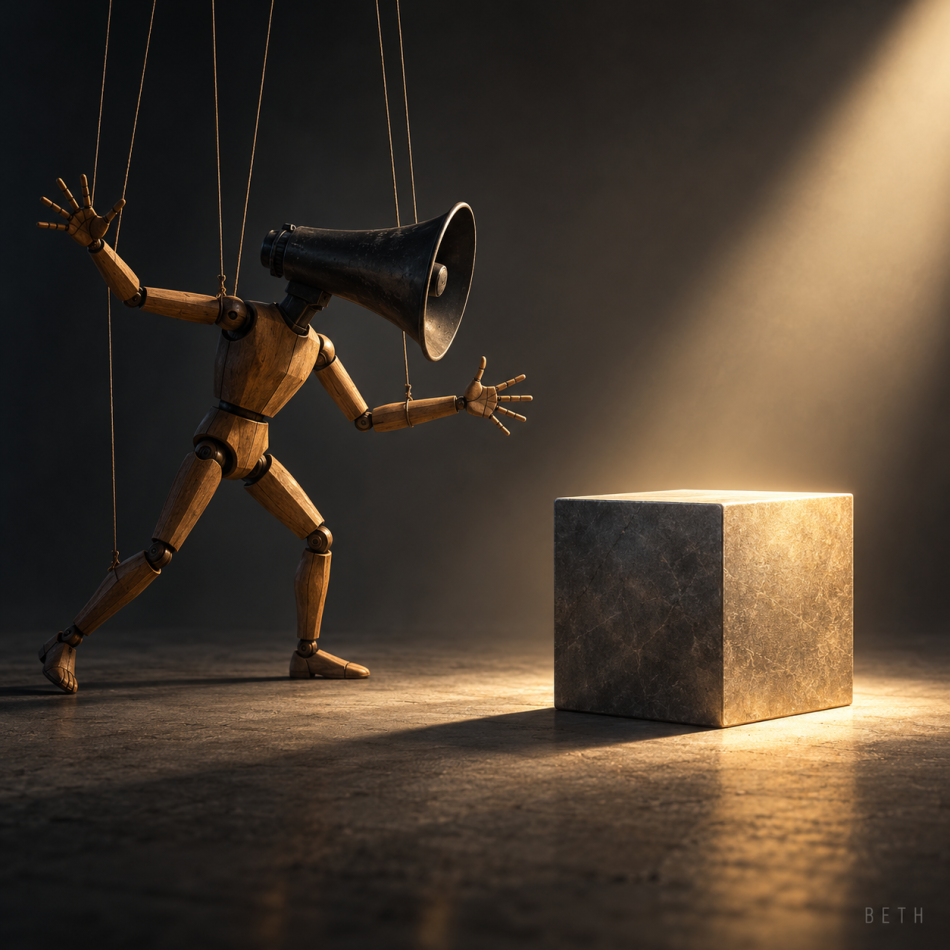
Fifth: Rented Minds
Public opinion today is shaped through a complex ecosystem involving rapid content, artificial intelligence, hidden guidance, and digital influence networks. The danger lies not only in misinformation, but in individuals becoming confident in ideas that were subtly implanted.
Sixth: Shadow Diplomacy
Not all understandings are announced, and not all messages are conveyed through official statements. Shadow diplomacy operates through intermediaries, neutral capitals, parallel security channels, and calculated denials.
BETH Insight
Every denial is not necessarily a closure; sometimes, it is an integral part of the negotiation process.
Seventh: Power Maps
The world is being reshaped through four interconnected dimensions:
- Military Influence
- Economic Corridors
- Political Alliances
- Media Influence
BETH Insight
Modern power is not linear but networked. Understanding it from a single dimension leads to misinterpretation of global balances.
Eighth: The Court of History
If the contemporary world were placed on trial, the key question would not be who fired the first shot, but who allowed the international system to reach such a level of fragility.
Historical Verdict
The world does not collapse solely because of the magnitude of crises, but due to a lack of political imagination capable of producing viable alternatives.
Ninth: News from the Future
2035 | The World Learns—Belatedly
After a decade of intermittent tensions, major powers realized that crisis management alone was insufficient and that the cost of maintaining the world on the brink of escalation far exceeded the cost of building sustainable agreements.
Conclusion
The world today does not merely need those who describe events, but those who understand their rhythm. “Global Pulse” is not just a report on tension, politics, or media—it is an attempt to build an analytical compass that reveals the interconnections between power, energy, influence, diplomacy, and the future.
Final Note
In an era where events accelerate, slow understanding becomes a risk. Where narratives intertwine with interests, deep analysis becomes a necessity rather than a luxury. The world is neither as calm as it appears nor as chaotic as it may seem—it is simply reconfiguring itself under the pressures of fear, ambition, interests, and anticipation.