



Coverage & Analysis | BETH
The U.S.–Israeli war on Iran has entered its thirty-eighth day, amid accelerating escalation matched by quiet political movement, in a scene reflecting the conflict’s approach toward a decisive point between settlement… or expansion.
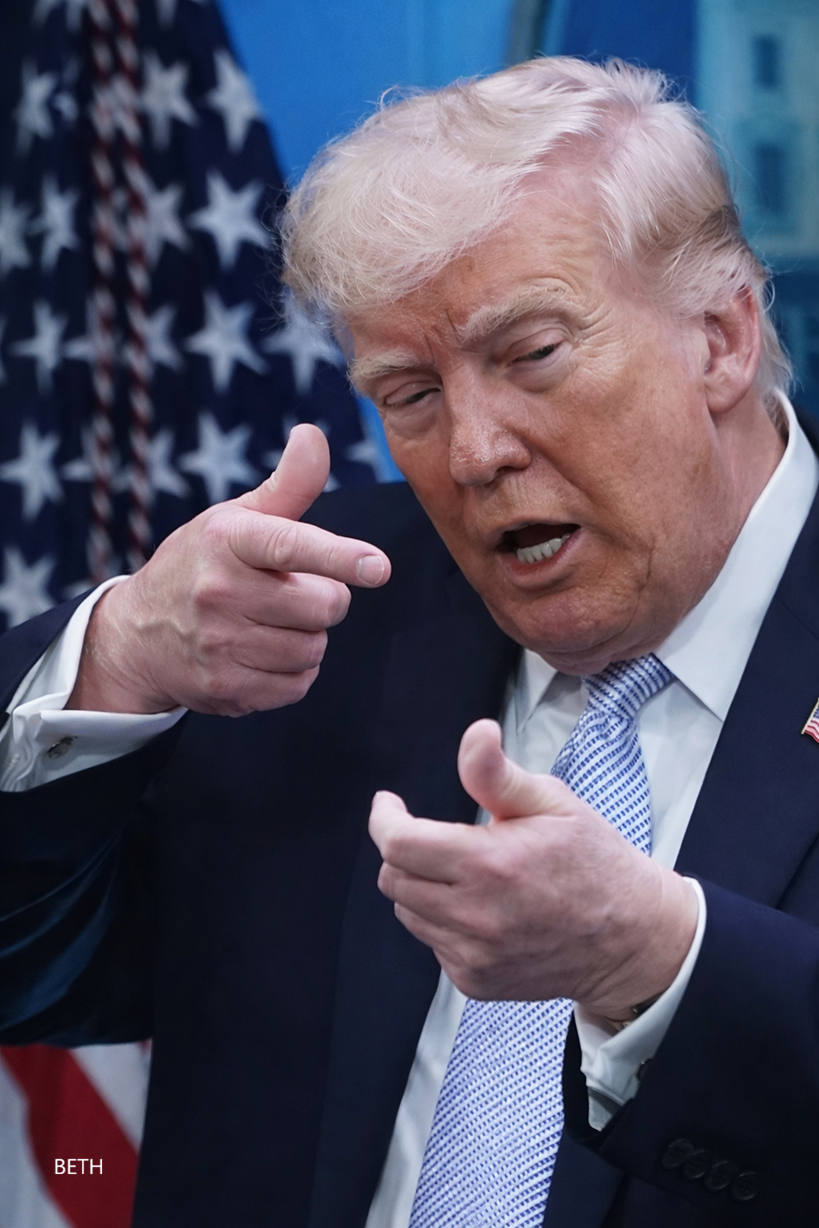
In Washington, U.S. President Donald Trump escalated his tone, confirming that the final deadline to reach an agreement ends at midnight on Tuesday, April 7, warning of a broad scenario that could include comprehensive targeting of Iran’s infrastructure, while stressing that reopening the Strait of Hormuz and ensuring the free flow of oil are key priorities in any potential agreement.
He also stated that this could be resolved within four hours.
In contrast, Iranian sources revealed that Tehran seeks to end the war, but refuses to do so within the framework or timeline proposed by Washington, reflecting a continued gap in negotiations despite military pressure.
On the ground, the Israeli military intensified its strikes inside Iran, announcing the targeting of what it described as “central infrastructure” of the Islamic Revolutionary Guard Corps in Tehran, in addition to conducting airstrikes on three major airports, including targeting aircraft and helicopters, in an attempt to deepen strikes on aerial capabilities.
In the same context, reports indicated scattered explosions in Isfahan province, targeting areas near Kashan airport and ammunition depots, as well as other locations across the province. Explosions were also reported on Kish Island in the south, signaling an expansion in the scope of targeting.
Politically, an Israeli official indicated that Prime Minister Benjamin Netanyahu is pushing for the continuation of operations and rejecting a ceasefire at this stage, reinforcing the likelihood of continued escalation.
Meanwhile, the Iranian Revolutionary Guard announced targeting the U.S. aircraft carrier “USS Tripoli,” a claim denied by the U.S. military, as the battle of narratives continues between the two sides.
On other fronts, rockets were launched toward northern Israel, triggering sirens, while reports indicated casualties following strikes on militia positions in the border city of Al-Qaim near Syria.
Regionally, the official spokesperson of the Saudi Ministry of Defense confirmed the interception of four ballistic missiles, indicating that the conflict’s repercussions are extending into the broader region.
BETH Analysis
The scene on day thirty-eight is moving on a dual track:
Escalating military pressure
And a political path attempting to capture the moment before explosion
Reading the Phase
The U.S. deadline:
Has shifted from a negotiation tool… to a pressure mechanism for decisive action
Intensified strikes:
Targeting air and logistical infrastructure… not just military sites
Geographic expansion:
From Tehran to Isfahan and Kish… indicating a widening target bank
Key Indication
The battle is no longer about weakening capabilities only,
but about reshaping capability entirely.
Conclusion
We are facing a decisive moment:
Either a settlement imposed under pressure
Or escalation that redraws the entire landscape
The question is no longer:
Will the war end?
But:
How will its end be imposed… and who will write its terms?
Updates
Security Council: Division Blocks the Resolution
In the past hours, the Security Council voted on a draft resolution aimed at securing navigation in the Strait of Hormuz.
- 11 countries supported the resolution
- Russia and China used the veto
- Two countries abstained
The result: the resolution failed to pass despite the majority, reflecting a lack of international consensus in one of the most critical global energy crises.
Trump’s Deadline: An Open Countdown
In Washington, U.S. President Donald Trump escalated his tone, confirming that:
- The deadline to reach an agreement ends at midnight on Tuesday, April 7
- The crisis can be resolved “within 4 hours” if an agreement is reached
- In case of failure:
A wide-scale attack may target Iranian infrastructure comprehensively
The message is no longer diplomatic… but an announced operational timing.
Iran: A Negotiation Offer Under Pressure
Tehran presented a 10-point proposal to end the war, including:
- Easing or lifting sanctions
- Halting strikes
- Partial reopening of the Strait of Hormuz
However, Washington considered it insufficient, leaving the negotiation gap unresolved.
Regional Mediation: Attempt to Buy Time
Several regional parties moved to propose a temporary truce:
- A proposed 45-day ceasefire
- Aimed at opening a negotiation window
However, the limited time before the U.S. deadline reduces the chances of success.
BETH Analysis
Deadline or Message?
What was announced by Donald Trump is not read as mere political pressure…
but as an indication of:
- Complete military readiness
- A potential decision already made… awaiting timing
Security Council: Collapse of Consensus
The failure of the resolution does not only mean procedural blockage, but reveals:
- The return of international polarization
- The transformation of the crisis into a global axis conflict
Strait of Hormuz: The Core of the Battle
The strait is no longer just an oil passage, but has become:
- A strategic pressure tool
- A test point for the international system
- A محور of balance between East and West
Conclusion
The scene no longer allows for traditional interpretation.
We are not facing negotiations…
but a deadline managed as part of the battle.
The question is no longer: will the strike happen?
but: has it been delayed… or has its timing already begun?