



Day 37: Between Escalation and a Ceasefire
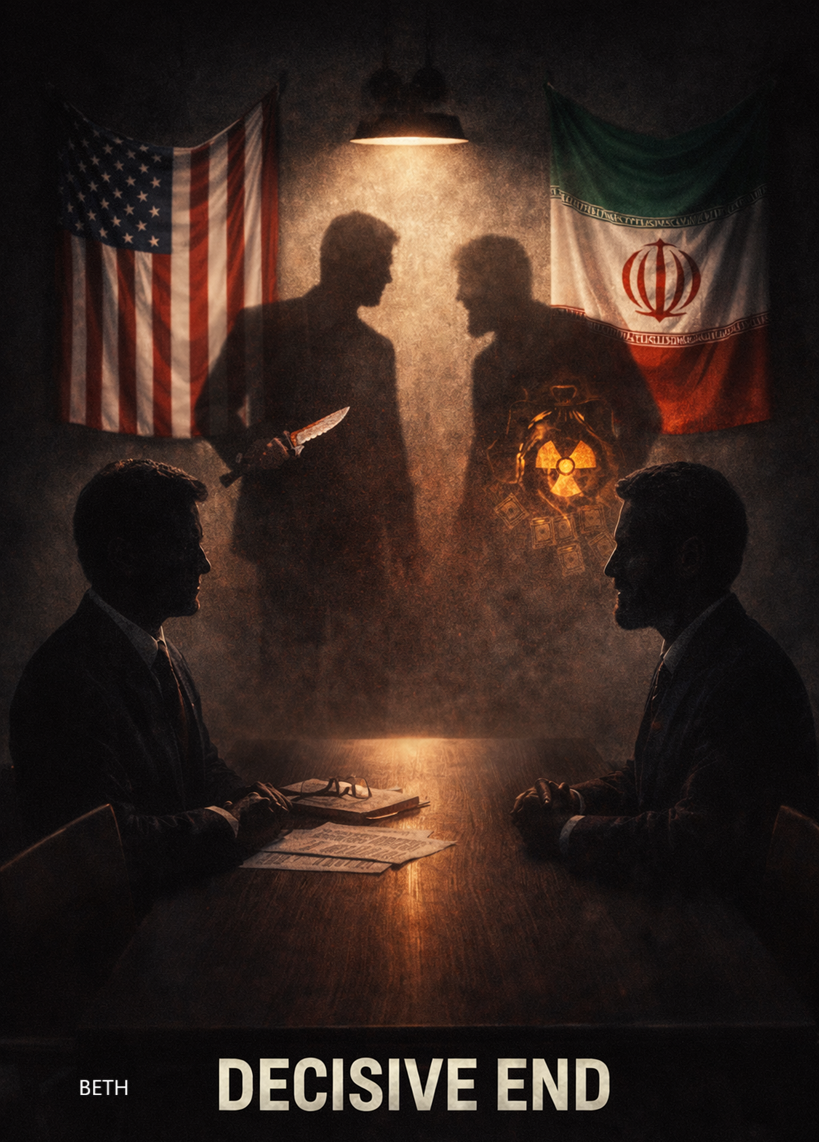
Coverage & Analysis | BETH
The war has entered its thirty-seventh day, presenting a dual-track scene that combines accelerating military escalation with late political attempts to contain the conflict before it passes the point of no return.
Overview
On the ground, the Israeli military has expanded its operations in Lebanon, targeting areas in the south and the Bekaa Valley. Strikes hit locations including Jibshit, Yohmor Al-Shaqif, and the outskirts of Nabatieh, marking a clear extension of operations beyond the Iranian theater.
Inside Iran, U.S.–Israeli strikes continued at an intensified pace, with reports of targets in and around Tehran, alongside the announcement by the Revolutionary Guard of the killing of its intelligence chief, Major General Majid Khadami, in what was described as a joint attack.
In a notable development, political movements have accelerated ahead of the deadline set by Donald Trump, with indications of a proposed plan to end hostilities based on two phases:
An immediate ceasefire
The reopening of the Strait of Hormuz
Final negotiations within 15 to 20 days
The proposal reportedly includes Iran relinquishing its nuclear program in exchange for sanctions relief and the release of frozen assets.
Pakistan is said to be acting as the primary communication channel in this initiative, with urgency placed on reaching agreement within hours.
Another Angle
Meanwhile, attention is turning to an expected announcement by the U.S. President regarding the rescue of the second pilot following the crash of an F-15 aircraft in southwestern Iran.
Iran, however, has questioned the U.S. narrative, suggesting that what occurred may have been a deception operation, possibly linked to undisclosed movements involving sensitive materials.
BETH Analysis
The scene is no longer a single trajectory…
but two parallel paths:
A military escalation pushing toward decisive outcomes
and a political track attempting to seize the moment before escalation peaks
The Paradox of Day 37
As strikes intensify,
proposals for an immediate ceasefire emerge simultaneously.
This suggests that military pressure has reached a level sufficient to open a negotiating window…
but not necessarily to close the war.
What Does the Ceasefire Proposal Mean?
It is not necessarily a peace initiative…
but may represent:
An attempt to manage an exit
A repositioning before a harsher phase
Or a test of the parties’ seriousness under time pressure
The Most Critical Indicator
The killing of the Revolutionary Guard’s intelligence chief
signals that operations have moved into the core of the security structure,
not just military capabilities.
Conclusion
We are facing a complex moment:
A battlefield escalating
and politics attempting to keep pace
BETH Closing
The question is no longer whether the war will stop…
but:
Will it be given a chance to stop… or pushed toward a decisive end?
Evening Updates
Dual Escalation.. and a Strategic Rescue
Military escalation continues across Iran and the region, alongside growing indicators that the conflict is approaching a decisive political and operational phase.
In Washington, U.S. President Donald Trump announced a final deadline for an agreement with Iran on Tuesday, warning of major escalation if Tehran refuses, including strikes on energy facilities and bridges. He also stated he is not concerned about the consequences of targeting infrastructure, adding that Iran is seeking a ceasefire under pressure from ongoing operations.
Meanwhile, Tehran has submitted its response to Pakistan regarding a proposed framework to end the war, following review at the highest levels, reflecting the continuation of a negotiation track despite intensifying military activity.
On the ground, Israel confirmed the continuation of its operations inside Iran, with Prime Minister Benjamin Netanyahu stating that the campaign aims to dismantle Iran’s industrial and financial infrastructure. Israeli officials also announced the destruction of major petrochemical facilities, describing them as part of the financial arm of the Revolutionary Guard.
Defense Minister Israel Katz added that a key petrochemical facility in Assaluyeh—accounting for a significant portion of Iran’s production—was targeted, along with military bases and airfields in Tehran, including Mehrabad, Bahram, and Azmayesh.
At the same time, operations targeting leadership figures continue, with reports confirming the killing of IRGC intelligence chief Majid Khadami, along with another senior figure from the Quds Force, signaling a deeper strike into the regime’s security core.
Rescue of the U.S. Pilot
In a notable development, U.S. military leadership revealed additional details about the rescue of the second pilot whose F-15 aircraft went down in southwestern Iran.
The Chairman of the Joint Chiefs of Staff stated that the pilot’s determination to survive played a decisive role in the success of the mission, praising the rescue teams for executing a highly complex operation in a high-risk environment.
Available information indicates that the operation involved:
Precise location tracking despite complex battlefield conditions
Rapid intervention using specialized air capabilities
High-level intelligence coordination to avoid detection and targeting
The operation reflects deep operational reach, rather than a conventional rescue response.
BETH Analysis
The situation is unfolding along two parallel tracks:
Military escalation targeting infrastructure and leadership
A political track attempting to seize the moment before escalation peaks
Key Indicators
Targeting energy and petrochemical assets:
A shift from degrading capabilities to undermining the economy
Elimination of leadership figures:
An effort to dismantle the decision-making core
Rescue of the pilot:
A signal that operational superiority remains intact and far-reaching
Conclusion
The conflict is no longer confined to the battlefield…
but has become a contest over timing and decision.
The question is no longer:
Will escalation continue?
But:
Who will determine its end—and how?