


Western Media Reading of Saudi Oil Flows via the East–West Pipeline
Riyadh | BETH
13 Shawwal 1447 AH | April 1, 2026
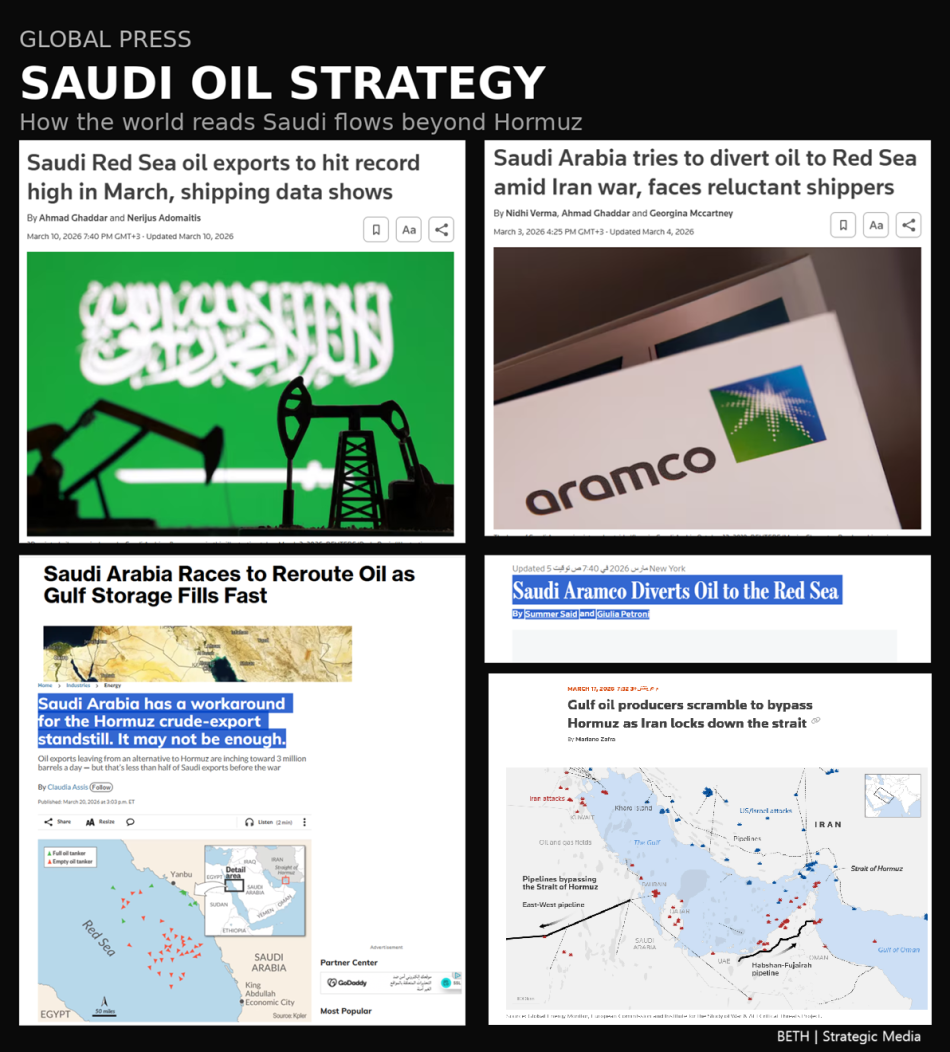
Amid escalating regional tensions, Western media—particularly in the United States—has turned its attention to closely monitoring Saudi oil flows, with a specific focus on the continuity of supply via the East–West pipeline and the sustained export activity through the Red Sea, both seen as critical factors in maintaining global energy market stability.
Coverage in leading financial outlets such as Bloomberg, Reuters, and Financial Times highlights growing interest in the resilience of Saudi Arabia’s oil infrastructure, particularly the continued pumping through the East–West pipeline, which connects eastern oil fields to the port of Yanbu on the Red Sea.
This pipeline is widely viewed as a key strategic tool in reducing dependence on the Strait of Hormuz, especially amid rising concerns over potential disruptions to maritime navigation in the الخليج.
Reports also indicate that oil flows through Red Sea ports—particularly Yanbu—remain steady, supported by advanced logistics infrastructure and strong operational capacity, reinforcing global market confidence in the continuity of Saudi supply.
In broader coverage by general media such as The New York Times and The Wall Street Journal, the issue is framed within a wider geopolitical context, linking the stability of Saudi oil flows to regional balance and positioning the Kingdom as a stabilizing force in global energy markets.
Western Media Perspective
Saudi Oil as a “Safety Valve”
Most analyses agree that the continued flow of Saudi oil through the Red Sea serves as a stabilizing factor for markets, mitigating the impact of military tensions on prices.
The East–West Pipeline as a Strategic Tool
The pipeline is viewed not merely as infrastructure, but as a sovereign strategic decision that reduces geopolitical risks associated with the Strait of Hormuz.
Confidence in Operational Capability
Reports emphasize that Saudi Arabia has demonstrated its ability to sustain production and exports during crises, even under direct threats.
The Political Dimension of Energy
Some U.S. analyses link the stability of Saudi oil flows to Washington’s ability to manage global balances, particularly amid pressures on Europe and international energy markets.
BETH Analysis
Western media is not tracking Saudi oil as a mere economic story…
but as a strategic indicator.
What is unfolding reflects a shift in perspective:
from “How much does Saudi Arabia produce?”
to
“How does it manage energy flows under pressure?”
The East–West pipeline is no longer just a pipeline…
it has become a sovereign instrument to bypass geopolitical constraints.
As for the continued flow through the Red Sea,
it sends a practical message to the markets:
alternatives exist—and stability is not accidental.
At a moment of regional instability,
Saudi oil is transforming from a commodity…
into a pillar of global balance.
When chokepoints tighten…
strong nations reveal their alternative routes.