



Trump’s Anticipated Address: Timing or Message?
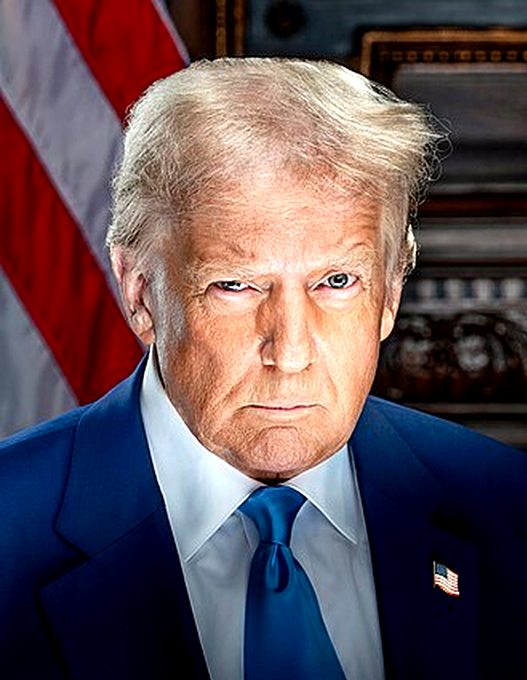
Reading the Signals of the Moment and What Lies Beyond the Words
Analysis & Coverage | Strategic Media Department – BETH News Agency
Supervised by: Abdullah Alomeira
13 Shawwal 1447 AH | April 1, 2026
With the rising tone of U.S. statements and an anticipated address by Donald Trump approaching, a question emerges that goes beyond the surface of events:
Are we witnessing escalation linked to the symbolism of timing (on the eve of Passover), or part of a calculated strategic path unrelated to occasions?
The address coincides with Passover, a religious observance for both Jews and Christians, though with differing meanings—symbolizing liberation and exodus in Judaism, and suffering and redemption in Christian belief—adding a limited symbolic dimension to how the timing may be interpreted.
However, this coincidence does not suggest that the course of the war is driven by religious considerations. At its core, decision-making remains governed by political and strategic calculations, with timing potentially used symbolically, but not as a determining factor.
Extremist actors may attempt to interpret Trump’s speech in ways that serve their own narratives.
The Expected Pattern of Trump’s Address
In his latest remarks on Truth Social, Trump raised the tone to an unprecedented level, vowing to continue operations until Iran is “taken back to the Stone Age,” while also stating that Iran had requested a ceasefire—conditioned on reopening the Strait of Hormuz.
On the Iranian side, statements remain contradictory:
an official denial of negotiations, alongside indirect acknowledgment of “message exchanges” through various channels—reflecting a dual track between public rhetoric and backchannel communication.
This contradiction is not new in modern warfare; rather, it is part of its management, where statements become parallel tools alongside military operations.
Timing as a Tool, Not a Driver
U.S. policy is not built around religious occasions, but it is adept at leveraging them.
Military decisions are made based on readiness and objectives,
while messaging may be calibrated to align with symbolic moments.
More precisely:
Timing does not create the decision, but it amplifies its impact.
A “Political Gift”?
From an Israeli perspective, escalation may be interpreted as a supportive signal aligned with symbolic timing.
From Washington’s perspective, however, what is unfolding is part of a broader strategic framework:
- Applying pressure ahead of negotiations
- Recalibrating deterrence
- Linking de-escalation to strategic conditions (with Hormuz as a key example)
Escalatory Language, Not a Nuclear Decision
The “Stone Age” rhetoric represents the peak of escalatory language,
but it does not necessarily indicate intent to use nuclear weapons.
At this level, U.S. doctrine:
- Is tied to existential threats
- Is constrained by severe international repercussions
- Operates within major power balances that limit risk-taking
What is unfolding is a calculated psychological strategy,
used to raise the ceiling of negotiation—not to trigger a nuclear outcome.
What Is Actually Happening?
The situation reveals a clear paradox:
- No negotiations, yet communication exists
- No de-escalation, yet conditions are being set
- No agreement announced, yet groundwork is being laid
Here, escalation becomes a tool:
not to end the war, but to shape how it ends.
We are not facing a “holiday gesture,”
nor a random decision.
Rather:
a strategy executed through a structured program, delivered in carefully timed language.
Wars are not managed by calendars,
but major messages are rarely delivered at ordinary moments.
Will It Be Repetitive or New?
It will not be repetitive,
but neither will it be entirely surprising.
In essence:
- The form will be new
- The substance will extend what already exists
What Can We Expect?
Refined Escalation (Upgrade, Not Repetition)
The same message presented more forcefully:
- Instead of “we will continue strikes”
→ “we are close to eliminating the threat” - Instead of “Iran requested a ceasefire”
→ “Iran is under unprecedented pressure”
The same message, framed as momentum toward victory.
Introduction of a New Element
Likely additions may include:
- A newly targeted site
- A capability claimed to be neutralized
- Or a shift in Iranian behavior
This is what gives the speech its news value.
Indirect Opening to Negotiation
A door left open without signaling weakness:
- “If they comply, this can end quickly”
- “We want peace, but on clear terms”
This is the most critical line, as it signals the beginning of a transition.
Reinforcing the Image of Control
The narrative will aim to establish:
- The United States is in control
- Iran is reacting
- The end is near and manageable
What Will Not Happen
- No announcement of the war’s end
- No declaration of a nuclear strike
- No clear retreat or direct de-escalation
The Strategic Phase
This speech represents:
Managing the moment before the deal
Not to ignite war,
not to end it,
but to define the terms of its conclusion.
Not repetition,
not a fundamental shift,
but a calculated progression within the same trajectory.
He will not say something entirely different,
but he will say it in a way that makes the world believe the end is near.
BETH Closing Insight
In a world where decisions are driven by science and planning,
some narratives remain bound to belief rather than reality.
And those who understand culture
understand how decisions are made—and how victories are told.
It appears to be the approaching end of a myth shaped in Tehran,
and the world has no need for counter-myths or rival illusions.