


Iran’s Foreign Minister: U.S. Contradictions Raise Doubts
Coverage & Analysis | BETH
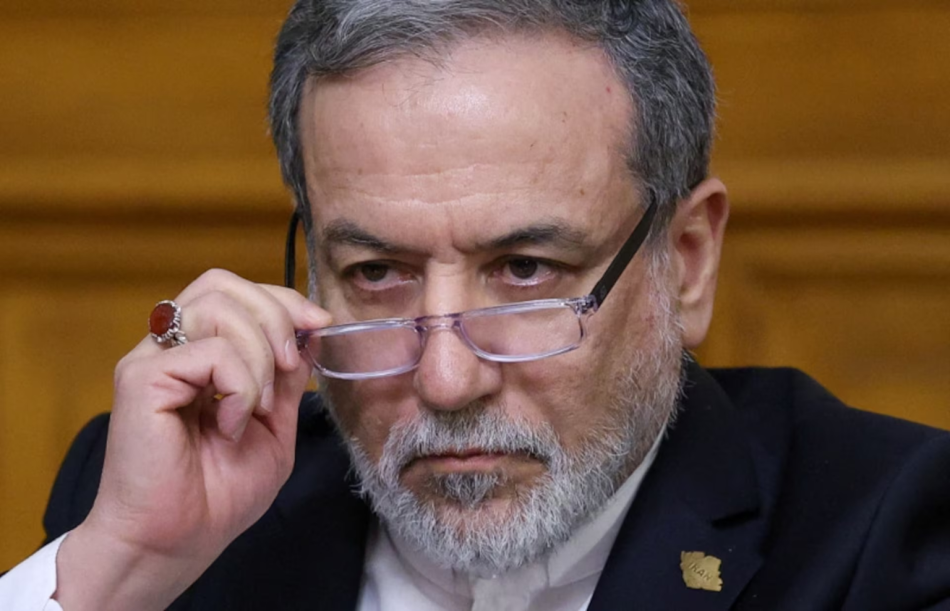
The Iranian Foreign Minister stated that contradictions in U.S. positions regarding reaching an agreement raise doubts, pointing to a lack of clarity in the negotiation path between the two sides.
He added that inconsistent American statements do not reflect a fixed position, which weakens confidence in the seriousness of the proposed understandings.
BETH Analysis
What stands out in the Iranian discourse is not only the content of the statements,
but the tone itself.
Despite ongoing military and economic pressures,
the Iranian language carries a sense of political superiority,
as if it were in a position to set conditions, rather than respond to pressure.
This paradox is not new,
but rather part of a structured Iranian discourse built on three pillars:
First: Victimhood Narrative
Presenting itself as a party subjected to pressure and injustice, reinforcing internal sympathy and justifying continued confrontation.
Second: Tactical Defiance
Raising the سقف of rhetoric during pressure phases as a negotiation tool, rather than a direct reflection of actual power balances.
Third: Historical Pride Framing
Relying on a long civilizational legacy to give the discourse a psychological dimension that transcends present realities, reframing setbacks as “resilience.”
More importantly,
this type of discourse is not only directed outward,
but also serves to stabilize the الداخل psychologically.
When the gap between reality and outcomes widens,
elevated rhetoric becomes a tool to maintain cohesion,
even if it appears inconsistent with field realities.
In other words:
the goal is not always to reflect reality,
but to prevent defeat from appearing as reality.
Conclusion:
The apparent contradiction is not a flaw in the discourse,
but part of its strategy.
In this type of messaging,
power is not measured by what happens,
but by how it is narrated.
At the same time,
it cannot be ignored that certain inconsistencies in U.S. statements provide this discourse with room to expand,
as Tehran captures fragments and missteps, and reframes them into a coherent image of “contradiction,”
within a framework that reinforces the narrative of victimhood and serves its negotiating and media objectives.