


Day 27: Killing of Hormuz Official.. and Widespread Strikes
Coverage & Analysis | BETH
As the war between Iran on one side, and Israel and the United States on the other, enters its 27th day, a dual scene is taking shape: a wide-scale military escalation… matched by a quiet political movement no less intense.
10-Day Extension.. Under Fire
U.S. President Donald Trump announced a 10-day pause in strikes targeting Iran’s energy facilities, in response to a request from the Iranian government, with the suspension set to last until April 6, 2026.
In a statement published on Truth Social, he noted that the decision comes as talks between the two sides continue, emphasizing that negotiations are “going very well,” despite what he described as “erroneous statements” by some media outlets.
Negotiations.. Under Pressure
Trump indicated that the halt in strikes is temporary, intended to provide space for the diplomatic track, without signaling any retreat from escalation, amid ongoing regional tensions.
BETH Commentary
The decision does not reflect de-escalation…
but a recalibration of escalation.
- Washington grants time… but does not ease pressure
- Tehran requests a pause… yet negotiates under fire
- The result: negotiations within a limited timeframe and a high ceiling of pressure
Conclusion
This is not a “truce”…
but a conditional negotiation window.
Ten days… not to stop the war,
but to test the possibility of an agreement.
Time Is Running Out
U.S. President Donald Trump said that Iranian negotiators are acting in a “strange and contradictory” manner, noting that they appear to be seeking a deal despite their public statements indicating they are still reviewing U.S. proposals.
He added on his platform Truth Social that Iran has suffered heavy military strikes and has no chance of recovery, urging Tehran to engage seriously in the negotiations.
He also warned that “time is running out,” indicating that failure to reach an agreement soon could lead to escalation that cannot be reversed.
In a related context, informed U.S. sources revealed, alongside ongoing indirect talks between Washington and Tehran, that military escalation could increase significantly if the negotiations stall.
The Field Ignites
Israel announced the killing of the Iranian Revolutionary Guard Navy commander, Ali Reza Tangsiri, who was responsible for the Strait of Hormuz closure file, in a strike carrying implications that go beyond the military dimension to the core of the global energy equation.
Missile Commander Killed
Iranian media reported the killing of Nour al-Din Gholipour, one of the missile commanders in the Islamic Revolutionary Guard Corps, without disclosing further details about the circumstances of his death.
This comes amid escalating military operations and regional tensions, where the missile program remains one of Iran’s key elements of military strength.
Targeting leadership… a message that goes beyond the battlefield.
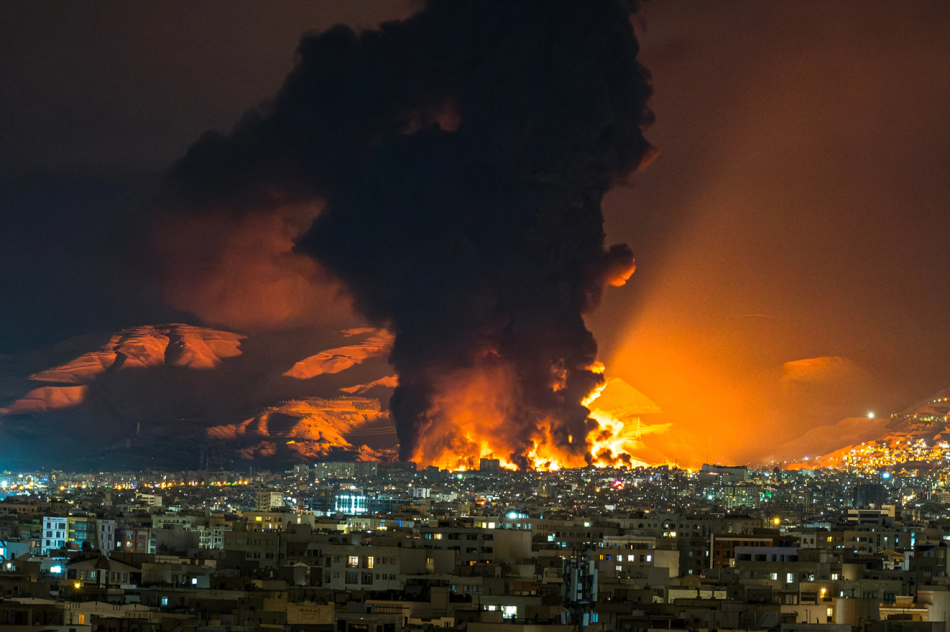
In Tehran, scattered explosions were heard, coinciding with the activation of air defense systems, indicating an expansion of strikes deep داخل Iranian territory.
The Israeli army announced carrying out a wide wave of strikes across multiple areas in Iran, including Isfahan, targeting what it described as the “infrastructure of the regime.”
It also confirmed targeting a research and development center linked to Iran’s military submarine program in Isfahan, signaling a focus on long-range strategic capabilities.
The strikes included:
- Airstrikes on Azadshahr district in northern Iran
- Targeting the Tchamran military complex in Bandar Abbas
- Reports of a major assassination operation in Bandar Abbas (according to Israeli sources)
On the other hand, a number of Iranian missiles were launched toward Jerusalem and central Israel, reflecting a continuation of response tactics without changing the rules of engagement.
Politics .. in a Low Voice
Amid this escalation, signals of indirect negotiations between Washington and Tehran are intensifying.
A Pakistani official revealed that Israel removed the names of:
- Iranian Foreign Minister Abbas Araghchi
- Parliament Speaker Mohammad Bagher Ghalibaf
from its target list, following a Pakistani request conveyed through Washington—reflecting an attempt to keep negotiation channels open.
For his part, U.S. President Donald Trump said that Iran wants to reach an agreement with the United States but does not want to disclose it, noting that Iranian negotiators fear being “killed by their own people” if such talks are revealed.
He added that Tehran is “negotiating secretly… while denying it publicly,” confirming that there is a real desire to reach a deal.
Negotiations… with Conditions
According to intersecting leaks, the U.S. proposal (15 points), conveyed via Pakistan, includes:
- Eliminating Iran’s stockpile of highly enriched uranium
- Halting enrichment activities
- Curbing the ballistic missile program
- Stopping support for allied groups in the region
In return, Iran has presented five counter-conditions, the details of which remain undisclosed, but early indications suggest they are far from being acceptable to Washington.
Observers believe that the mutual conditions were structured in a way that makes rejection likely… indicating that negotiations here are not meant to resolve the conflict, but to manage it.
BETH Analysis
What is happening on Day 27 should not be read as mere military escalation…
but as a redistribution of cards ahead of a negotiation table that has not yet been set.
The assassination of Tangsiri is not a passing field event, but a direct message:
approaching the Strait of Hormuz… is a global red line.
At the same time, the continuation of Iranian missile launches despite the strikes confirms that “capability” has not been broken… but rather reshaped.
As for the secret negotiations, they reveal the most important paradox:
the parties exchanging strikes publicly…
are the same ones seeking an exit quietly.
The war continues…
but the goal is no longer total victory, rather improving the terms of the end.
And in this type of war:
the most dangerous thing is not what is said… but what is managed in the shadows.
Widespread Strikes on Iran
Airstrikes continued across multiple locations inside Iran, including the city of Ardabil, sites affiliated with the Quds Force of the Islamic Revolutionary Guard Corps in Hamedan, as well as targets in the capital Tehran, including the Parchin industrial complex.
The strikes also hit a base in Bandar Abbas and a solid-fuel production unit for missiles in Tisabulr, in addition to military buildings in several cities.
In the same context, the United States Central Command announced that it has targeted around 10,000 objectives so far as part of the ongoing military operations.
Widespread Strikes on Iran
Airstrikes continued across multiple locations inside Iran, including the city of Ardabil, sites affiliated with the Quds Force of the Islamic Revolutionary Guard Corps in Hamedan, as well as targets in the capital Tehran, including the Parchin industrial complex.
The strikes also hit a base in Bandar Abbas and a solid-fuel production unit for missiles in Tisabulr, in addition to military buildings in several cities.
In the same context, the United States Central Command announced that it has targeted around 10,000 objectives so far as part of the ongoing military operations.
Escalation.. and a Deal
U.S. statements on escalation with Iran continue, as President Donald Trump emphasized the continuation of military pressure, confirming that the United States has struck Iranian capabilities at an “unprecedented level,” including the destruction of missile, drone, and naval bases, and inflicting significant damage on military production capacities.
He added that military operations are progressing ahead of schedule, noting that Iran was only weeks away from acquiring a nuclear weapon were it not for the U.S. strikes, urging Tehran to fully abandon its nuclear ambitions.
In contrast, Iranian Foreign Minister Abbas Araghchi stated that Iran is facing “double standards,” arguing that Iran’s defensive actions are condemned while the actions of its adversaries are accepted.
Open Channels.. No Agreement
Informed sources revealed that Iran has delivered its response to the 15-point U.S. proposal through intermediaries, describing it as “one-sided and unfair,” and failing to meet the minimum requirements for success.
Other sources confirmed that Tehran is awaiting a U.S. response, while no concrete arrangements for a new round of negotiations have yet been established.
At the same time, the European Union, through its foreign policy chief Kaja Kallas, announced diplomatic efforts to de-escalate tensions, while maintaining coordination with regional partners, including Saudi Arabia.
A Heated Battlefield
On the ground, explosions were reported in several areas across Iran, including Piroozi and Damavand east of Tehran, Karaj, and areas south of the capital.
The Islamic Revolutionary Guard Corps also announced the launch of a volunteer recruitment program to support the armed forces, including logistical and field roles, with the minimum participation age in some activities reduced to 12, raising questions about Iran’s international commitments.
BETH Analysis
The scene does not reflect negotiations…
but negotiations under fire:
- Washington is raising the level of pressure
- Tehran is responding politically… while holding its ground militarily
- Mediators are trying to prevent a major escalation
The key paradox:
Each side speaks of a “deal”…
while acting on the ground as if time is allocated for escalation, not resolution.
A deal is possible…
but the path to it runs through the highest levels of escalation.
The Story of Iran’s “Gift” to Trump
U.S. President Donald Trump said that Iran had given the United States “10 oil tankers as a gift,” referring to indirect gains achieved by Washington, alongside what he described as “very important” talks underway with Tehran.
He added that Iran had sought negotiations after suffering significant losses, stressing that the United States would not allow any fees to be imposed on shipping through the Strait of Hormuz, noting that such attempts are “already happening.”
Contradictory Signals
In a notable escalation, Trump stated that control over Iran’s oil remains an option, affirming that Gulf states had been targeted by Iranian missile attacks, and that U.S. forces are “operating freely” inside Iran.
Despite speaking of ongoing negotiations, he indicated that he “does not care” whether a deal is reached, reflecting a clear divergence between escalation on the ground and negotiation rhetoric.
BETH Commentary
The “oil gift” is not a literal description…
but an American interpretation of the outcomes of conflict:
- Iranian losses turning into gains for the opposing side
- Military pressure translating into economic influence
- Negotiations being managed… under the ceiling of escalation
The key paradox:
Washington speaks of a deal…
yet acts as if it does not need one.
The scene is no longer just a military conflict…
but a strategic management of gains and losses.
Iran is losing on the ground…
while the United States is capitalizing politically and economically.
Focused Analysis
What happened is a direct result of military escalation:
Strikes → disruption in supply
Disruption → increased strategic value of energy
Result → indirect gains for the stronger side
But the more important phase begins here:
Washington does not merely benefit… it leverages the outcome into influence:
- Economically: strengthening its position in energy markets
- Politically: imposing stronger negotiating terms
- Strategically: reasserting its presence in the Gulf
A Deeper Question
Does Iran reveal Trump’s weaknesses…
or does it reveal its own vulnerabilities to him?
In other words:
Does Iran believe it is playing on Trump’s weaknesses…
while in reality strengthening his hand?
BETH Commentary
Iran may be betting on:
- Trump’s personality
- His deal-making instincts
- His sensitivity to media pressure
But in contrast, Trump uses every Iranian escalation to say:
- I am stronger
- I am in control
- I set the rules of the game
Iran may believe it understands Trump’s weakness…
but the “gift” he refers to actually means:
its actions have exposed his strength… not his weakness.