


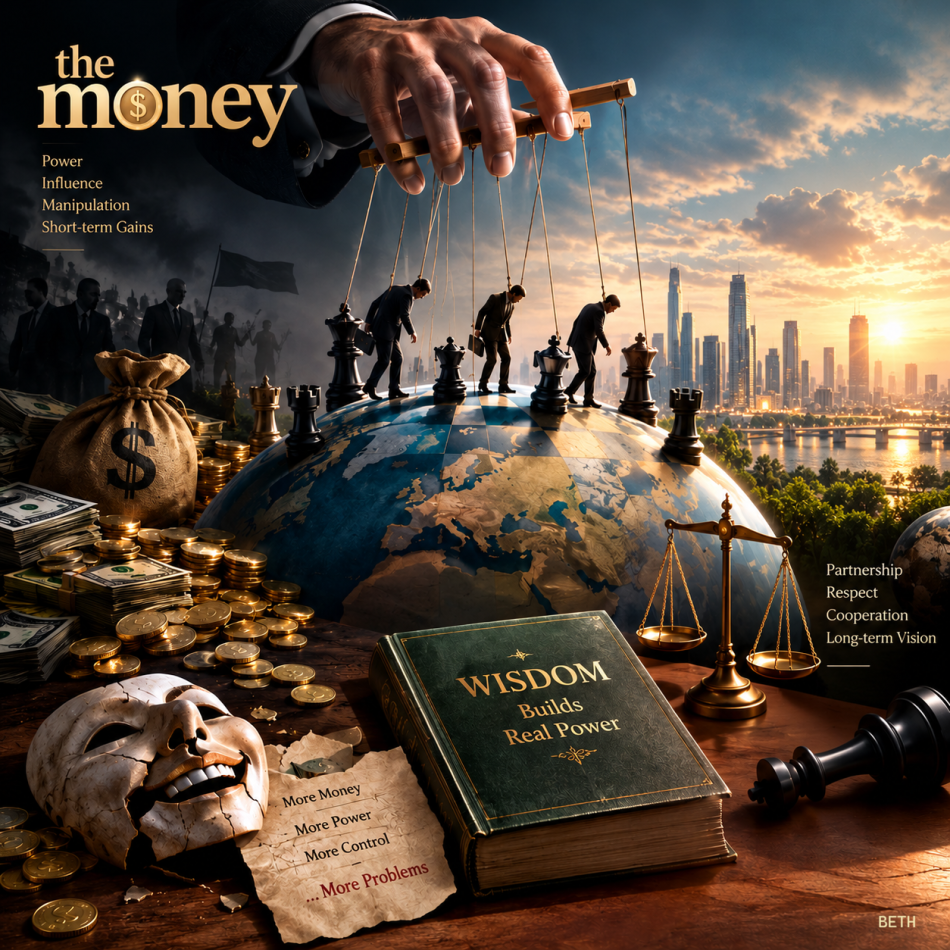
The Closed Narrative
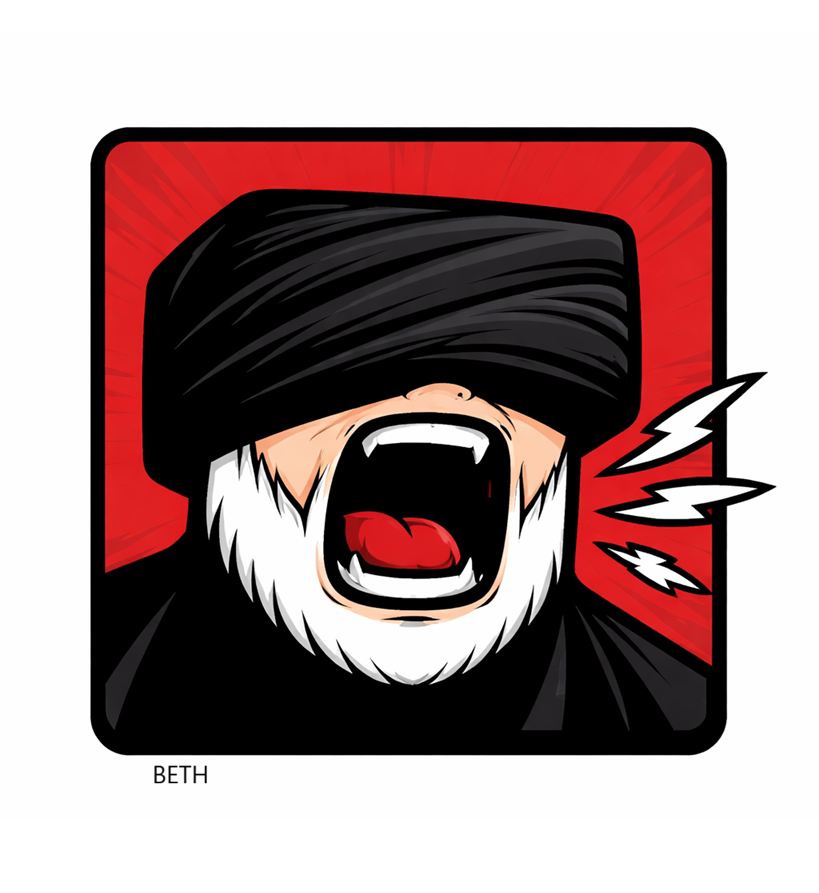
Prepared & Analyzed by | Strategic Media Department – BETH News Agency
Supervised by: Abdullah Al-Umairah
Introduction
How can the language of Iranian media discourse be understood?
What type of discourse is it?
And what is the nature of the similarity between it and the discourse of proxies, militias, and affiliated actors?
This report attempts to deconstruct the structure of this discourse, not merely as media content,
but as an intellectual system that is reproduced across multiple levels.
The Language of Iranian Discourse
Type of Discourse
Iranian media discourse can be classified as:
An ideologically driven, mobilizing discourse framed politically
It is neither neutral news reporting,
nor open-ended analysis…
but a discourse that creates a position before conveying an event.
Key Features
- A sharp binary: (Us / Them)
- A moral framework: (Resistance / Aggression)
- Redefinition of loss: turning it into resilience
- Focus on meaning rather than the event
- Intentional repetition to build conviction
How Does the Discourse Operate?
It does not ask: What happened?
It says: What should this mean?
It provides a ready-made interpretation,
and closes the door to alternative readings.
Similarity with Proxy and Militia Discourse
The similarity is not coincidental…
but a structural extension, reflected in language, tone, and modes of engagement.
Unified Vocabulary
The same terms are repeatedly used:
- “Aggression”
- “Resistance”
- “Legitimate response”
- “Hegemony”
This reflects a centralized production of discourse.
Unified Framework
The conflict is presented as:
- A battle for existence
- Or a battle for dignity
Not as a conflict of interests.
Unified Objective
- Mobilizing the audience
- Reinforcing legitimacy
- Justifying actions before outcomes
Difference in Tone… Not in Substance
- Iran: disciplined official discourse
- Proxies: more intense and emotional
But:
The idea is the same… the style adapts to the audience
The Deeper Implication
We are not dealing with “media similarity”…
but with:
A single discourse system… with multiple voices
Classification of Iranian Discourse
In Terms of Openness
A relatively closed discourse:
- Does not allow real space for opposing views
- Provides a single interpretation of events
- Limits plurality within the narrative
In Terms of Civil Nature
A mobilizing rather than dialogical discourse:
- Does not engage in dialogue with the other
- But seeks to assert its position
In Terms of Truth Handling
A confirmation-driven discourse:
- Does not seek what is true
- But reinforces what serves the narrative
Condensed Formulation
A closed… mobilizing… confirmation-driven discourse
that does not rely on openness or self-review,
but on reinforcing its narrative even under pressure.
How Did This Discourse Form?
After more than four decades of the Iranian system,
a fundamental question arises:
How did this closed discourse form?
And why was it not fully recognized until recently?
The answer lies in three factors:
- Time: the discourse was built gradually until it became “normal” within its environment
- Closed environment: lack of real plurality prevented internal critique
- Smart external projection: the discourse was presented differently depending on the audience
Thus, the discourse was not hidden…
it simply was not deeply examined.
How Should This Discourse Be Addressed?
Not through total isolation…
nor through aggressive confrontation,
but through intelligent multi-layered management.
Segmentation Before Engagement
Not all audiences are the same:
- Leadership producing the discourse
- Convinced supporters
- The undecided audience (most important)
The real effort should focus on the undecided.
Because:
- The hardline rarely changes quickly
- The undecided can be influenced
Deconstruction (Not Confrontation)
Deconstruction is not direct breaking, but through:
- Exposing contradictions
- Simplifying reality
- Shifting discussion from slogans to real-world impact
From: “Resistance / Aggression”
To:
- Economy
- Losses
- Direct impacts
Here, the discourse begins to lose its rigidity.
Using the Same Tools… Differently
- Repetition
- Symbolism
- Storytelling
But:
To build awareness… not mobilization
Avoiding Energy Waste
Some groups:
- Do not change quickly
- Or do not want to change
The goal is not to convince them…
but to neutralize their influence
When Deconstruction Fails
When discourse is tied to:
- Identity
- Belonging
- A sense of threat
Change becomes more difficult…
but not impossible.
It requires a shift in approach:
- From confrontation → to building alternatives
- From attack → to presenting a better model
The Critical Mistake to Avoid
Turning the battle into “breaking the other”
Because that:
- Reinforces their narrative
- Increases their cohesion
Conclusion
Iranian discourse does not spread…
it is reproduced.
The voice changes…
but the structure remains.
It cannot be broken by force…
nor left unchallenged.
It must be deconstructed through:
- Targeting the undecided audience
- Exposing contradictions
- Building a more rational and compelling narrative
In the end:
The battle is not with who speaks louder…
but with who understands better.
Who does this closed narrative serve?
On the surface… it serves those who promote it,
but at its core… it is not built to convince the world,
but to prevent its audience from questioning.