



Day 21 | Iran Under Fire… Sustained Targeting of Leaders
BETH | Monitoring & Analysis
Military operations inside Iran continue for the twenty-first consecutive day, with a notable escalation in the pace of U.S.–Israeli strikes targeting Tehran and several major cities, according to Iranian media reports.
Strikes Deep Inside Iran
The city of Ahvaz witnessed powerful explosions this morning, coinciding with an intensive wave of attacks on Lorestan province, which has been subjected to more than 100 airstrikes targeting 64 locations across 12 cities.
According to an Iranian security official:
80 soldiers killed
64 civilians killed
Elimination of Key Figures
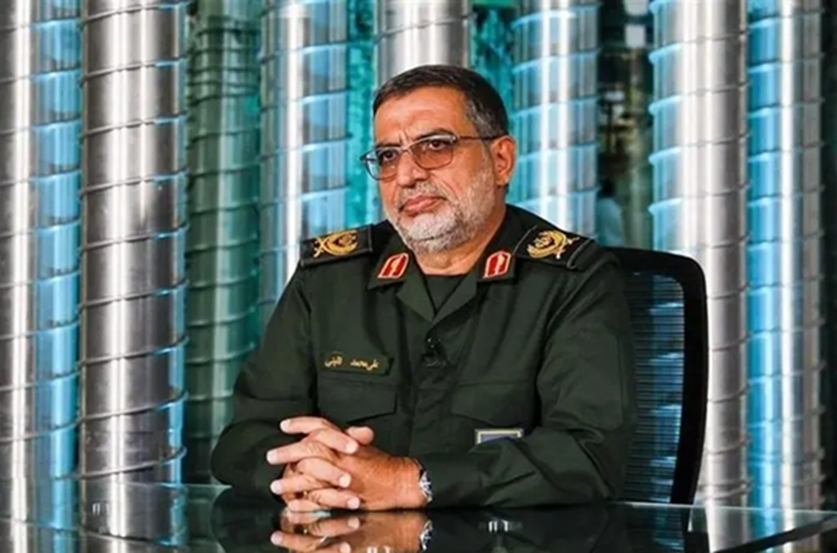
The Islamic Revolutionary Guard Corps announced the killing of its spokesperson, moments after issuing threats against the United States and Israel — a development carrying symbolic significance regarding the speed and precision of leadership targeting.
General Esmail Ahmadi, head of intelligence for the Basij forces, was also killed in strikes described as targeting highly sensitive security circles.
Tehran Under Pressure
Explosions renewed west of the capital, Tehran, indicating continued strikes on sensitive military infrastructure deep inside Iranian territory.
Hormuz… The Next Escalation Arena
Washington is intensifying its operations over the Strait of Hormuz, signaling a potential shift toward direct naval confrontation.
Use of Apache helicopters to destroy Iranian boats
Expectations of deploying additional warships
Sources indicate possible deployment of a U.S. Marine unit in the coming days
Israel Expands the Scope of Operations
On the northern front, Israel launched intensive airstrikes on southern Lebanon, targeting multiple towns in the districts of Tyre and Bint Jbeil, alongside heavy artillery shelling.
Civilian casualties reported
Targeting of electrical infrastructure, with a major power station taken offline
Lebanese Ministry of Health: Over 1,000 fatalities since the escalation began
BETH Reading | A War Beyond Geography
The scene is no longer “strikes inside Iran”…
It has evolved into a multi-theater war, operating on three strategic layers:
1. Iran’s Depth is Being Systematically Drained
Precision, repeated strikes targeting military infrastructure and leadership figures point to a long-term attrition strategy — not a limited response.
2. Hormuz Becomes a Global Chokepoint
Any escalation there threatens not only Iran, but places the global economy on the edge of disruption.
3. Expanding Fronts to Diffuse Response
Pressure on Lebanon opens an additional front, aiming to distribute retaliatory capabilities and prevent concentration in a single arena.
Conclusion
We are entering a different phase:
Not a “strike-and-response” cycle…
but a reconfiguration of the regional balance of power.
The defining question now:
Is this heading toward containment… or a wider escalation?
Trump and Netanyahu… Divergence and Convergence in Objectives
The Washington Post, citing U.S. officials, revealed a divergence in the objectives of the United States and Israel toward Iran, despite ongoing military coordination between the two.
Officials clarified that U.S. President Donald Trump is not seeking regime change in Iran, while Israel is focused on targeting the structure of leadership inside the country.
In the same context, U.S. Director of National Intelligence Tulsi Gabbard, during a hearing before the House Intelligence Committee, confirmed that Washington’s objectives differ from those of Tel Aviv.
She explained that:
Israel focuses on crippling Iran’s leadership
The United States focuses on destroying Iran’s ballistic missile program
In addition to targeting Iran’s naval capabilities
Despite both sides emphasizing close operational coordination, officials acknowledged that such coordination does not imply identical strategic objectives.
Kharg Under the Spotlight
Reports indicate that President Donald Trump is considering plans to seize or impose a blockade on Iran’s Kharg Island, in a move that could represent a qualitative escalation in the course of operations.
Kharg Island is one of Iran’s most vital oil export hubs, making any action against it directly impactful on Iran’s economy and global energy markets.
BETH Reading | A War of Two Aims
The scene does not reflect a disagreement…
but rather different tools toward a shared outcome:
Israel strikes the head → accelerating internal collapse
Washington strikes the tools → weakening the ability to respond and project power
The difference is not in the alliance…
but in the point of resolution:
Will leadership fall… or will capabilities be neutralized?
Conclusion
When objectives diverge within an alliance,
it does not necessarily weaken it…
but may instead make it more complex—and more effective.
They agree on weakening Iran… but differ on the point of resolution:
Washington targets capabilities, while Tel Aviv targets leadership.
Initial outcome:
A weakened Iran… without decisive resolution;
either an exhausted system or degraded capabilities, with tensions remaining.
The objective in all cases:
To contain Iran—not eliminate it;
and to reduce its capacity to influence, without triggering a full regional .
Trump Attacks NATO… Calls It “Cowardly”
U.S. President Donald Trump sharply escalated his rhetoric against the North Atlantic Treaty Organization (NATO), describing some of its members as “cowards” and calling the alliance’s power “hollow”, in an unprecedented criticism posted on his Truth Social account.
Trump stated that allies had “refused to help” during the confrontation with Iran, adding that the United States “will not forget this stance,” referring to what he described as a lack of real support from NATO partners.
In a notable remark, he asserted that the war with Iran had been “decided,” reinforcing a U.S. narrative that key military objectives have been achieved.
Meanwhile, European positions — particularly from France, the United Kingdom, and Germany — indicated readiness to participate in post-operation arrangements, including securing navigation routes and regional stability, without direct involvement in the ongoing combat.
BETH Reading | Breaking the Facade
Describing NATO as “cowardly” and “hollow”
is not mere rhetoric… but a break from diplomatic restraint within the alliance.
Trump is not only applying pressure…
he is redefining the value of an ally:
An ally, in his view, is one who fights
Not one who manages the aftermath
Europe, however, is not rejecting its role…
but repositioning its timing:
No to direct war involvement
Yes to managing what comes after
Conclusion
What is unfolding is not a passing disagreement…
but a direct test of what an alliance truly means:
Is it a war alliance… or a post-war management alliance?