

From the Shah to the Mullahs .. What Comes Next?
Prepared and Analyzed by | Strategic Media Department – BETH News Agency
Supervised by: Abdullah Al-Omira
Introduction
When Khomeini returned to Tehran on February 1, 1979, aboard an Air France flight from Paris, it was not merely the return of a man from exile, but the beginning of a profound transformation in the nature of the Iranian state, in regional balances, and in the form of tension between religion and authority, and between revolution and the state.
With the سقوط of the Shah’s rule, Iran’s crisis did not end; rather, a different kind of crisis began.
A crisis that did not remain within Iranian borders, but extended to the Gulf, the Arab world, the West, energy markets, networks of influence, and proxy wars.
Since that moment, a question has hovered over the region:
Was the rise of the mullahs’ regime an international mistake?
And was the prolonged patience toward it a form of incapacity… or a calculation of interests?
And the more critical question:
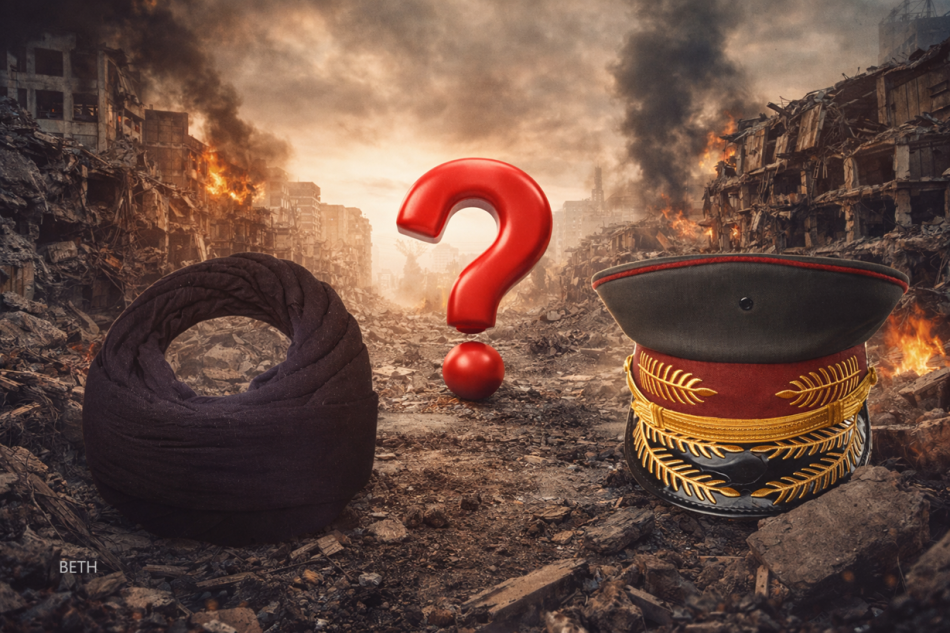
If this chapter ends, will Iran return to one of its previous models, or will it enter a completely different third chapter?
First: Was the Rise of the Mullahs an International Mistake?
From a purely historical perspective, what happened was not a “simple mistake,” but rather a major international miscalculation.
The United States and the West viewed Iran, at the moment of the Shah’s سقوط, from a narrow angle:
a decaying regime, public anger, corruption, repression, and an opposition seemingly capable of mobilizing the street.
But many failed to sufficiently anticipate that the fall of the Shah would not necessarily produce a modern national state, but could instead produce a complex ideological state that considers the export of terror part of its identity.
In other words:
the world did not only misread the weakness of the Shah, but more critically misread the nature of the alternative.
Here lies the decisive distinction:
the fall of an authoritarian regime does not automatically mean the birth of a better one.
Sometimes, a traditional authoritarianism collapses… only to give rise to a harsher form, more capable of repression, manipulation, and shielding itself behind slogans.
Second: Why Did the World, Especially the U.S., Tolerate Iranian Disruption?
This question matters, because prolonged patience is rarely explained by incapacity alone, but by a mixture of interest, fear, and complex calculations.
The United States was not always incapable of deterring Iran, but often pursued policies that viewed containing Iranian behavior as less costly than destabilizing Iran itself.
Because the alternative was unclear.
Would the سقوط of the regime lead to a stable state?
Or to the fragmentation of a large, multi-ethnic country filled with militias, ideological stockpiles, and armed networks?
The West often preferred dealing with a troublesome yet “relatively understood” regime, rather than risking chaos with unpredictable consequences.
There is another equally important factor:
Iran was not merely an adversary, but at times a functional card within the region.
The presence of a persistent adversary—one that can be deterred at times, negotiated with at others, and whose threat can be used to reshape alliances—was, for some major powers, more useful than a stable, strong, and independent Middle East.
This is not a “total conspiracy,” but a more grounded reality:
great powers do not manage the world through ethics, but through interests.
And when a disruptive adversary serves a role in regulating the region, tolerance becomes part of policy—not approval.
Third: Was the Iranian Regime Merely a Problem .. or a Functional Phenomenon in the International System?
Strategically, the Iranian regime was not only a crisis, but gradually became part of the structure of regional crises.
It raises grand slogans, yet operates largely through:
indirect influence,
armed proxies,
wars of attrition,
and gray zones between state and non-state.
This is why it endured.
Not because it was always the strongest, but because it mastered survival within the gaps:
neither a fully conventional state, nor a purely revolutionary movement;
neither fully integrable, nor easily eliminated.
This hybrid flexibility made containment possible… and eradication costly.
Fourth: Can the Two Chapters Repeat? The Shah .. or the Mullahs?
Here lies the core question.
History does not repeat itself literally, but it repeats patterns when underlying conditions remain unchanged.
Thus, the question is not:
Will the Shah return?
Or
Will the mullahs return?
But rather:
Has Iran changed enough to prevent the reproduction of authoritarianism and disorder in a new form?
It is highly unlikely that Iran will return to the “Shah chapter” as it was; time has changed, society has changed, political and social awareness has evolved, and historical memory has become too heavy to allow a simple replication.
It is also unlikely that the “mullahs’ chapter” can continue indefinitely if the state reaches structural exhaustion, losing its ability to control internally and project disruption externally at the same time.
The real risk, however, is not the return of the Shah or the persistence of the mullahs, but the production of a third version of the crisis:
a new system in form… but old in essence.
A change of faces… while the structure of control, monopoly, and ideological use remains.
Fifth: What Could Come After the Mullahs?
This is the most difficult question, because the سقوط of regimes does not necessarily reveal the nature of what comes next.
There are four theoretical scenarios:
First: Reform from within
Reducing ideological rigidity without fully dismantling the system.
This prolongs the state’s life, but does not quickly resolve its structural crisis.
Second: Organized national transition
The best-case scenario, if a leadership emerges capable of uniting Iranians around the idea of the state—not revenge, not retaliation, not exporting crises.
Third: Transitional chaos
This is what the world long feared, and why it exercised patience.
Iran is a large state, and any sudden vacuum may trigger internal fragmentation and conflict.
Fourth: Reproduction of power with a new face
A common historical outcome:
the رأس falls, but the structure remains, producing a quieter system… yet no less controlling.
Thus, the real question is not merely:
Will the system change?
But:
Will the philosophy of governance change?
Will the philosophy of governance change… or will it continue along the same revolutionary pattern, with all its fluctuations, as seen throughout the history of this land since the fall of Khosrow until today?
Will contemporary civilizational transformations influence the policies of a future government, in an era of economic integration and civilizational interconnection?
The world is moving toward integration… but the decision remains in the hands of those who choose:
a normal state… or a continuing idea.
Sixth: What Does Iran Need to Avoid Repeating the Cycle?
Iran does not need only political change, but a new national contract.
A contract that redefines the state based on:
a state for citizens, not for a ruling doctrine;
security to protect people, not ideology;
and a neighborhood built on cooperation, not expansion.
Without such a transformation, Iran may exit the mullahs’ chapter… only to enter another phase of conflict with itself, its region, and the world.
BETH Reading
What happened in 1979 was not merely a change of regime, but a transformation in the very concept of the state.
And when the concept of the state changes, its consequences do not remain confined within borders.
Thus, the rise of the mullahs’ regime can be seen as a major historical miscalculation, yet international patience toward it was not always ignorance, but often a temporary management of a greater risk.
As for the future, it is unlikely to restore the Shah as he was, nor does it guarantee a smooth end to the mullahs as their opponents might hope.
Iran, if it reaches a moment of transformation, will face a challenge greater than toppling a regime:
the challenge of building a normal state after decades of an ideological state.
Conclusion
The question is no longer:
Will the mullahs’ regime collapse?
But rather:
What will be born after it?
Iran does not need a third chapter of disorder…
but a first chapter of statehood.