



Day 18: Fall of the Iranian Regime’s Heads
Follow-up & Analysis | BETH
As the confrontation between Iran on one side and Israel and the United States on the other enters its eighteenth day, military operations are shifting toward a qualitative escalation targeting senior leadership and decision-making centers, in addition to military infrastructure.
The Israeli army launched a wide wave of airstrikes on the capital, Tehran, alongside strikes targeting sites linked to Hezbollah in Beirut’s southern suburbs. Tensions also extended to Israel’s northern front after rockets were launched from southern Lebanon toward Nahariya and the Galilee, accompanied by sirens sounding in multiple areas.
Key Development
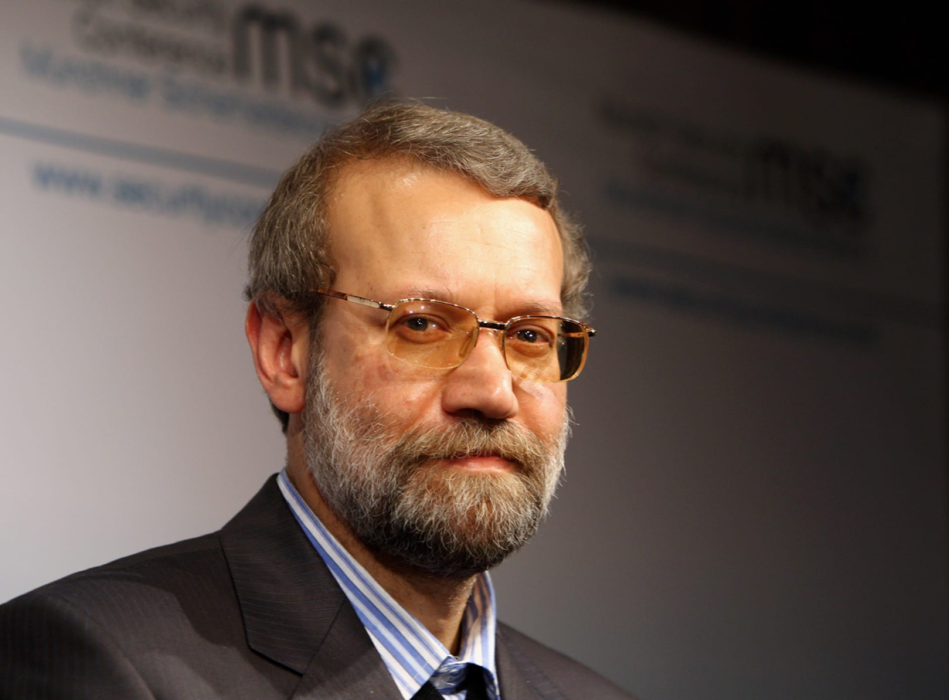
The Israeli Defense Minister announced the killing of Iran’s Supreme National Security Council chief Ali Larijani, along with Basij commander Gholam Reza Soleimani and ten other senior figures, in strikes described as among the deepest inside Tehran.
The Israeli army spokesperson confirmed that operations will continue, noting that targeting the regime’s leadership will remain a priority in the next phase.
BETH Reading
The scene is shifting from “targeting capabilities” to “breaking will”:
Targeting leadership aims to disrupt Iran’s political and military decision-making.
The exchange of assassinations confirms that the conflict is no longer conventional, but deeply intelligence-driven.
In the background, U.S. leaks suggest that the war is not open-ended, but rather managed through two parallel tracks:
Calculated escalation to increase pressure
Exit pathways ready if a decision is made to end the confrontation
Initial estimates indicate that achieving full military objectives may take between 4 to 6 weeks, with timelines subject to daily changes based on battlefield developments.
When Narratives Clash
Israel confirms the killing of Larijani… while Iran denies it.
This is not merely an information gap, but part of the battle itself.
In this type of war, truth becomes a tool of pressure:
Confirmation is used to impose a psychological and political reality.
Denial is used to preserve internal cohesion and prevent disruption.
Conclusion
When confirmation and denial collide,
what is certain is that the battle has reached the core of decision-making… not just its edges.
Can Death… and Life Be Manufactured?
Can a “double/stand-in” be used to prove that a figure is alive or dead?
BETH Reading
The conflict is no longer about who is alive and who is dead…
but about who controls the moment of belief.
In today’s wars:
evidence of life can be manufactured…
and evidence of death can also be manufactured…
But the decisive factor is not the evidence itself,
rather its timing and the credibility of the party presenting it.
Why is it used?
Absorbing shock and preventing the collapse of morale
Buying time to reorganize leadership
Confusing the opponent, both media-wise and intelligence-wise
Why doesn’t it last long?
A digital environment that exposes details (image, video, voice, tracking)
Precise intelligence comparison of behavior and appearances
A small mistake can turn into a scandal bigger than the event itself
Conclusion | BETH
Whether a “double” is used or not…
the battle has reached the level of managing public perception, not just the battlefield.
And its use — if it occurs — is a temporary tool,
that does not change the truth… but only delays its emergence.
Leadership Escalation… Messages Beyond the Strikes
The confrontation between Iran on one side, and the United States and Israel on the other, is witnessing a notable escalation in targeting leadership figures, alongside political messaging that goes beyond the battlefield.
Iran Confirms Death of Basij Chief
Iran’s Islamic Revolutionary Guard Corps announced the death of Gholam Reza Soleimani, head of the Basij organization, in an attack carried out by the United States and Israel, in one of the most significant strikes targeting the regime’s security structure.
Trump: NATO Out of the Equation
U.S. President Donald Trump stated that the United States no longer needs support from the North Atlantic Treaty Organization (NATO), criticizing what he described as the alliance’s unwillingness to participate in military operations against Iran, despite supporting Washington’s stance against Tehran acquiring nuclear weapons.
Netanyahu: More Surprises Ahead
Following Israel’s confirmation of the assassination of Ali Larijani, head of Iran’s Supreme National Security Council, Israeli Prime Minister Benjamin Netanyahu warned Iran of “many surprises.”
In a video statement, he said military operations are ongoing, noting that Israel is “approaching a point where it will become a global power alongside the United States.”
He added that the strikes aim to destabilize the Iranian regime, expressing hope that “these developments will give the Iranian people the opportunity to determine their own future.”
BETH Reading (Brief)
The scene is shifting toward a war on leadership, not just positions:
Targeting leadership reflects an attempt to break decision-making centers, not merely weaken capabilities
Trump’s statements reveal a gap within the Western alliance
Netanyahu’s rhetoric goes beyond deterrence toward reshaping Iran’s internal political landscape
Conclusion:
The conflict is no longer purely military… it has evolved into a struggle over the regime itself, its alliances, and its internal future.
Tasnim: Larijani Killed
Iran’s government-affiliated Tasnim News Agency confirmed the killing of Ali Larijani, in a notable development amid the ongoing escalation inside Iran.
This confirmation comes after Israeli Prime Minister Benjamin Netanyahu had previously announced the killing of Larijani, along with the head of the Basij, in the context of recent military operations.
BETH Commentary (Brief)
A subsequent Iranian confirmation reinforces the credibility of the Israeli announcement
The dual targeting of political and security leadership reflects a qualitative escalation
The strikes are clearly moving toward the center of decision-making, not its peripheries
Conclusion:
When narratives intersect… the contours of transformation become clearer.
What Does the Delay in the Iranian Announcement Mean?
Iran’s announcement of Larijani’s death more than six hours after the Israeli announcement should not be read merely as a time delay, but as a calculated political and security behavior.
However, this time gap raises another important question:
Does this reflect higher credibility for Israel in this case?
Does it indicate that its announcement was based on confirmed intelligence and real penetration into the Iranian scene?
Or does it, on the other hand, reveal hesitation or slowness within the Iranian system in verification and response?
Possible Implications
1. Verification before acknowledgment
Figures of this level are not declared dead quickly, suggesting that Tehran needed time to fully confirm before issuing an official position.
2. Managing internal shock
The delay may be part of an attempt to control the narrative internally and prevent sudden disruption within state institutions or the public.
3. Reframing the message
A delayed announcement allows the system to present the news within a context that serves it, rather than merely echoing the adversary’s narrative.
4. Testing reactions
Allowing time to monitor international and regional responses before finalizing the official position.
Additional Commentary
On the other hand, Israel’s prior announcement followed by later confirmation from inside Iran gives the Israeli narrative in this case greater weight, and most likely points to one of two possibilities—or both:
That Israel possessed accurate and confirmed intelligence before announcing
Or that the strike exposed a weakness in the speed of verification and response within the Iranian structure
This does not necessarily indicate absolute superiority in all aspects, but in this specific event, it suggests that the side that announced first was closer to the center of field reality than the side that absorbed the strike.
Deeper Reading
In relatively closed systems, news is not merely information, but a tool for managing reality.
Therefore, the timing of the announcement can sometimes be more important than the announcement itself.
The gap between a rapid external announcement and a delayed internal confirmation may reveal more than a sequence of timing;
it may reflect the level of penetration, the speed of decision-making, and the efficiency of shock management.
Conclusion | BETH
When an adversary announces the killing of a figure of this magnitude first, and confirmation follows hours later from within,
the issue is not just the news itself, but what it reveals about an imbalance in knowledge and readiness.
Between the speed of the Israeli announcement and the delay of the Iranian acknowledgment, a deeper reality emerges:
the battle is no longer only on the ground… but on who knows first, and who manages the shock better.