



Day 17: The War Continues .. Emerging Questions
Follow-up & Analysis | BETH
As the war in Iran enters its third week, U.S. and Israeli airstrikes continue targeting sites inside Iranian cities, particularly in Tehran and Karaj province, where fighter jets struck dozens of locations over the past hours.
Meanwhile, Iran has continued launching missiles toward Israel and some neighboring countries, as part of what Tehran describes as retaliation for the ongoing attacks.
Searching for a War Criminal!
Iranian Foreign Minister Abbas Araghchi accused Israel of committing a “war crime” after targeting fuel storage tanks in Tehran.
In a post on the platform X (formerly Twitter), he said that bombing fuel depots constitutes a war crime, violates international law, and could leave long-term environmental impacts on residents.
However, these accusations revived a question circulating among observers:
Does targeting civilian infrastructure in Tehran differ from the missiles that struck residential areas in other countries in recent days?
It is a question reflecting the recurring contradiction in the language of war, where international law often turns into a tool of mutual accusations between rivals.
When Is It Necessary?
Iranian Foreign Minister Abbas Araghchi said his country would attack and defend itself “when necessary,” commenting on the escalating military developments.
However, the statement raised questions among analysts, as it came at a time when Iran is already facing a series of ongoing military strikes.
Analytical question:
If the war is already underway and strikes continue inside Iran, when is necessity considered to have been reached?
BETH Reading:
The language of “necessity” in political statements often reflects an attempt to manage escalation without sliding into a wider confrontation.
It gives decision-makers room to maneuver between two options:
Direct military retaliation
Or delaying confrontation while leaving the door open for diplomacy
But the continuation of strikes places this rhetoric under pressure, as public opinion may ask the same question:
If this is not necessity… then when is it?
Khamenei’s Aircraft Destroyed
The Israeli military announced it had destroyed an aircraft reportedly used by the late Iranian Supreme Leader Ali Khamenei at Mehrabad Airport in Tehran.
According to the Israeli statement, the aircraft had been used to transport senior officials and military figures domestically and abroad.
However, some observers say the narrative raises questions, as it appears unusual to speak of using an aircraft for travel and diplomatic coordination while Iranian airspace is under heavy strikes from the United States and Israel.
This once again reflects how military narratives during wartime become part of the information battle.
Some hesitant or contradictory statements may also reveal psychological pressure or confusion in managing wartime decisions.
Missiles Cross the Frontlines
In another field development, the Qatari Ministry of Foreign Affairs confirmed that evacuation operations in parts of Doha followed an Iranian missile strike targeting a residential area.
It added that Iranian attacks and threats against civilian sites have not stopped.
A New Front
In another development, the Israeli military announced the start of ground operations against Hezbollah in southern Lebanon, indicating the possibility of the conflict expanding into additional fronts.
Oil… The War Card
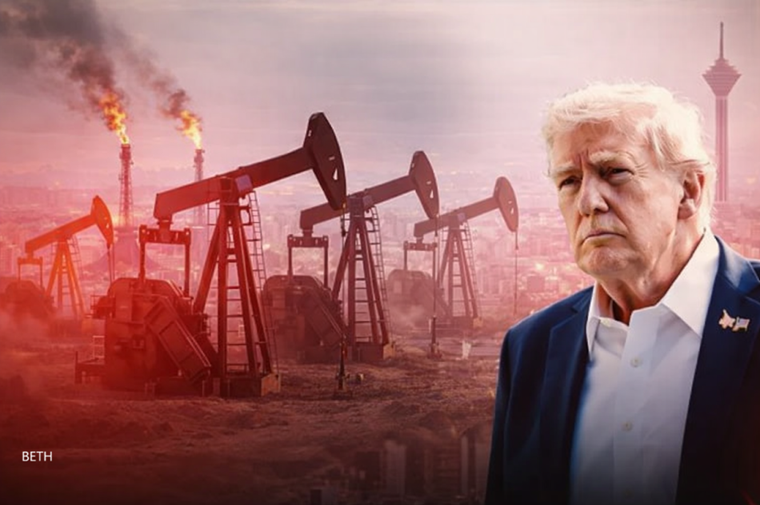
Politically, the website Axios reported what may be one of the most significant developments so far: U.S. officials revealed that the administration of President Donald Trump is considering the possibility of seizing Iranian oil on Kharg Island if the Strait of Hormuz is not opened to navigation.
According to the sources, implementing such a step would require U.S. forces on the ground, though no final decision has been made.
Some officials believe that controlling oil exports from the island could represent a severe economic blow to Iran, as it is one of the country’s most important oil export hubs.
Hormuz or Kharg?
With the escalation of the war, a strategic question emerges:
Will the Strait of Hormuz remain open, or will Washington move to control Kharg Island’s oil facilities?
Closing Hormuz would disrupt nearly 20% of global oil trade, making it an extremely costly option for all parties, including Iran itself.
For this reason, the threat of closing the strait is often seen as a pressure card rather than a long-term option.
By contrast, Kharg Island represents the main artery of Iranian oil exports. Any control over it could deliver a major economic blow to Tehran, but such a move would require a direct U.S. military presence and could trigger broader escalation.
BETH Reading:
The more likely scenario is that the Strait of Hormuz will remain open, while the option of Kharg Island is used as a strategic pressure tool to push Iran to avoid escalation that could threaten global shipping.
Trump: Deal or Strike Kharg
Washington | BETH – March 16, 2026
President Donald Trump said that Iran wants to make a deal with the United States but is “not ready yet” to take the necessary step.
Trump added that he could target Iran’s Kharg Island if escalation continues, noting that Tehran had already been informed.
In a post on Truth Social, Trump also accused the media of spreading misinformation about the war, claiming that some circulating images and videos were fabricated.
He said artificial intelligence has become a new weapon in the information war, adding that Iran is using it extensively to spread misleading content.
BETH Reading:
Trump’s statements reflect the shift of the confrontation into the arena of information warfare alongside military escalation, where AI-generated images and videos have become part of the narrative battle accompanying modern wars.
Trump Attacks the Media
Washington | BETH
President Donald Trump accused the media of spreading misinformation about the war with Iran, saying that some circulating images and videos are “fake or AI-generated.”
In a post on Truth Social, Trump said artificial intelligence has become a new weapon in information warfare, claiming that Iran uses it to spread misleading narratives about the conflict.
BETH Reading:
Trump’s remarks reveal that the confrontation is no longer purely military; it has also become a battle of narratives.
In modern wars, the struggle is not only about controlling territory but also about controlling the image the world sees.
Accusing the media of spreading manipulated images reflects three key dynamics:
The rise of information warfare alongside military operations
Declining trust between political leaders and traditional media
The entry of artificial intelligence as a factor shaping wartime narratives
In this environment, truth itself becomes a battlefield, as each side seeks not only victory in the field but also to convince the world of its version of the war.
General BETH Reading
After seventeen days of war, it is becoming clear that the conflict is no longer merely a military confrontation between specific actors.
Instead, it has evolved into a multi-dimensional conflict: military, economic, and informational.
On the battlefield, strikes continue.
Politically, accusations escalate.
Meanwhile, energy and oil have become strategic tools of pressure.
Amid this landscape, a familiar paradox of war emerges:
Every side speaks of international law… but from the angle that serves its narrative.
The reality that is still taking shape is that the battlefield itself will ultimately define the limits of politics and the limits of rhetoric.
U.S. and Israeli Fighters Fly Low over Iran
Realistic Analysis
What does low-altitude flight inside hostile airspace mean?
In air combat doctrine, low-altitude flight inside enemy airspace is not normal behavior.
Low-level flight is usually used when aircraft are:
Carrying out actual attacks
Conducting close reconnaissance
Confirming target destruction
However, it increases the risk of being hit, as short-range ground defenses become more effective.
For this reason, aircraft normally fly low only after air defenses have been weakened or struck.
What does this reveal about air defenses?
If aircraft:
Enter the airspace
Operate at low altitude
Without being shot down or effectively intercepted
This usually means:
Part of the air defense network has been destroyed or disabled, or
Local air superiority exists in operational zones
Does this mean full control of the skies?
Not necessarily full control of the entire country’s airspace, especially in a large state like Iran.
But realistically, low-altitude flight inside hostile airspace is a strong indicator of local air superiority and weakened air defenses in operational areas.
Summary
If U.S. and Israeli fighters are indeed flying at low altitude inside Iran without effective interception, it likely indicates:
Breached air defenses
Disabling of parts of the defense network
Local air superiority in the theater of operations
This would represent a significant military development even if it does not mean total control over all Iranian airspace.
Israeli Channel 13: Iran May Want an Agreement?
Analysis
Political groundwork for de-escalation
Such assessments may prepare public opinion for a shift from military strikes to negotiations.
Narrative warfare
The report could aim to show that military pressure is producing results.
Testing Iran’s reaction
Leaks may test how Tehran responds.
Possible intelligence indicators
Israel may have signals through diplomatic channels or intermediaries that Iran seeks a political exit.
Combined Reading
Two messages appear simultaneously:
Israeli estimates suggesting Iran may want an agreement
Trump saying: “We are not finished yet.”
This likely reflects pressure before negotiation.
Even if negotiations begin, military pressure may continue to improve bargaining terms.
In many wars, bombing precedes negotiation—and sometimes continues during it.
Pezeshkian: Stopping the War Requires Guarantees
Iranian President Masoud Pezeshkian said there is no point in stopping the war without clear guarantees that it will not recur.
The statement comes amid growing discussion about possible de-escalation after escalating mutual strikes.
Brief reading:
Tehran does not want merely a temporary ceasefire but an agreement that includes long-term security guarantees preventing renewed strikes.
Simultaneous Explosions
The confrontation continues across the region, with explosions reported in Iran, Baghdad, Lebanon, and Israel, while sirens sounded at the U.S. Embassy in Baghdad amid rising tensions.
In another development, reports indicated that 13 ballistic missiles were intercepted, while another missile fell in Qatar without causing casualties.
BETH Follow-up:
These developments show the conflict expanding across multiple arenas, reflecting a complex war unfolding through multiple fronts and reciprocal strikes, amid continued military alert in several regional capitals.