


Day 16: Iran Wants to End the War.. America Postpones
Monitoring & Analysis | BETH
As the war in Iran enters its third week, notable political signals have begun to appear in Tehran’s rhetoric, while military operations continue at a high pace.
Iranian Foreign Minister Abbas Araghchi announced that Tehran welcomes any initiative that would lead to a complete end to the war, noting that diplomatic contacts are continuing with Qatar, Saudi Arabia, Oman, and several countries in the region.
This statement is considered one of the most significant political signals since the start of the confrontation, as it reflects an Iranian willingness to consider paths toward ending the war after weeks of mutual military escalation.
Araghchi also indicated that Iran is ready to form a joint investigation committee with regional countries regarding attacks that targeted sites in some Arab states, suggesting that Israel may be behind those strikes.
Observers believe this rhetoric may reflect one of two possibilities:
either a growing recognition of the scale of military pressure on Iran, or a pre-emptive attempt to open a diplomatic window before the confrontation expands further.
On the other hand, the diplomatic path does not appear to have immediate support from Washington.
U.S. President Donald Trump said he is not prepared to reach an agreement to end the war at this stage, explaining that the current terms “are not good enough,” and that any potential agreement must be “extremely solid.”
This position indicates that the United States still sees the continuation of military operations as a means of increasing pressure on Tehran before entering any possible settlement.
Militarily, the Israeli army announced the start of a wide wave of airstrikes targeting military infrastructure in western Iran, as part of ongoing operations against sites linked to Iran’s missile capabilities.
In response, Iran launched a new wave of missiles toward Israel, while the Islamic Revolutionary Guard Corps escalated its rhetoric, vowing to “hunt down and kill” Israeli Prime Minister Benjamin Netanyahu.
The Israeli army also announced that it carried out strikes targeting missile launch platforms belonging to Hezbollah.
BETH Reading
The statement by the Iranian foreign minister may represent the first clear political signal of thinking about a way out of the war, even if it came in cautious diplomatic language.
However, the U.S. position suggests that Washington does not yet believe the moment for settlement has arrived, meaning that military operations may continue until the balance of pressure on the ground changes.
Between these contrasting signals, the war on its sixteenth day appears to stand at a clear crossroads:
either further escalation that imposes new conditions…
or a diplomatic window that may open later after a period of attrition.
Broad Military Escalation
An airstrike destroyed a facility belonging to the Iranian Revolutionary Guard Corps (IRGC) in the city of Hamadan, in a new development within the escalating military confrontation between Israel and Iran.
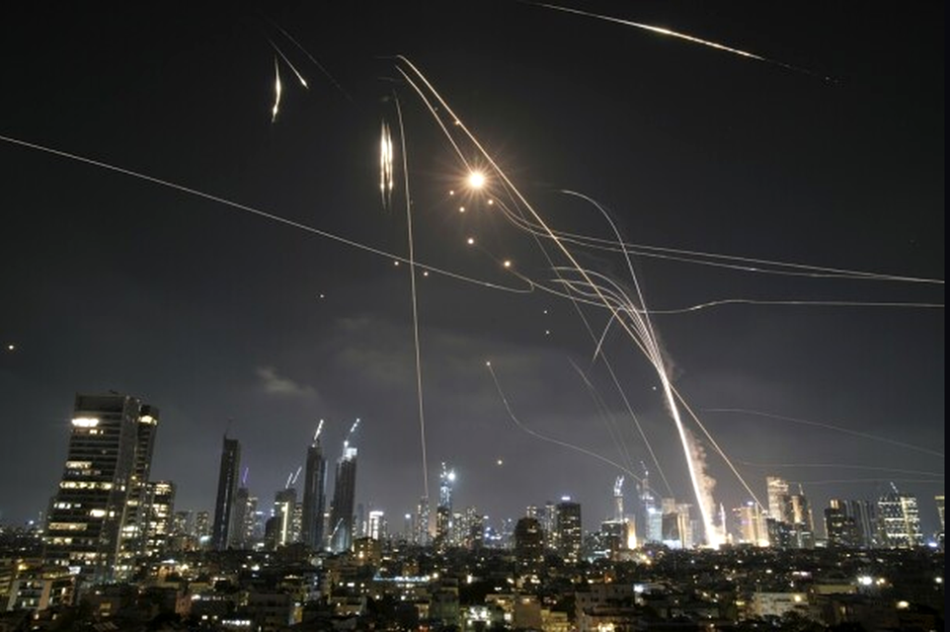
In the same context, the two sides exchanged intense barrages of missiles and drones over the past hours, in what appears to be one of the most severe waves of escalation between them.
In Washington, reports indicated that the U.S. Department of Defense (Pentagon) is preparing around 2,500 additional personnel in anticipation of a possible intervention in the Strait of Hormuz, in addition to nearly 50,000 U.S. troops already deployed in the region.
Military assessments circulating in strategic circles suggest the possibility of an expansion of operations to include limited ground intervention scenarios, potentially involving control of Kharg Island, Iran’s key oil export terminal, or targeting sites linked to the Iranian uranium program.
Internal Developments in Iran
In a related development, informed sources revealed that U.S. intelligence agencies briefed President Donald Trump and a small circle of his aides on assessments concerning the succession of leadership in Iran.
According to these sources, the evaluations suggest that the late Iranian Supreme Leader Ali Khamenei had reservations about his son Mojtaba Khamenei assuming the position of Supreme Leader.
Intelligence analyses indicated that Khamenei senior viewed his son within some circles as limited in capability and not qualified to lead the country.
The information also suggested that the former Supreme Leader was aware of problems in his son’s personal life.
Araghchi Maneuvers Under Pressure
Hours after Iranian Foreign Minister Abbas Araghchi stated that Tehran welcomes any initiative leading to a complete end to the war, noting the continuation of diplomatic contacts with Saudi Arabia, Qatar, Oman, and several countries in the region, the Iranian official later declared that Iran “sees no reason to negotiate with the United States.”
The statement came following remarks by U.S. President Donald Trump, who said he is not prepared to reach an agreement to end the war at this stage.
Araghchi had also previously proposed the formation of a joint investigation committee with regional countries regarding attacks that targeted locations in several Arab states, suggesting that Israel might be behind those attacks.
BETH Reading
In moments like these during wars, political statements do not always reflect the true balance of power on the battlefield.
Military realities indicate that the keys to stopping the war or opening negotiations are not currently in Tehran’s hands, as Iran is facing increasing military pressure. This makes its political rhetoric appear closer to tactical maneuvering and an attempt to preserve an image of resilience, rather than a strategic decision capable of imposing conditions.
In this context, Araghchi’s remarks seem aimed at maintaining a margin of political dignity in public discourse, while avoiding the appearance of a party seeking to halt the war under pressure.
Historical experiences with ideological or authoritarian regimes suggest that such systems rarely declare surrender openly. Instead, they may resort to back-channel contacts or discreet negotiations, while maintaining a defiant tone in public.
In major wars, the positions of states are not measured by what they say, but by what the balance of power on the ground allows.
Escalation Indicators
Alongside these developments, the Iranian Revolutionary Guard threatened to “hunt down and kill” Israeli Prime Minister Benjamin Netanyahu.
Meanwhile, Israel’s Channel 12 reported that the country’s security establishment has approved a war plan that could continue for at least three more weeks.
These signals suggest that the current phase remains closer to controlled escalation than to an imminent political settlement, as battlefield calculations continue to outweigh negotiation dynamics.