

Missiles or Balance?
Prepared & Analyzed by | Strategic Media Department – BETH News Agency
As the military confrontation in the region continues, Iran announced that it will use more precise and more destructive ballistic missiles in its upcoming operations.
At first glance, the statement appears to be a military announcement.
In reality, however, it carries several political, psychological, and strategic messages that extend far beyond the battlefield.
What Does the Iranian Statement Mean?
Statements of this kind usually carry three simultaneous messages.
Boosting Internal Morale
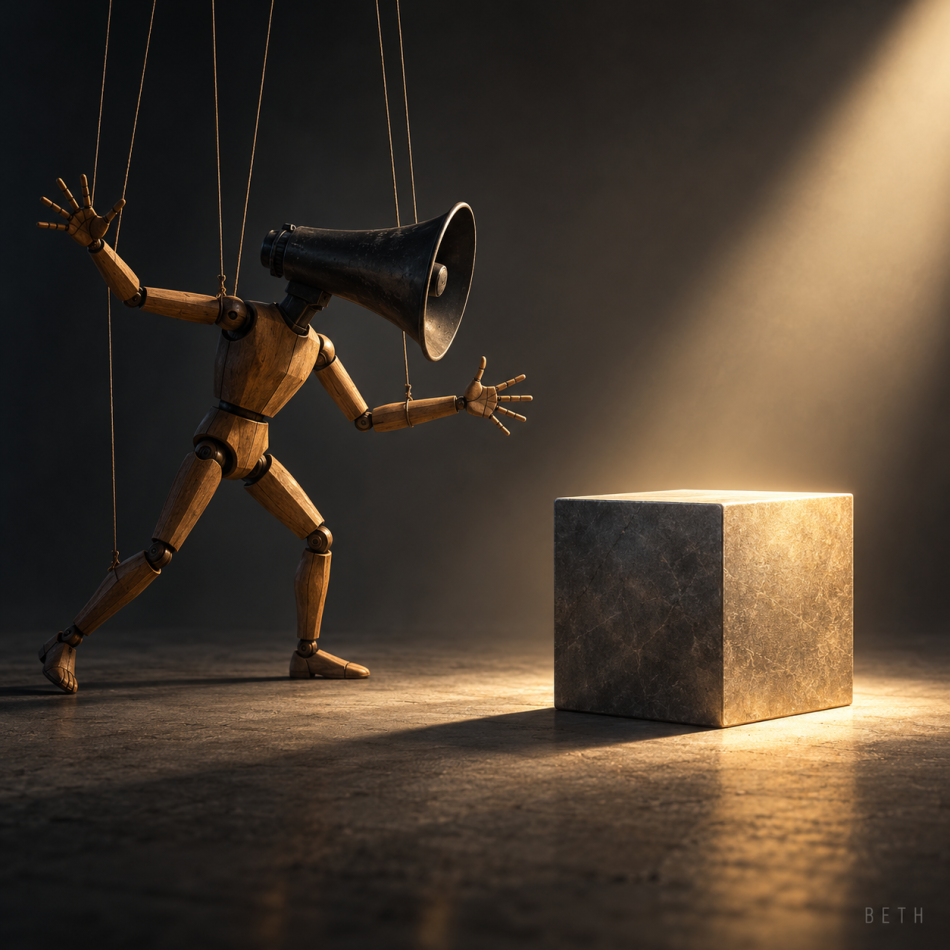
When a country is subjected to heavy military strikes, media discourse becomes part of managing the psychological dimension of war.
The message directed to the Iranian public is clear:
We have not lost our military capability, and we still possess stronger tools that have not yet been used.
Such messaging becomes particularly important in systems concerned about the domestic impact of war on internal stability.
Responding to the American Narrative
At the same time, the United States and Israel claim that recent strikes have caused significant damage to Iran’s military capabilities.
The Iranian statement therefore seeks to convey that its military capacity has not yet been exhausted.
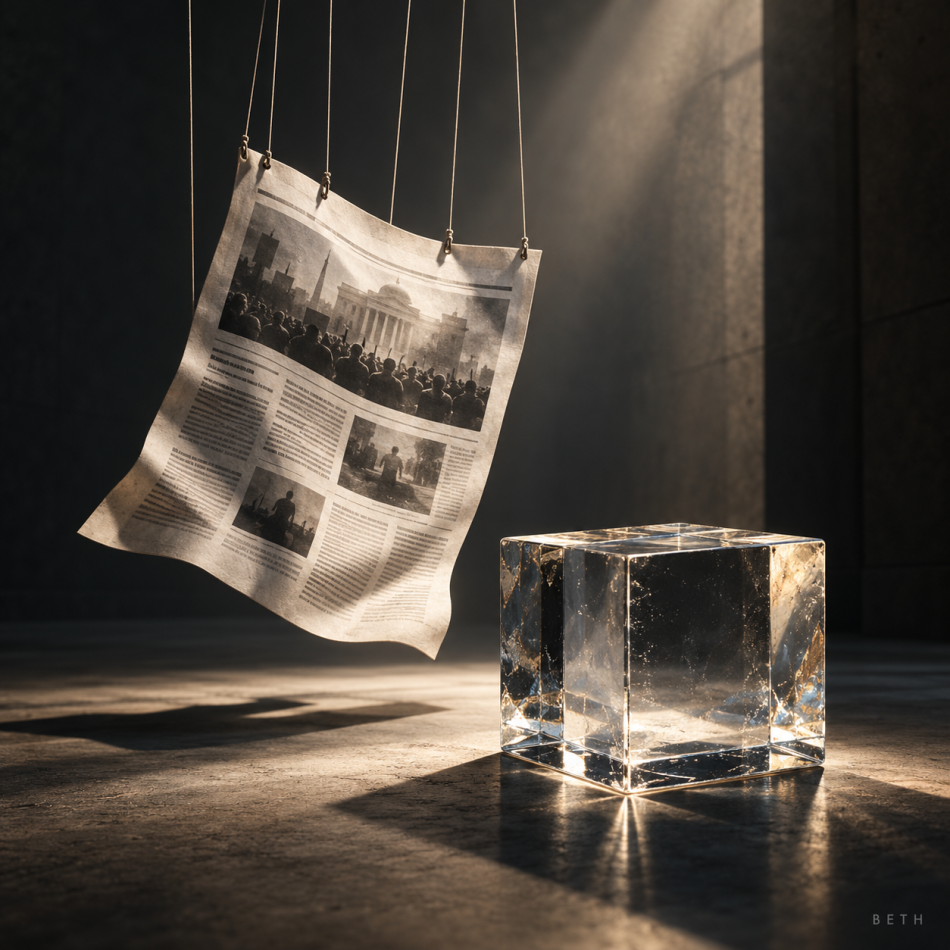
In this sense, the confrontation becomes a war of narratives as much as a military confrontation.
A Message of Deterrence
The statement also carries a deterrent message directed at:
Washington
Tel Aviv
and regional states
The core of that message is that any additional escalation may be met with a qualitative escalation in missile use.
In military doctrine, such signals are known as deterrence messages.
In the current Iranian context, however, available indicators suggest that the statement is closer to achieving the first two objectives.
Does Iran Still Have Capabilities Left to Respond?
The most realistic answer is: Yes — but with conditions.
For decades, Iran has invested heavily in building a large arsenal of:
ballistic missiles
drones
cruise missiles
This strategy largely stems from the relative weakness of its air force compared with Western powers.
As a result, the missile program became the backbone of Iran’s military power.
Western military estimates suggest that Iran possesses thousands of ballistic missiles, both older and upgraded models, stored in tunnels and underground facilities.
What Might Iran Still Be Holding Back?
In wars, states rarely use:
their entire stockpile
or their most advanced weapons
except during decisive phases.
Therefore, Iran may still be holding:
longer-range missiles
more accurate systems
more powerful warheads
However, recent strikes appear to target directly:
launch platforms
military storage facilities
command and control centers
This means the attacks may affect operational capability, even if the arsenal itself still exists.
In other words:
The real question is not only whether Iran possesses weapons,
but whether it can deploy them intensively under sustained bombardment.
Another Reading of Iran’s Military Capabilities
Since 1979, Iran has focused on building a military structure largely centered on ballistic missiles and indirect regional networks.
Over the decades, however, a clear paradox has emerged within this structure.
While Tehran invested heavily in missile and drone programs, its conventional air force and air defense systems remained relatively limited compared with modern military developments.
This raises a logical question often asked by observers:
If Iran possesses strong military deterrence capabilities,
why does this power not appear in its ability to protect its airspace from repeated strikes?
Operational reality suggests that American and Israeli aircraft have been able to conduct deep strikes inside Iranian territory, revealing evident gaps in air defense and air-control capabilities.
As for the missiles occasionally launched, they are expected within the context of war, but so far they have not demonstrated the ability to decisively alter the military balance.
Between Rhetoric and Capability
Military history reveals a familiar pattern:
States that possess real deterrent power rarely need to announce it repeatedly.
True power is usually demonstrated by the ability to prevent an enemy from striking in the first place, not merely by responding afterward.
For this reason, some analysts believe that the recent Iranian statements may reflect an attempt to compensate for the gap between military rhetoric and battlefield realities.
A Lesson in Regional Power
At the same time, other models in the region follow a different approach to power.
Some states have built their military capabilities over recent decades through:
continuous technological modernization
advanced defense partnerships
sophisticated air-defense systems
linking military strength with economic and political stability
In such cases, actions often speak louder than statements.
Countries with genuine deterrent power typically do not need to emphasize it frequently, because real deterrence appears in facts before words.
Power in the Middle East Is Not Only Military
Power in the Middle East is often reduced to missiles, aircraft, and tanks.
In reality, the equation is more complex.
The region includes countries possessing some of the most advanced military arsenals in the world, particularly in the Gulf, where several Arab states have invested heavily in advanced defense systems in partnership with the United States, Britain, and France.
Yet the real difference lies not only in the type of weapon, but in how power is conceived, planned, and managed.
Military strength becomes effective when it is accompanied by:
a clear political vision
economic stability
the ability to manage regional balances
These elements cannot be measured simply by the number of missiles or the size of arsenals.
Iran: A Model of Unbalanced Power
For decades, Iran has focused on building a non-conventional military structure based on:
ballistic missiles
drones
indirect regional networks
These tools have provided Tehran with a degree of influence and pressure.
However, this power has not been matched by comparable economic or developmental strength.
The Iranian equation has largely remained one of military capability alongside a fragile economy and growing internal pressure.
Therefore, any confrontation involving Iran cannot be measured solely by the balance of military strikes, but also by its capacity to sustain prolonged conflict.
Is War the Path to Changing the Region?
The history of the Middle East suggests a clear reality:
Wars may alter military maps, but they rarely reshape the region politically and economically.
Real shifts in the balance of power usually occur through:
economic strength
stability
alliances
the management of shared interests
—not through war alone.
Stability… The Decisive Factor
At the heart of this equation lies an element often overlooked in military discussions:
stability.
Oil, global trade, financial markets, and energy corridors all depend on a stable regional environment.
Any prolonged disruption in the region quickly reverberates across the global economy.
This is why states capable of managing balances and preserving stability become central actors in the regional power equation.
History adds another dimension to this reality.
The crises that have affected the Arab region over the decades reveal a fact worth reflecting upon:
The region may endure severe shocks, and its balances may fracture temporarily, but it is rarely defeated.
Each major crisis eventually leads to a gradual reordering of regional balances, often leaving the region more experienced and resilient.
Beyond the War
Perhaps the real battle in today’s Middle East is not the battle of missiles or airstrikes.
It may instead be a deeper struggle over the future of the region itself.
Will the region remain trapped in cycles of military confrontation,
or will it gradually move toward a stage where stability, development, and the management of shared interests become the foundation of regional power?
BETH Insight
Historical experience suggests that the balance of power in the Middle East has never been built on war alone.
It has always depended on the ability to create and sustain stability.
Ultimately, the strength of states is not measured by the number of missiles they launch,
but by their ability to guide the region toward stability rather than chaos.
Perhaps the most important question shaping the future Middle East is not:
Who possesses the most powerful missiles?
But rather:
Who possesses the ability to build the most durable peace?
Image Caption
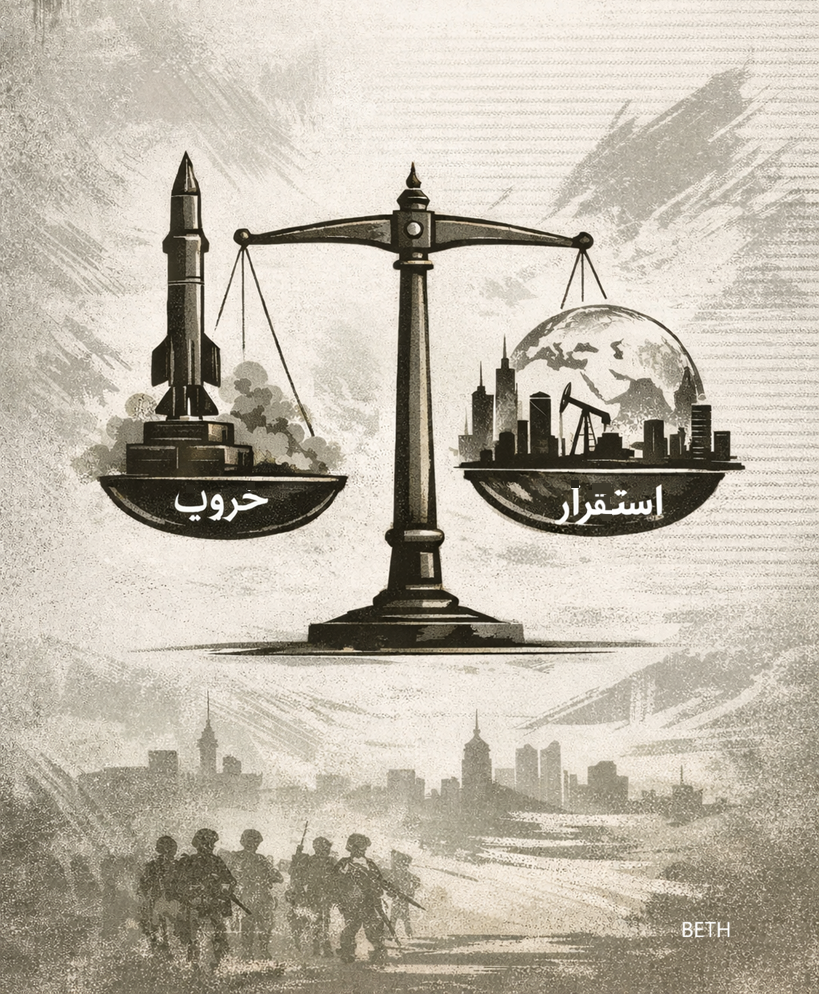
Between war and stability the region’s balance is defined.
Power may impose equilibrium — but only wisdom creates stability.