



The Journey of the Soul Toward Freedom.. and the Shared Nature of Humanity
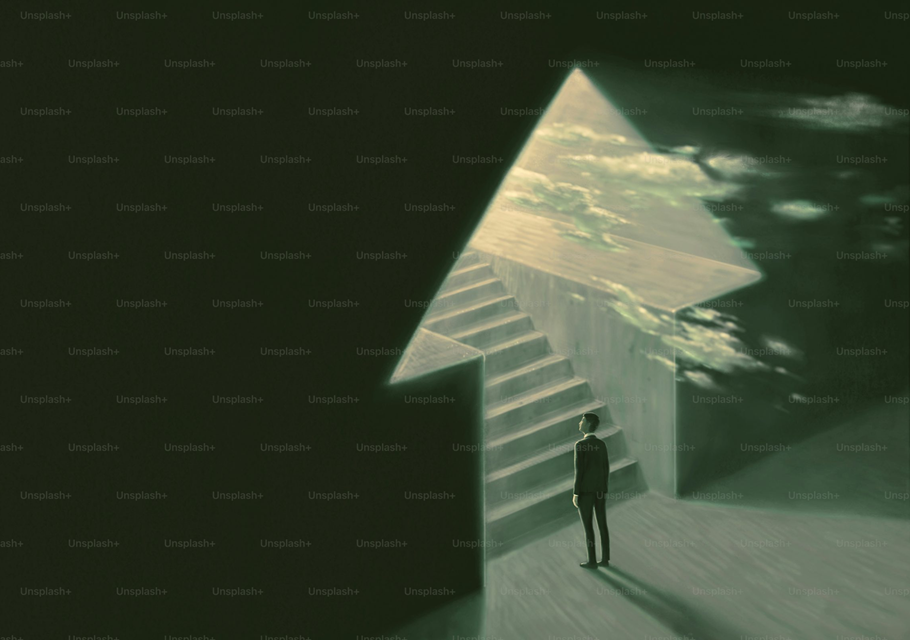
From Fear to Wisdom
Prepared & Analyzed by | Strategic Media Department – BETH News Agency
Supervised by: Abdullah Al-Omira
Introduction: Humanity Between Constraint and Liberation
Deep within every human being lies a silent battle—one that cannot be seen in wars, politics, or economics.
It is the battle between fear and freedom, between ego and conscience, and between external authority and inner awareness.
This struggle is what distinguishes a person who truly lives from one who exists inside an invisible cage.
The human soul is not born completely free.
Rather, it passes through a long journey of transformation—a journey that begins with fear and may end in wisdom.
Yet this journey rarely unfolds smoothly.
Along the way, it is often confronted by three powerful forces:
Radical Trust
The Crisis of Transformation
Absolute Authority
And here begins the true story of the human soul.
First: Radical Trust — The Beginning of Strength and the Beginning of Risk
Radical trust is the deep faith that fills the human heart at the beginning of life.
A child trusts the world.
Believes what is told to them.
And assumes the system they live in represents the full truth.
This trust is necessary for psychological development, yet it carries a hidden danger.
When trust turns into blind obedience, a human being shifts from a conscious individual into a programmed one.
Here emerge the first seeds of what can be called:
The Slave Mentality.
A slave is not necessarily someone chained in iron.
One may be physically free, yet intellectually captive.
Second: Absolute Authority — The Factory of Obedience
When radical trust meets absolute authority, one of the most dangerous human conditions emerges.
Absolute authority does not refer only to political power.
It may also appear as:
The authority of family
The authority of society
The authority of ideas
The authority of religion when misunderstood
Or even the authority of success and wealth
Absolute authority does not ask for thought.
It demands compliance.
And here is formed what psychology and philosophy describe as:
The Slave Mentality.
A mind that fears questions.
A person who prefers obedience over truth.
Yet history shows us something important:
This state never lasts forever.
Because within the human soul lies another force.
That force is pain.
Third: The Hidden Meaning of Pain
Pain in human life is not merely suffering.
Often, pain becomes the beginning of awareness.
When a person collides with reality, questions begin to emerge:
Why did this happen?
Is what I learned really true?
Is the path I follow truly my own?
Here begins what may be called:
The Crisis of Transformation.
It is the moment when a person discovers that the world they believed to be stable… is not.
And that many truths they lived by may only have been narratives.
This moment is the most dangerous stage in human development.
Because it forces a choice between two paths:
Returning to obedience
Or confronting the truth.
Fourth: The Stages of Human Evolution
The journey toward inner freedom often follows similar psychological stages.
1 – Fear
The journey begins with fear—
fear of authority, fear of society, fear of the unknown.
2 – Error
The individual realizes they misunderstood the world—or themselves.
3 – Escape
They attempt to flee from the truth because facing it is painful.
4 – Isolation
They distance themselves from social noise in search of self.
5 – The Call
A quiet voice emerges within:
Search. Question. Think.
6 – Confrontation
The individual chooses to face reality—even if it destroys their previous comfort.
7 – Leadership
With understanding comes the ability to influence others.
8 – Wisdom
The rarest stage.
A stage where one realizes that true power is not control over others…
but mastery of the self.
Fifth: Conscience, Ego, Fear, and Wisdom
Within every human being four voices struggle for dominance:
Conscience
The voice of truth.
Ego
The voice of the self seeking control.
Fear
The ancient guardian resisting change.
Wisdom
The balance between them all.
A person led by fear becomes a follower.
A person led by ego becomes a tyrant.
But the one guided by conscience moves closest to wisdom.
Conclusion: Freedom Begins Within
Human liberation does not begin by overthrowing external authority.
It begins with a simple question:
Am I thinking… or merely repeating what I was told?
Every person travels their own path between fear and wisdom.
But only a few reach the end.
Because the road to wisdom demands something rare:
The courage to confront oneself.
And from that moment, true freedom begins.
If Human Nature Is Shared… Why Conflict?
If human nature is fundamentally similar, why does conflict dominate the world?
Why do lovers of war sometimes appear more successful than the wise?
Why do the reckless advance while the thoughtful hesitate?
The answer often lies not in the strength of evil itself, but in the imbalance between boldness and responsibility.
Those driven by destructive ambition often share three characteristics:
Impulsiveness
They do not wait for consensus or deep reflection.
Their decisions are fast—even when destructive.
Moral Simplicity
Their worldview is simple:
Us or them.
This simplicity makes decisions easier.
Risk Appetite
Those who fear no consequences move faster.
Why Do the Wise Hesitate?
Wisdom, by its nature, is cautious.
The wise see the full picture:
They see the outcomes of war.
They see human suffering.
They see the ethical and political complexity of decisions.
Thus hesitation sometimes emerges.
The paradox is that deep awareness can slow action.
Yet History Reveals Another Truth
Those driven by chaos may move quickly…
but they rarely build civilizations.
Wars may be ignited by reckless minds,
yet the world is always rebuilt by the wise.
History remembers not those who set fires,
but those who rebuilt the cities.
The Real Question
The real question is not:
Why do the wicked sometimes prevail?
The deeper question is:
When will the wise decide that wisdom does not mean silence?
Because when wisdom turns into permanent hesitation,
the field is left to those who possess neither wisdom nor restraint.
Final Reflection
The problem of the world is not that the wicked are powerful.
It is that the wise sometimes delay using their power.