



Day 13 of the War
The Gulf Under a Barrage of Drones… and Airstrikes Expand Inside Iran
Follow-up & Analysis | BETH
Introduction
As the war between Iran on one side and the United States and Israel on the other enters its thirteenth day, it is becoming clear that the conflict is no longer confined to its direct parties. Its repercussions have expanded to include the Gulf states and vital maritime corridors in the region.
While airstrikes continue inside Iranian territory, Gulf countries are facing a series of drone attacks, as international concerns grow over the possibility that the Strait of Hormuz could turn into a hotspot threatening global trade and energy flows.
These rapidly evolving developments reveal that the current war is no longer merely a conventional military confrontation. Rather, it has become a multi-front conflict extending from the skies to the sea, and from the military arena to the global economy.
Iranian Drones Target the Gulf
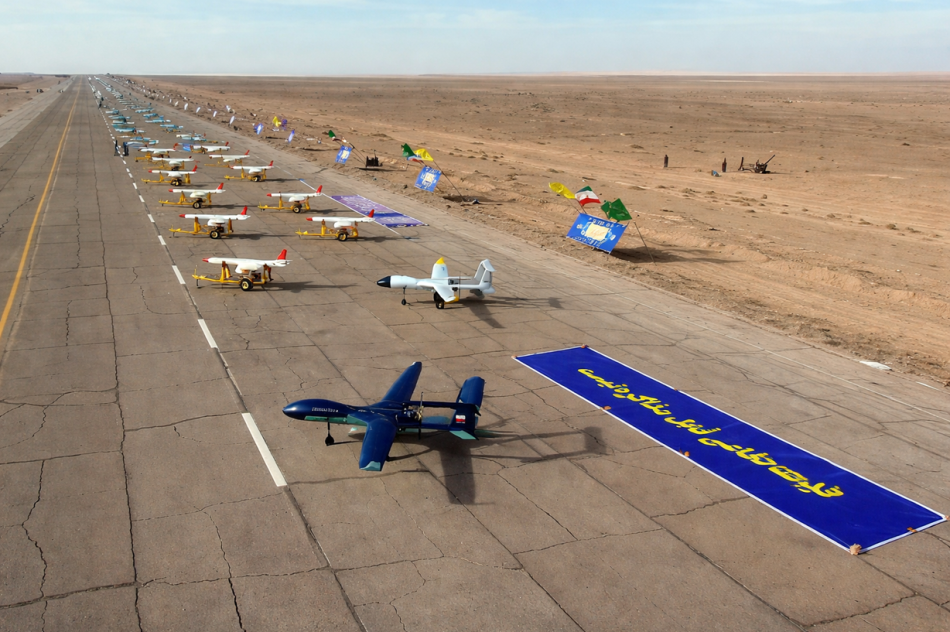
Military estimates indicate that Iran has launched approximately 3,300 drones toward Gulf Arab states since the beginning of the war up to its thirteenth day.
Saudi Arabia, the United Arab Emirates, and Kuwait have announced in recent days the interception of several drones that targeted their airspace or areas close to vital facilities.
These attacks come within the framework of a regional pressure strategy through which Tehran seeks to expand the scope of the confrontation beyond its immediate borders.
Israeli Airstrikes Inside Iran
Meanwhile, the Israeli military has continued its aerial operations inside Iran.
Iranian media reported on Thursday that the Aviation College in Isfahan in central Iran was targeted, in addition to locations in the Karaj region.
The Israeli army also announced the launch of a wide wave of airstrikes across various areas in Iran, as part of the ongoing military operations since the outbreak of the war.
Strikes Extend Into Iraq
In another development related to the war, Iraqi sources reported that around twenty people were killed or injured in a strike targeting a headquarters belonging to the Popular Mobilization Forces in the city of Al-Qaim in western Iraq near the Syrian border.
This attack comes as part of a series of strikes that have recently targeted Iraqi armed factions and sites linked to the Popular Mobilization Forces.
Rising Concern in the Strait of Hormuz
Alongside the military escalation, international concerns are increasing over the possibility that the Strait of Hormuz could turn into a dangerous flashpoint.
As the number of incidents involving cargo ships in the vital maritime corridor increases, U.S. officials have warned that the strait—which is only 21 miles wide at its narrowest point—could become a hazardous area for international navigation if the war continues to escalate.
The Strait of Hormuz is one of the most important maritime passages for global oil transport, meaning that any disruption there could have a direct impact on global markets.
BETH Reading
A Multi-Front War
Developments on the thirteenth day reveal that the war is unfolding across three main fronts:
Airstrikes inside Iran aimed at exhausting its military capabilities and infrastructure linked to its missile program.
Drone attacks on Gulf countries through which Tehran seeks to transfer pressure to its regional surroundings.
Maritime tensions in the Strait of Hormuz that could become a strategic pressure card in the conflict.
This equation reflects an attempt by each side to expand the tools of confrontation without sliding into a full-scale ground war.
Question of the Day
Despite U.S. statements claiming that recent strikes have weakened Iran’s military capabilities, U.S. President Donald Trump said that Tehran is approaching a point of defeat.
Yet a strategic question remains:
If Iran’s power has declined to this extent, how is it still capable of launching missiles and drones at a continuous pace?
Are we witnessing remaining operational capacity within Iran, or merely the final stage of escalation before larger shifts in the course of the war?