


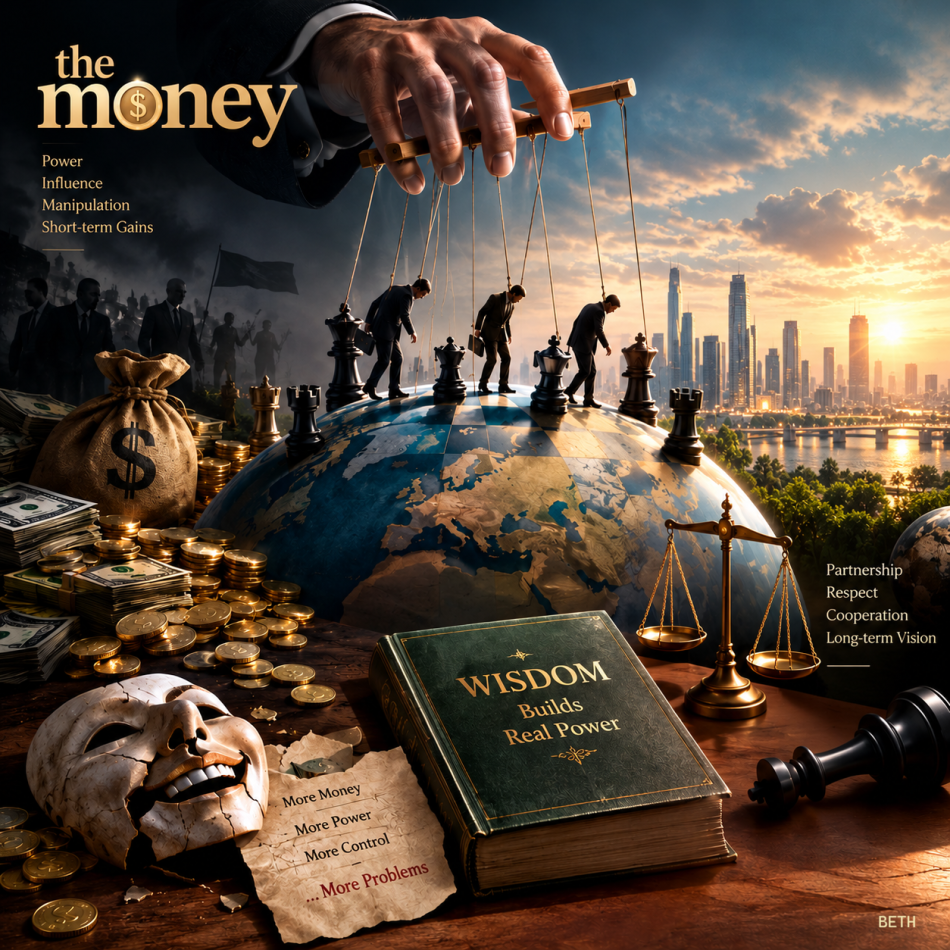
When Hatred Speaks Arabic Against the Gulf .. A Reading of the Phenomenon and How to Deal With It
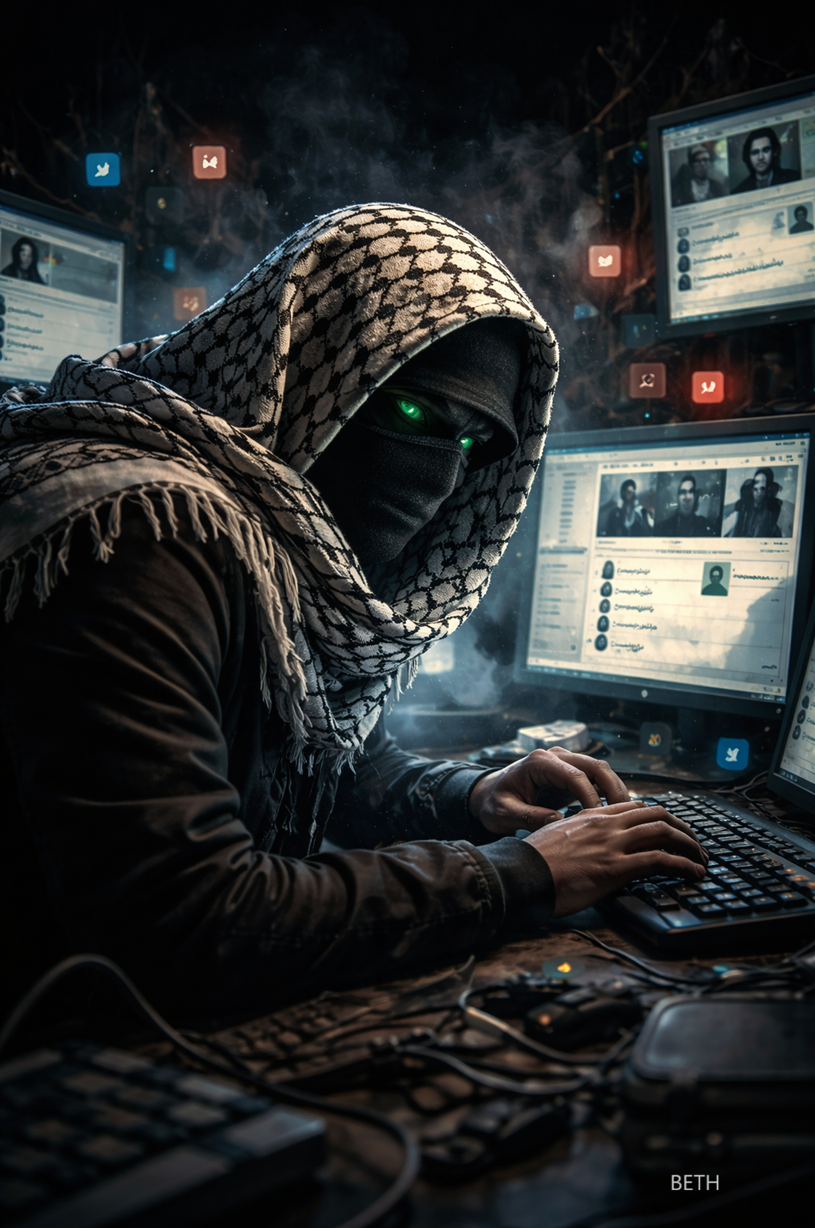
Prepared and Analyzed by | Strategic Media Department – BETH News Agency
Supervised by: Abdullah Al-Omira
Introduction
In times of war, it is not only missiles that move. Media narratives and battles over public awareness move with them as well.
Amid the ongoing confrontation between Iran on one side and Israel and the United States on the other, a striking phenomenon has emerged in the Arab digital space: voices speaking Arabic openly expressing support for Iran and justifying its strikes—even when those strikes target Gulf countries and their infrastructure.
This phenomenon raises a fundamental question:
Are we witnessing genuine political positions?
Or organized influence campaigns?
Or perhaps a mixture of both?
Understanding this phenomenon requires an analysis that goes beyond political reactions to psychological, media, and strategic perspectives.
First: The Power of Old Narratives
In political psychology, historical narratives play a major role in shaping attitudes and collective awareness.
In the Arab world, a deeply rooted central narrative still revolves around the idea that the primary enemy is Israel. Yet many Arabs have not fully realized that Israel’s declared hostility toward Arabs is no less significant than the hidden hostility of Iran’s ruling clerics.
While Israel openly declares its historical ambitions toward Arab lands with slogans extending “from the Nile to the Euphrates,” Iran exercises influence across several Arab countries through direct interventions or armed proxies—as seen in Iraq, Syria, Lebanon, and Yemen.
Because of the strength of the “primary enemy” narrative and its deep roots in Arab consciousness, the parallel enemy has struggled to find a place in this mindset. As a result, some observers tend to consider any actor confronting Israel as automatically part of the resistance camp—even when its policies directly harm other Arab states.
This pattern of thinking is known in political studies as the moral simplification of conflict, where events are interpreted through a simplified binary:
good versus evil.
However, this reading reduces reality and ignores the possibility of a parallel threat that may be no less dangerous than the one already embedded in collective perception.
In reality, political and military dynamics are often far more complex than this simplified formula.
In any case, the coming days will reveal one of two possibilities:
either a transformation in the perception of the primary enemy… or a clearer exposure of the hidden one.
Second: The Psychology of “The Enemy of My Enemy Is My Friend”
One common psychological pattern during conflicts is what is known as the enemy-of-my-enemy bias.
This psychological tendency leads some individuals to view any actor opposing their enemy as automatically an ally, without deeper analysis of how that conflict may affect their own interests or regional environment.
Such quick emotional interpretations may overlook fundamental questions, including:
Who is paying the real price of the war?
Whose infrastructure and economy are being damaged?
And what impact does this have on regional stability?
Third: The Role of Digital Campaigns
It would be inaccurate to assume that every voice appearing in the digital sphere represents genuine public opinion.
Modern studies in digital media point to the existence of coordinated influence campaigns, which may use:
automated accounts
digital amplification networks
targeted media platforms.
The goal of such campaigns is not necessarily to convince everyone, but rather to create the impression that a certain opinion is widely shared.
Fourth: Division as a Political Tool
In geopolitical strategies, many international actors recognize that weakening social cohesion within societies can be an effective method of managing conflicts.
For this reason, amplifying divisions within the Arab world may serve several objectives, such as:
diverting attention away from the core conflict
weakening regional solidarity
turning external confrontation into internal division within Arab consciousness.
Historically, this strategy has been known as divide and rule.
Fifth: The Economy of Emotion in Digital Media
The algorithms of digital platforms play a major role in amplifying extreme discourse.
Platforms tend to promote content that provokes:
anger
controversy
shock.
This type of content generates higher engagement, which means that extreme voices may appear far more widespread than they actually are.
How the Gulf Has Dealt With the Crisis
In contrast, the response of Gulf states—particularly Saudi Arabia—to the current war presents a different model based on strategic calm in crisis management.
Rather than being drawn into escalation, Gulf policy has focused on:
protecting internal stability
avoiding the expansion of the war
keeping the door open for political solutions.
This approach reflects what strategic studies describe as quiet crisis containment.
Media Between Explanation and Noise
At the media level, the Gulf discourse has generally been characterized by a high degree of composure and balance, focusing on presenting facts and emphasizing principles of international law and the right to self-defense.
However, this composure may sometimes be misinterpreted in the digital space. In environments dominated by emotional debates, some may see it as weakness or hesitation—when in reality it represents a conscious decision to avoid descending into chaos and incitement.
In contrast, some voices on digital platforms adopt emotional rhetoric that reduces the conflict to simple slogans, ignoring its political and strategic complexities.
Here lies the difference between media that explains the world… and media that merely creates noise around it.
Yet successful media communication is not based on composure alone, but on combining calm presentation with the strength of argument.
Responsible media does not merely present facts; it also works to dismantle misleading narratives and present clear arguments that enhance public awareness.
For this reason, the current stage requires not only media composure but also educational and analytical programs that provide accurate information, reveal contradictions, and equip audiences with tools for critical understanding.
When composure is supported by strong arguments, it becomes a force of persuasion.
Noise, no matter how loud, remains a voice without knowledge.
Serious media does not raise its voice—it raises the level of awareness.
Conclusion
The phenomenon we observe in the Arab digital sphere cannot be explained by a single factor.
It is often the result of the interaction of several elements:
strong historical narratives
rapid psychological reactions
digital influence campaigns
a fast-spreading media environment.
But the most important truth of our time is that wars are no longer decided only on battlefields—they are also decided in the minds of people.
Therefore, the deeper battle is not only about intercepting missiles, but about protecting awareness from manipulation and oversimplification.
Final Reflection
In the end, not every voice that rises in times of noise deserves to become a battle.
Some voices live on controversy, feed on responses, and grow larger whenever they receive attention greater than their true size.
True media wisdom does not lie in responding to every voice, but in distinguishing between those who require awareness through argument, those whose manipulation must be exposed to the public, and those who deserve nothing more than to fade into their own noise.
Media that respects people’s intellect does not chase every echo. It chooses the battle worth fighting—and raises awareness instead of raising noise.