



Serving the Two Holy Mosques in Numbers .. Security and Safety
Makkah | BETH
Services provided to visitors of the Two Holy Mosques recorded significant figures during the first twenty days of Ramadan 1447 AH, reflecting the continuous efforts dedicated to serving the Guests of Allah and facilitating their worship in an atmosphere of security and tranquility.
The General Authority for the Care of the Affairs of the Grand Mosque and the Prophet’s Mosque stated that Zamzam water consumption in the Two Holy Mosques reached 25,933 cubic meters, as part of an extensive distribution system inside the Grand Mosque, the Prophet’s Mosque, and their courtyards.
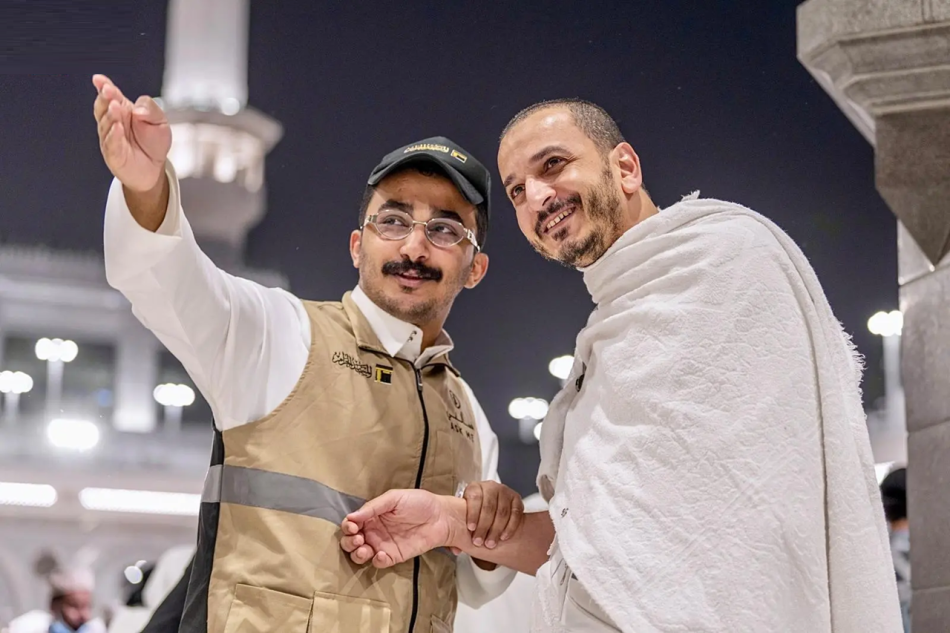
More than 913,715 people also benefited from guidance services provided by field teams and information points that assist visitors and answer inquiries in multiple languages.
Regarding services for fasting visitors, 14,841,600 iftar meals were distributed within the courtyards and prayer areas of the Two Holy Mosques, as part of an integrated system designed to organize and facilitate iftar for worshippers.
In the Grand Mosque, more than 61,782 people benefited from the hair-shaving service (Tahallul) at designated locations operating under high health and organizational standards.
Additionally, 96,021 people benefited from special mobility carts designated for pilgrims, elderly visitors, and people with disabilities, ensuring ease of movement inside the Grand Mosque and enabling worshippers to perform their rituals with greater comfort.
The Authority affirmed that these figures reflect the scale of efforts made to provide integrated services for visitors of the Two Holy Mosques during Ramadan, in a way that accommodates large crowds while enhancing the quality of services offered to the Guests of Allah.
BETH Comment
These figures reflect not only the scale of services, but also reveal a highly organized management system operating with precision in one of the most crowded places in the Islamic world.
Maintaining the security of the Two Holy Mosques and managing the movement of millions of visitors is not merely a service task, but part of a broader system that confirms:
The security of the Two Holy Mosques is a direct extension of the Kingdom’s security and stability.