



Day Eleven: The War Branches Out
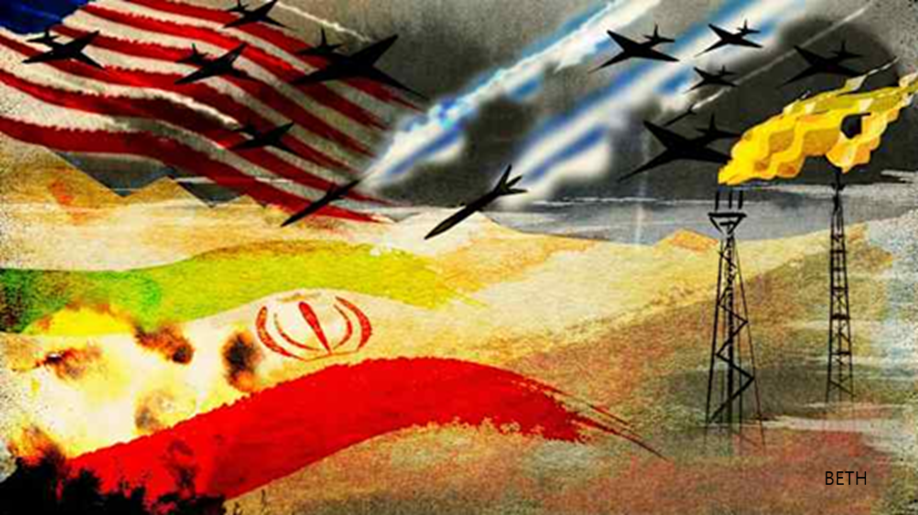
Riyadh | BETH
The U.S.–Israeli confrontation with Iran entered its eleventh day as military operations expanded and signs of escalation intensified across several regional fronts.
Air raid sirens sounded in Jerusalem after Israeli forces detected missiles launched from Iran. The Israeli military later announced that the missiles had been intercepted, marking the first Iranian missile alert since earlier in the day.
Meanwhile, the Iranian military said it had targeted fuel facilities in northern Israel, describing the strike as part of Tehran’s response to the attacks it has been facing.
Mutual Strikes Inside Iran
Iranian media reported an attack targeting naval facilities and the airport in Bandar Abbas, while Israel’s Channel 12 said nuclear laboratories in Tehran were among the targets of airstrikes carried out Monday night.
Thick black smoke was seen rising over the Iranian capital after an oil refinery was hit, signaling an escalation in attacks on Iran’s domestic energy infrastructure.
The Director-General of the World Health Organization, Tedros Adhanom Ghebreyesus, warned that fires at oil facilities could lead to contamination of food, water, and air.
Threat to Halt Oil Exports
In a notable escalation, Iran’s Islamic Revolutionary Guard Corps (IRGC) declared it would not allow “a single liter of oil” to be shipped from the Middle East if U.S. and Israeli attacks continue.
U.S. President Donald Trump responded by warning that the United States would strike Iran with greater force if Tehran attempted to disrupt energy exports from the region.
Escalation in Lebanon
On the Lebanese front, Israeli forces conducted overnight airstrikes in southern and eastern Lebanon, while issuing evacuation warnings to residents south of the Litani River.
The Israeli military urged civilians to move immediately north of the river and also warned residents of specific buildings in the cities of Tyre and Sidon to evacuate ahead of potential strikes.
In response, Hezbollah announced attacks on Israeli positions, including Tziporit Base east of Haifa, using a swarm of suicide drones. Reports also spoke of a possible return of the “security belt” concept in southern Lebanon.
Contrasting Political Messages
Israeli Prime Minister Benjamin Netanyahu said the war against Iran “is not over yet,” stressing that continued strikes are weakening the ruling system in Tehran.
He added:
"We hope the Iranian people will free themselves from tyranny, but ultimately the decision is theirs."
Meanwhile, the Speaker of the Iranian Parliament stated that Tehran is not seeking a ceasefire at this stage.
BETH Analysis
The current landscape reveals three strategic realities:
First: Expansion of the war theater
The confrontation is no longer limited to Iran and Israel, but is extending to Lebanon, the Gulf, and key energy corridors.
Second: Targeting economic infrastructure
Strikes on refineries and fuel facilities indicate a shift from military deterrence to economic and energy pressure.
Third: A battle of wills, not a short campaign
Statements from Israeli and Iranian leaders suggest both sides are preparing for a longer confrontation, rather than a brief military exchange.
As battlefield developments intensify, the key question remains:
Will the confrontation move toward a broader regional escalation… or toward negotiations after mutual attrition?
The war is no longer about who strikes first… but about who can endure its widening.
What is unfolding is not merely a missile war… but a test of the entire region’s patience.
New Airstrikes on Lebanon
The Israeli army renewed its airstrikes on southern Lebanon and the southern suburb of Beirut after issuing new evacuation warnings to residents.
The strikes come as Lebanese authorities report a large wave of displacement since the outbreak of the confrontation between Hezbollah and Israel.
Lebanon’s Disaster Management Unit, affiliated with the government, reported that the number of displaced people registered since March 2 has reached 759,300 people.
More than 122,000 displaced persons are currently staying in official shelters supervised by the Lebanese government after schools and public facilities were converted into shelters, including Beirut’s Sports City complex.
Iranian Diplomats Killed in Beirut
Iran’s Permanent Representative to the United Nations, Amir Saeid Iravani, announced that four Iranian diplomats were killed as a result of an Israeli airstrike that targeted Beirut on the morning of March 8.
Strikes on Tehran and Explosions in Bandar Abbas
In Iran, authorities in Tehran announced that one person was killed and 28 others were injured following a U.S.-Israeli airstrike targeting central Tehran.
At the same time, Iranian media reported a massive explosion at the port of Bandar Abbas.
Reports also spoke of heavy fires breaking out at several locations in Tehran, coinciding with Israeli strikes on the port.
Washington Mobilizes in the Strait of Hormuz
In a notable development, the White House announced that U.S. warships may escort oil tankers in the Strait of Hormuz as part of security measures related to the escalation.
The statement added that the U.S. military is working to dismantle Iran’s missile production infrastructure.
The White House confirmed that military operations will end when President Donald Trump decides that the objectives have been achieved and Iran is in a state of unconditional surrender.
It also stated that Washington has struck more than 5,000 targets inside Iran since the beginning of the operations, noting that the military objectives of the campaign have not changed.