



Saudi Security .. Stability Across Time
Monitoring & Analysis | Strategic Media Department – BETH
Riyadh | BETH
At a time when global stability is shifting and crises are intensifying across many regions, the Kingdom of Saudi Arabia stands out as one of the most stable and secure countries for decades.
Security in the Kingdom has never been a temporary condition tied to a specific crisis or period. Rather, it has become a constant feature of daily life in Saudi society, built upon a solid security system, wise crisis management, and mutual trust between the state and society.
Thanks to this system, citizens, residents, and visitors in Saudi Arabia live in an atmosphere of reassurance and stability, where daily life proceeds normally across cities, markets, and roads—even during periods of regional tension or global challenges.
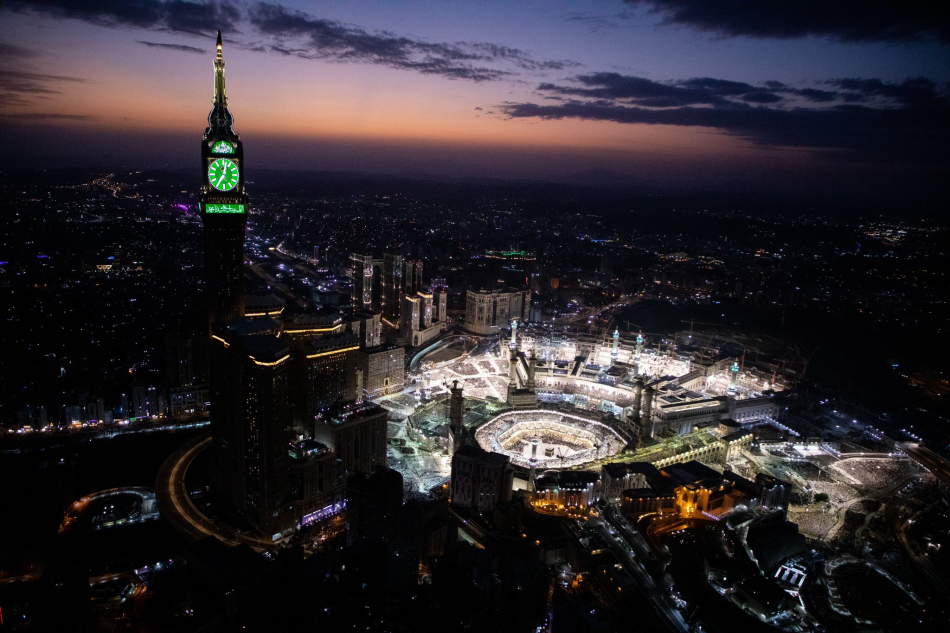
The millions of people gathering at the Two Holy Mosques remain the greatest testimony in the world to Saudi Arabia’s unique ability to manage security and organization in one of the most complex and densely populated environments.
Crowd Management
The World’s Largest Experience
Crowd management at the Two Holy Mosques represents the largest organizational experience in the world. Makkah and Madinah receive millions of pilgrims and Umrah performers every year, in addition to millions of visitors during the Umrah seasons and the month of Ramadan.
Despite this enormous human influx, the Kingdom successfully maintains high levels of security, organization, and smooth movement through an integrated system that combines:
advanced security planning
modern digital technologies
massive infrastructure
thousands of trained personnel
This organization is evident in the details of daily life inside the Two Holy Mosques, from the movement of Tawaf and Sa’i to the management of prayer areas and courtyards, as well as the guidance of crowds during peak times.
Services for the Guests of God
An Integrated Humanitarian System
The General Authority for the Care of the Affairs of the Grand Mosque and the Prophet’s Mosque continues to provide advanced services for the Guests of God through an integrated system that includes:
two main guest care centers
19 subsidiary centers inside the Two Holy Mosques
These centers provide a wide range of organizational and humanitarian services, including:
religious guidance and ritual assistance
answering questions and inquiries
lost-and-found services
assistance for the elderly and people with disabilities
care for lost women and children
luggage storage services
These centers operate around the clock and offer modern communication channels that enable visitors to access services easily, reflecting the high level of care and attention the Kingdom provides to the Guests of God.
Smart Crowd Management
Digital Technologies at the Prophet’s Mosque
As part of efforts to enhance the experience of visitors, authorities have introduced advanced digital services to regulate the movement of worshippers inside the Two Holy Mosques.
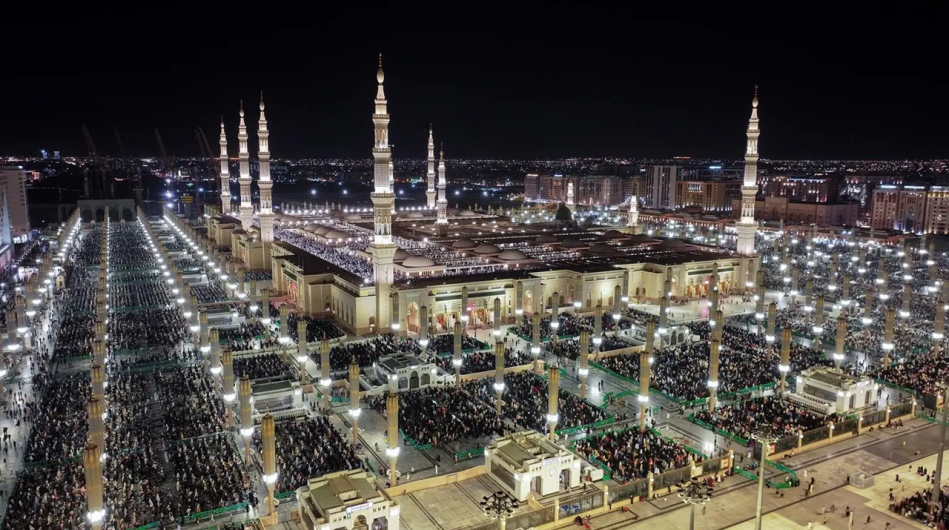
Among these services is the Prayer Area Occupancy Status service at the Prophet’s Mosque, which allows visitors to view real-time information about capacity levels in various prayer areas and courtyards.
The system uses four colors to indicate occupancy levels:
Green: Available
Yellow: Nearly full
Red: Full
Gray: Not available
This service helps worshippers select less crowded locations, contributing to smoother movement and supporting crowd management efforts, especially during peak periods.
Saudi Expansions
The Largest Development Project in the History of the Two Holy Mosques
The care for the Two Holy Mosques has been closely linked to the history of the Saudi state since the reign of the founder, King Abdulaziz bin Abdulrahman Al Saud, who initiated the first restoration and development works at the Grand Mosque after entering Makkah in 1924.
Since then, the Grand Mosque and the Prophet’s Mosque have witnessed a series of historic expansions carried out by the Kings of Saudi Arabia, including:
the First Saudi Expansion
the Second Saudi Expansion
the Third Saudi Expansion
These expansions increased the prayer capacity of the Grand Mosque to approximately two million worshippers at one time, while the expansions of the Prophet’s Mosque will accommodate nearly 1.8 million worshippers once the current projects are completed.
These massive projects include:
vast prayer courtyards
modern tunnels and corridors
water and electricity stations
movable domes
advanced ventilation systems
They represent one of the largest religious architectural projects in history.
Technology Serving Pilgrims
Electronic Gates at Airports
As part of the Kingdom’s efforts to improve the experience of the Guests of God from the moment they arrive, the General Directorate of Passports has introduced modern technologies at:
King Abdulaziz International Airport in Jeddah
Prince Mohammed bin Abdulaziz International Airport in Madinah
Among these technologies are electronic gates (E-gates), which allow pilgrims to complete entry and departure procedures independently within seconds by matching biometric data.
This technology contributes to:
reducing waiting times
accelerating travel procedures
enhancing the smooth flow of movement in airports
These measures come as part of the Ministry of Interior’s plans to improve services provided to the Guests of God.
BETH Reading
The Saudi experience in managing security and crowds reveals a unique model that combines security strength, professional administration, and continuous development of infrastructure and services.
The Kingdom does not only manage the largest religious gathering in the world but also maintains high levels of security and organization in an environment that welcomes millions of visitors from different nationalities and cultures.
For this reason, the massive gatherings at the Two Holy Mosques have become one of the most important global testimonies to Saudi Arabia’s ability to combine security stability, administrative efficiency, and humanitarian care.
In a world experiencing increasing turbulence, the Saudi experience stands as a clear example that true security is not measured only by force, but by the ability to organize life and allow it to continue with confidence and reassurance.