



Britain Between Defense and Calculations
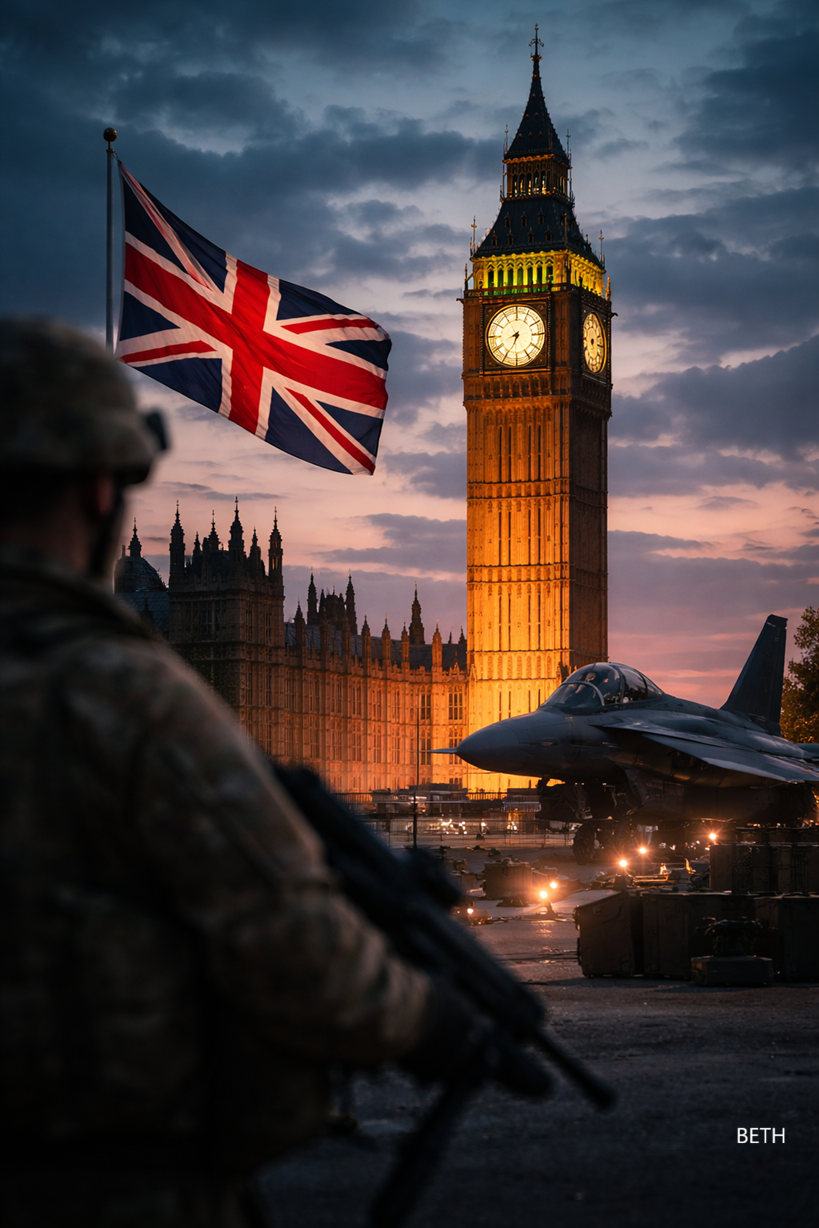
Did It Step In After the War’s Direction Became Clear?
Preparation & Analysis | Strategic Media Department – BETH News Agency
Introduction
As the military confrontation between the United States and Israel on one side and Iran on the other continues to escalate, Britain has emerged in the scene through statements and limited military moves that have raised questions about the true nature of its role.
While London officially confirms that it is not participating in offensive operations against Iran, developments on the ground indicate defensive and military movements that reflect a calculated presence within the regional equation.
This contrast between political rhetoric and military actions opens the door to a broader question:
Is Britain exercising a purely defensive role?
Or is it waiting for an appropriate political moment to enter the scene?
What Has Britain Said?
So far, the official British line leans toward a clear formula:
Defense, not offense.
The British Prime Minister confirmed that the United Kingdom did not participate in the military strikes against Iran, stressing that priorities are focused on:
Protecting British citizens in the region
Preventing the expansion of the war
Supporting regional stability
At the same time, British media reports indicated that London allowed the use of certain British military bases for operations described as defensive, particularly in response to missile and drone threats.
The British government also emphasized that it will not engage in direct offensive operations against Iran.
What Has Britain Done on the Ground?
Despite the political caution, developments on the ground point to several important steps:
Strengthening British military presence in the region
Raising protection levels around British bases in Cyprus and the Gulf
Participating in operations to intercept drones and aerial threats
These actions reflect a traditional British policy based on military readiness without formally announcing participation in the war.
Why Are London’s Statements Interpreted as Signs of a Longer War?
Some British statements and media analyses have discussed preparations for the possibility that the war may last for months.
However, these estimates have largely emerged within the context of military and logistical preparations rather than an official declaration of a long-war policy.
Military readiness does not necessarily indicate a desire to prolong the war; rather, it reflects an attempt to prepare for worst-case scenarios.
BETH Reading: The Logic Behind the British Move
Based on available facts, Britain appears to be operating according to a clear three-part equation:
Protecting its military assets and citizens in the region
Supporting the American ally within a logistical and defensive framework
Avoiding direct involvement in offensive warfare
This policy reflects clear strategic caution from London.
Does Britain Seek to Drain the United States or the Gulf?
This scenario is often repeated in political and popular analyses, but it is difficult to prove through facts.
Major state policies are primarily built on direct interests, not on historical impressions or political accusations.
Why Would Prolonged Attrition Not Serve Britain’s Interests?
Two main factors explain this.
1. Economy and Energy
An expansion of the war in the region threatens global energy markets, which directly impacts the British economy through:
Rising oil and gas prices
Increasing energy costs
Domestic economic pressure
2. British Interests in the Gulf
Britain maintains major strategic interests in the region, including:
Economic investments
Trade partnerships
Military bases
Maritime security
Any prolonged attrition in the Gulf would therefore represent a direct strategic cost for London.
Why Does the British Position Appear “Gray” to Some?
This perception is largely due to two main factors.
Cautious Political Language
British statements confirm non-participation in offensive operations, but they leave the door open for possible future military measures should threats escalate.
The Iraq Experience
The legacy of the Iraq war still influences British policy, as British governments remain cautious about direct involvement in major wars without clear political cover.
The War on Iran: Where Is It Heading?
Current developments point to two possible trajectories for the conflict.
First Scenario: A Short Campaign
Some political statements suggest that military operations may continue for only a few weeks.
The logic behind this scenario involves:
Targeting specific military capabilities
Reducing missile capabilities
Imposing long-term deterrence
Second Scenario: A War of Attrition
On the other hand, military analyses suggest the possibility of continued low-intensity harassment operations for a longer period.
Such operations may include:
Drone attacks
Threats to maritime navigation
Indirect operations through regional actors
This could open the door to a longer conflict, though with lower military intensity.
What Will Determine the Duration of the War?
Five key indicators could determine the direction of the conflict:
The status of the Strait of Hormuz
Iran’s ability to sustain military operations
The level of participation by Western allies
Pressure from global markets
Expansion of military fronts
Why Has British Support Appeared Now?
The timing of British movements raises an important question:
Why now?
A possible strategic explanation is being discussed in international analyses.
If Western military assessments indicate that Iranian capabilities suffered significant damage during the first phase of the war, some Western powers may see logistical support at this stage as carrying lower risks.
In other words:
London may be attempting to protect its interests and participate in shaping the regional landscape after the direction of the conflict has become clearer, without bearing the cost of direct confrontation at the beginning.
This raises another strategic question:
Is Britain waiting to confirm the balance of power before expanding its role?
Or is it simply seeking to protect its interests without entering the battle?
Conclusion
So far, available facts indicate that Britain is moving according to a cautious policy based on:
Protecting its military and economic interests
Supporting the Western alliance within calculated limits
Avoiding involvement in an open war
However, developments in the conflict itself could later push London to adjust this position if the balance of power shifts or the conflict expands.
The larger question remains:
Are we facing a short war that will redraw the balance of deterrence in the region…
or a prolonged phase of attrition that will reshape the security order of the Middle East?