



Day Six: Hormuz on the Brink.. and the War Expands Its Theater
Follow-up & Analysis | Strategic Media Department – BETH News Agency
Supervision | Abdullah Al-Omira
Brief News Introduction
As the war on Iran enters its sixth day, the confrontation appears to be shifting from reciprocal strikes toward a broader regional deterrence test.
Washington and Tel Aviv continue targeting sites inside Iran, while Tehran responds with missiles and drones directed toward Israel and American interests in the region.
At the same time, a more dangerous dimension is emerging through threats surrounding the Strait of Hormuz, alongside security spillovers toward Iraq, Azerbaijan, and other regional fronts.
Field Developments
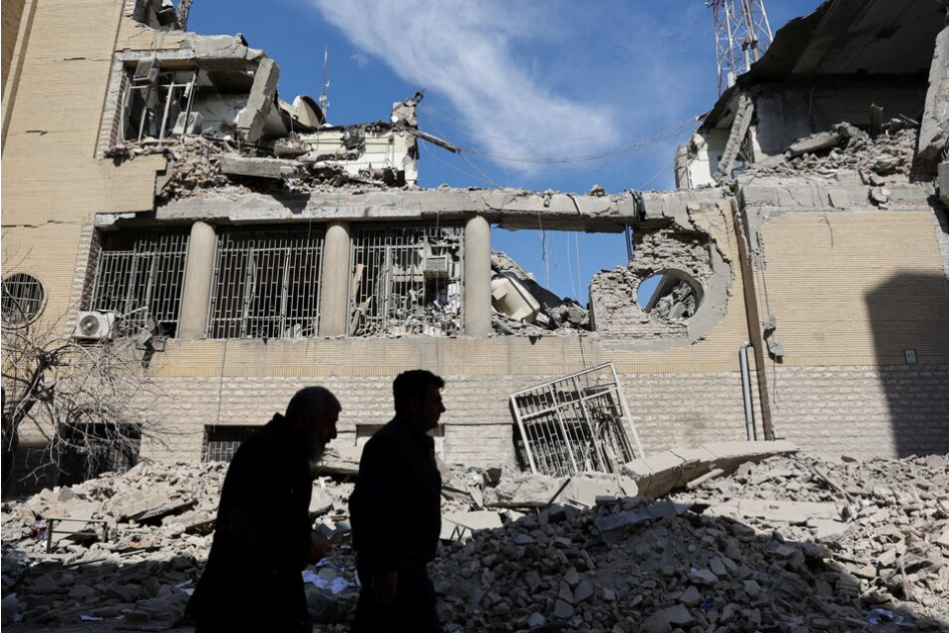
Tehran Under Renewed Strikes
Iranian media outlets, including Tasnim News Agency, reported explosions in multiple areas of Tehran and its western outskirts, accompanied by statements that Iranian air defenses had been activated.
Simultaneously, Iran announced a new wave of missiles launched toward Israel.
BETH Reading
The repeated explosions in the capital, coupled with successive retaliation waves, suggest the conflict is gradually shifting from merely striking targets toward disrupting operational rhythm — the rhythm of command, control, and symbolic authority within Iran’s core.
Strait of Hormuz: A Strategic Pressure Point
The Islamic Revolutionary Guard Corps announced — according to Iranian state broadcasting — that the Strait of Hormuz is “closed” to vessels belonging to the United States, Israel, Europe, and their allies, warning that such vessels could be targeted if detected.
Iranian Deputy Foreign Minister Kazem Gharibabadi stated that “control of the Strait must remain in Iran’s hands during wartime,” adding that Tehran would not allow ships of hostile countries to pass through the corridor.
BETH Reading
This announcement represents more than a maritime measure. It is a strategic deterrence instrument with several implications:
Raising the economic cost of war by threatening the world’s main energy artery.
Expanding pressure from the battlefield to global supply chains.
Creating international tension around who bears responsibility if shipping routes are disrupted.
Demonstrating that Tehran holds leverage capable of extending beyond direct military confrontation.
Professional Note
There is a substantial operational gap between declaring closure and enforcing it, yet the rhetoric itself immediately raises risks for shipping, insurance markets, and global energy prices.
The War Spreads Beyond Iran
Iraq: A Fragile Western Front
Reports indicate attacks targeting telecommunications towers linked to Iranian opposition groups in the Kurdistan Region of Iraq, alongside claims of armed Kurdish movements toward Iranian territory.
The Kurdistan Regional Government of Iraq denied reports claiming that Kurdish parties from the region had been armed or sent into Iran, stressing that such claims are unfounded.
BETH Reading
If confrontations expand along the western frontier, it could signal attempts to pressure Iran’s western flank, potentially forcing Tehran to redistribute its security and military resources.
Azerbaijan: Drone Incidents Beyond the Battlefield
Azerbaijan accused Iran of launching two drones into its territory, reportedly injuring two people. Authorities said one drone fell near an airport in Nakhchivan while another landed close to a school, prompting Baku to summon Iran’s ambassador.
BETH Reading
Any spillover into neighboring states creates an expanding ring of tension, transforming the conflict from a bilateral confrontation into a multi-front regional theater, increasing the risks of miscalculation.
Europe Enters the Deterrence Equation
Recent developments indicate growing European support for Western operations related to the escalation with Iran.
Reports suggest that France has agreed to allow the United States to use certain French military bases within the framework of operations linked to the ongoing regional escalation.
In the same context, Italian Prime Minister Giorgia Meloni announced that Italy will provide defensive assistance to countries affected by Iranian attacks, stressing that Rome is coordinating with its allies to safeguard regional stability.
BETH Reading
These developments carry three major strategic implications:
European shift from caution to logistical support
Allowing the use of military bases signals that some European states are beginning to move from cautious observation toward operational support roles.
Building a regional defensive umbrella
Rome’s statement about assisting affected states suggests a European inclination to strengthen defensive capabilities among allies in the Middle East in anticipation of possible escalation.
An indirect deterrence message to Tehran
The core message behind these positions is that any expansion of Iranian attacks may face a broader international response beyond unilateral American or Israeli action.
Strategic Lens: Testing Political Narratives
The “Long War” Scenario
Some analysts argue that the confrontation may evolve into a prolonged war of attrition, potentially lasting months or even years if neither side achieves decisive dominance.
BETH Editorial Assessment
While such projections remain speculative, one strategic factor remains valid:
Prolonged conflicts often accelerate technological, economic, and geopolitical transformations, reshaping global power structures long after the battlefield quiets.
Day Six in Perspective
Three strategic signals define the sixth day of the war:
The Strait of Hormuz has emerged as a critical pressure lever in the conflict.
Peripheral fronts — including Iraq and Azerbaijan — suggest the confrontation could expand into a network of regional flashpoints.
European involvement, even at the logistical and defensive level, signals a widening international dimension to the crisis.
BETH Conclusion
By the sixth day, the war is no longer defined solely by missiles and airstrikes.
The deeper question now emerging is:
Will the end of this war be decided in the skies, in the Strait of Hormuz… or inside Iran itself?
Trump: I Want to Participate in Choosing Iran’s Leader
U.S. President Donald Trump told the American news site Axios that he believes it is necessary for him to personally participate in choosing the next Iranian leader, following the killing of Iran’s Supreme Leader Ali Khamenei in U.S.–Israeli airstrikes that targeted Tehran last Saturday.
Trump indicated that Mojtaba Khamenei, the son of the late Supreme Leader, is considered the leading candidate to succeed his father. However, he said:
“Khamenei’s son is not acceptable to me. We want someone who brings harmony and peace to Iran.”
He added:
“I must participate in the appointment process, just as I did with Delcy in Venezuela.”
The Second Phase of the War
Military estimates suggest that the war may enter its second phase, which could focus on targeting ballistic missile sites buried deep underground inside Iran.
This comes after the Israeli military announced that it had destroyed hundreds of above-ground missile launch platforms capable of targeting Israeli cities.
According to informed sources, the next phase will include bunkers and fortified facilities that store ballistic missiles and military equipment.
New Wave of Airstrikes on Tehran
The Israeli military announced Thursday evening that the Israeli Air Force launched a new wave of airstrikes on the Iranian capital Tehran.
It said the attacks targeted military infrastructure, while warning residents to evacuate the following areas:
Abbas Abad
Shanzar Industrial Area
The military noted that this is the second time Tehran has been bombed during the same day, and that it represents the thirteenth wave of attacks on targets in the Iranian capital since February 28.
Explosions in Tehran and Iranian Missile Response
Iranian news agencies reported that powerful explosions shook several areas of Tehran on Thursday evening, pointing to a missile attack targeting eastern Tehran.
Meanwhile, Iran’s state radio and television authority announced that Iran launched a new batch of missiles toward Israel.
Airstrikes on Beirut’s Southern Suburbs
The Israeli military carried out airstrikes targeting buildings in the southern suburbs of Beirut.
Earlier in the day, the military had issued urgent evacuation orders for residents of entire neighborhoods in the southern suburbs ahead of the attacks.
The warning included residents of:
Burj Al-Barajneh
Al-Hadath
Haret Hreik
Al-Shiyah
The military urged residents to move north or east, warning that heading south could put their lives at risk due to security threats.
French Move to Support the Lebanese Army
French President Emmanuel Macron announced that France will strengthen its cooperation with the Lebanese Army by providing armored transport vehicles, in addition to operational and logistical support.
Macron said in a post on the platform X that France will make every possible effort to prevent Lebanon from being dragged once again into war in the Middle East.
Iran: No Ceasefire, No Negotiations
Iranian Foreign Minister Abbas Araghchi confirmed that Tehran is not seeking a ceasefire and does not intend to enter negotiations with the United States, on the sixth day of the war in the Middle East.
Araghchi said in an interview with NBC News:
“We are not calling for a ceasefire, and we see no reason to negotiate with the United States.”
He added:
“We negotiated with them twice, and each time they attacked us during the negotiations. We have received no request for a ceasefire or for negotiations with the United States, and we have not sent them any such messages.”
Tehran: Washington Failed to Achieve a Quick Victory
Araghchi said the United States failed to achieve its main objective of securing a decisive and rapid victory over Iran.
He said:
“After six days of war, it has become clear that the United States has failed to achieve a quick victory, and it is now trying to justify its attack on us.”