



When Events Advance .. and Communication Falls Behind
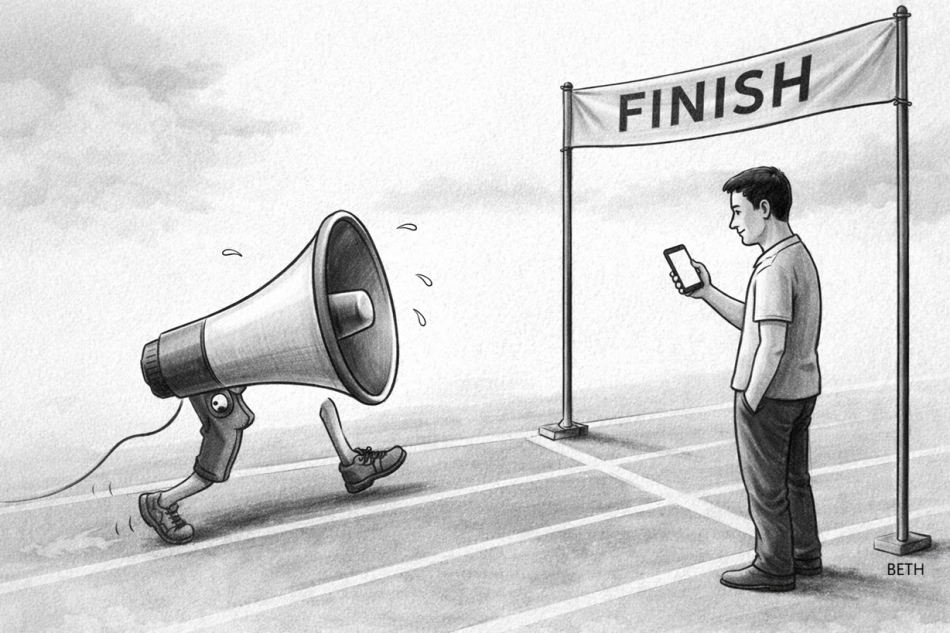
Why Press Conferences Need Reinvention in Times of Crisis
Prepared by | Strategic Media Department – BETH News Agency
Supervised by | Abdullah Al-Omira
Introduction
In every major crisis — war, disaster, or regional escalation — global attention naturally turns toward press conferences, official statements, and media briefings as primary sources of information and institutional reference points.
Yet modern crises have revealed a striking paradox:
the challenge is no longer the lack of information, but how it is delivered.
While events now move at unprecedented speed across digital platforms, many press conferences continue to operate with a communication mindset shaped in an era when audiences waited for news rather than encountering it first.
Today, the landscape has fundamentally changed.
The public sees events before the statement,
analyzes them before the conference,
and forms opinions before official briefings begin.
This raises a central question:
What value does a press conference offer if it adds no new understanding?
Crisis Communication with a Pre-Digital Mindset
Historically, official statements served clear purposes: confirming institutional positions, documenting decisions, controlling narratives, and reassuring society.
However, the modern media environment has shifted influence from the sender to the receiver.
Audiences no longer wait for information — they seek explanations for the uncertainty they experience. When official communication fails to provide clarity, people instinctively turn elsewhere.
At that moment, institutions risk something more dangerous than losing media speed:
the loss of cognitive trust.
When the Public Knows Before Being Told
In contemporary crises, public awareness follows a new sequence:
An event appears through footage or leaks,
instant analysis spreads online,
public perception forms rapidly,
and only afterward does the official statement arrive.
As a result, press conferences unintentionally become repetitions of what people already know rather than sources of added insight.
The problem, therefore, is not missing information — but missing value.
The Blurring Roles of Statements, Briefings, and Conferences
One major source of communication fatigue during crises is the disappearance of functional distinctions between official communication tools.
A statement should answer: What happened?
A media briefing should explain: What does it mean?
A press conference should clarify: Why did it happen — and what comes next?
Meanwhile, news bulletins connect events to public life and real-world impact.
When all platforms deliver identical messages in similar formats, audiences feel their time is consumed without gaining deeper understanding — sometimes leaving external analysts appearing more informative than official sources themselves.
Why Audiences Experience Information Fatigue
Communication science shows that during crises, people seek only three essential answers:
Am I safe?
What will happen next?
What should I do now?
Yet many conferences provide lengthy language, technical detail without structure, and messages lacking practical guidance.
This produces information fatigue — not from scarcity, but from poor organization of information.
The Required Global Shift
From Announcing Information to Managing Awareness
Modern press conferences are no longer announcement platforms; they are instruments of collective perception management.
Successful institutions during crises do not necessarily provide more data — they provide faster understanding, clearer messaging, rational reassurance, and realistic outlooks on what may follow.
People do not need every detail.
They need clarity now.
The BETH Model for Crisis Communication Development
Based on analysis of multiple international experiences, BETH believes that improving press briefings begins with transforming philosophy before format.
An effective conference should be shorter in duration yet deeper in meaning, clearly explaining what has changed since the previous update rather than repeating earlier messages.
Communication must begin with public concerns — not institutional preferences — supported by structured visual and cognitive organization that enables rapid comprehension.
Equally essential is presenting short-term outlooks that help audiences understand the next phase, shifting communication from defensive narratives toward explanatory leadership that builds trust and limits misinformation.
The Battle for Attention — The New Challenge
In the digital era, institutions do not lose only when mistakes occur, but when reality is poorly explained.
Communication that fails to evolve leaves informational gaps quickly filled by rumors, unverified platforms, and inaccurate analysis.
At that point, crises transform from political or security events into crises of collective perception.
BETH Perspective
BETH views the modernization of press conferences and media briefings not as cosmetic improvement, but as a component of institutional and national security architecture.
Managing awareness has become a direct extension of crisis management itself.
Accordingly, BETH’s Strategic Media Department develops advanced training and advisory models that include redesigning crisis communication systems, preparing official spokespersons, building strategic messaging frameworks, managing high-impact press engagements, and transforming media from a reactive tool into an instrument of cognitive leadership.
Conclusion
Crises test not only institutional strength…
but the ability to explain the world to people without overwhelming them.
When events move faster,
communication must move wiser.
Otherwise, audiences will seek understanding beyond official sources.
BETH
Media is no longer about reporting events —
but helping societies understand them with confidence and calm.
Image Interpretation
Traditional media runs…
speaking louder than it explains,
moving quickly — yet with outdated methods.
The modern audience no longer waits for traditional press conferences.
It is no longer a passive receiver of information,
but a public that evaluates, compares, and decides.
In the end,
success belongs not to those who speak more,
but to those who evolve faster and understand their audience first.