



Iran Speaks of a “Long War” .. Signals of Resilience or Shock Management?
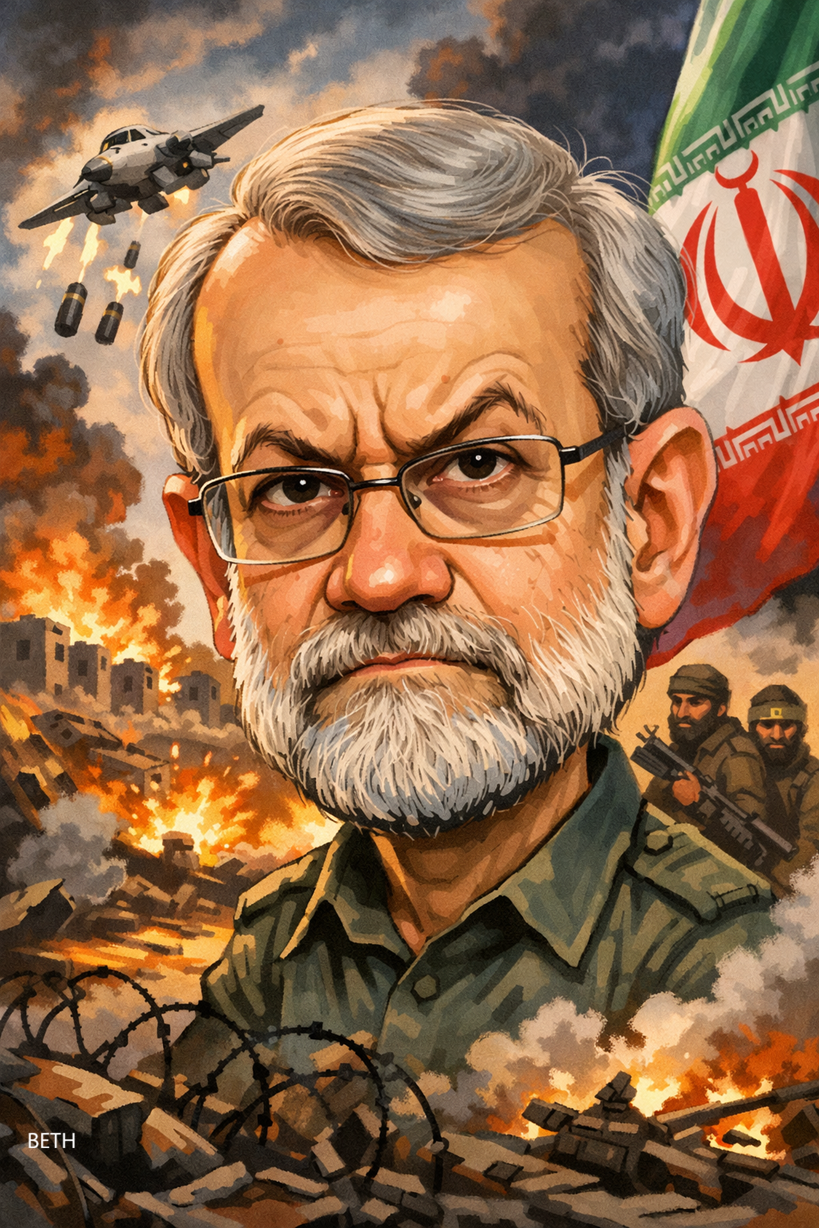
Follow-up & Analysis | Strategic Media Department – BETH News Agency
Iran’s Secretary of the Supreme National Security Council, Ali Larijani, stated that Iran has “prepared itself for a long war,” in remarks delivered Monday, coinciding with the third day of ongoing U.S.–Israeli military operations against targets inside Iran.
Posting on the platform X, Larijani wrote:
“Iran, unlike the United States, has prepared itself for a long war.”
BETH Reading | What Does the Statement Mean?
The statement is less military in nature and more psychological and political in meaning.
Under intense military pressure, official wartime communication often shifts from the language of deterrence to the language of endurance — a significant transition in the psychology of conflict messaging.
Boosting Domestic Morale
Yes — the statement clearly falls within an effort to reinforce internal morale.
When leadership faces accelerating strikes, the immediate priority becomes:
Preventing a sense of societal collapse
Reassuring security and political elites
Conveying institutional continuity
The phrase “long war” here represents not an operational plan, but a psychological shield designed to sustain resilience.
Is It a Challenge to Washington?
On the surface, yes.
In practical terms, however, it suggests something different.
Historically, the United States possesses:
Decisive air superiority
Economic endurance capacity
Strategic control over escalation timing
Thus, speaking of a “long war” appears closer to an attempt to shift the confrontation from military decisiveness to political exhaustion.
In other words:
If the strike cannot be prevented, its cost can be prolonged.
The Strategic Paradox
States confident in the balance of power rarely emphasize the duration of war.
Such rhetoric typically emerges when:
Rapid military resolution becomes unlikely, or
Leadership fears internal instability before operations conclude.
BETH Conclusion
Larijani’s statement does not primarily project strength — it reflects a transformation in Iran’s strategic messaging:
From deterrence…
to endurance.
BETH:
When nations begin speaking about the length of war, it often means they no longer control its timing.