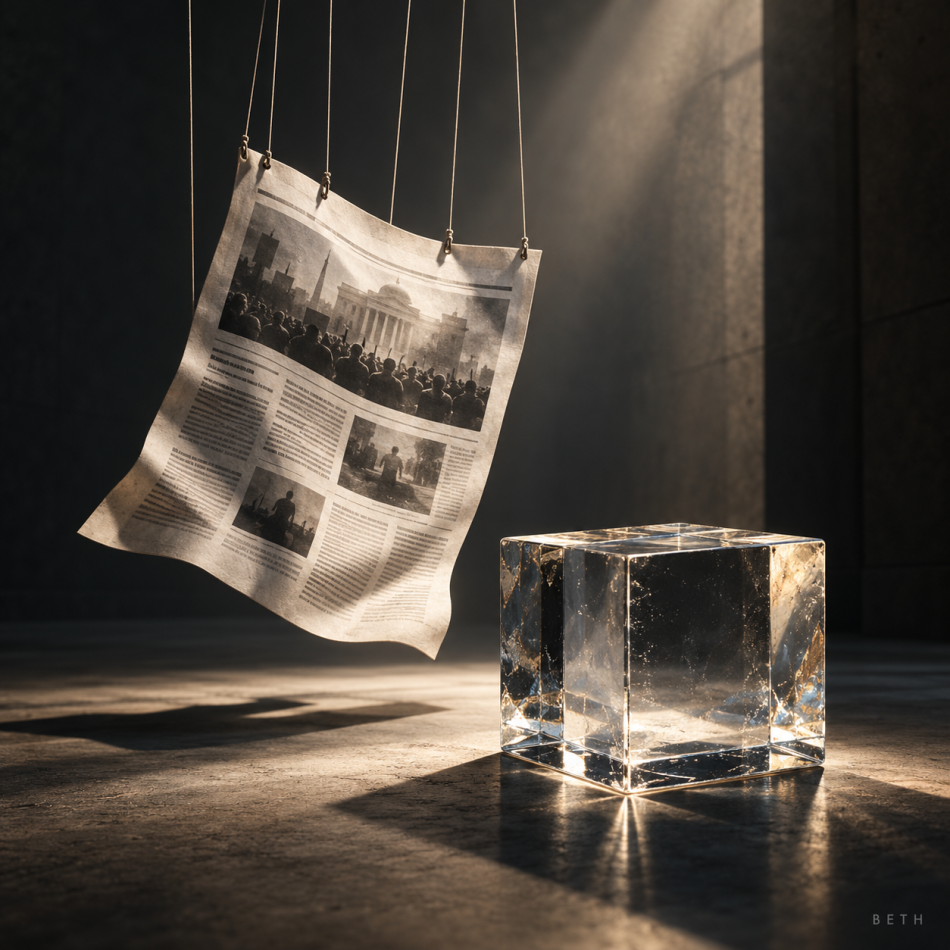



Khamenei..Between Reports of Death and Uncertainty
Monitoring & Analysis | BETH
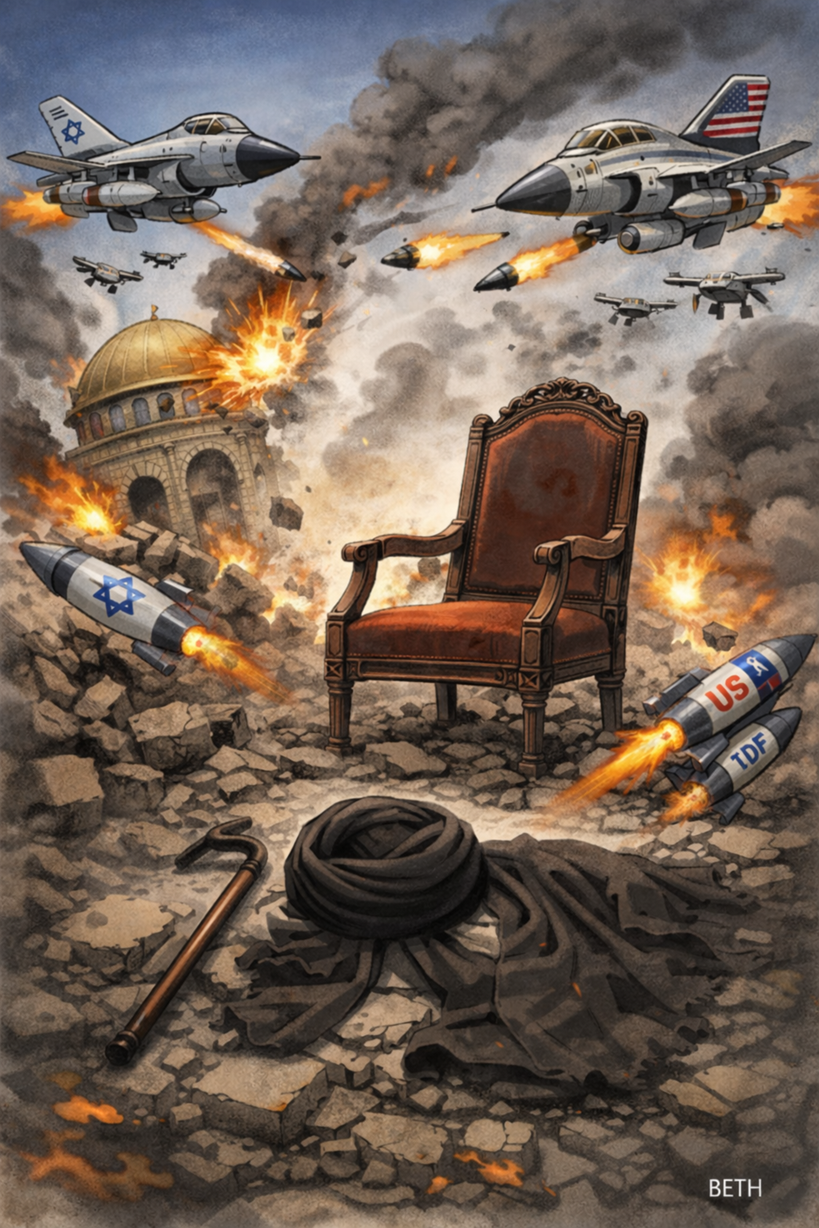
The regional confrontation has entered a historic turning point following U.S. President Donald Trump’s announcement confirming the death of Iran’s Supreme Leader Ali Khamenei, marking the first direct political confirmation from Washington and effectively ending the phase of uncertainty surrounding his fate.
The announcement follows a series of Israeli statements and intelligence reports indicating the success of an unprecedented strike targeting Iran’s highest leadership compound in Tehran, amid growing signs that Iran’s command structure has suffered its most severe blow since the establishment of the Islamic Republic in 1979.
From Uncertainty to Declaration
Earlier Israeli reports stated that Khamenei had been killed and that his body was recovered from the targeted site, with documentation allegedly presented to Israeli Prime Minister Benjamin Netanyahu, before the narrative moved into U.S. diplomatic and intelligence channels.
With Trump’s announcement, the development has shifted from intelligence assessment to international political acknowledgment, despite Tehran’s continued official silence.
Why Does Tehran Remain Silent?
Even after the announcement, Iran’s silence remains strategically predictable due to structural considerations:
Organizing a controlled leadership succession process.
Preventing divisions between the Revolutionary Guard and the religious establishment.
Avoiding sudden internal instability or psychological shock.
In ideological systems, announcing leadership loss is treated as a matter of national security management, not merely a media statement.
Strike on Iran’s Leadership Structure
Alongside the reported targeting of Khamenei, the Israeli military stated that recent strikes killed several senior Iranian officials, including Ali Shamkhani, as well as prominent military and security figures linked to the Islamic Revolutionary Guard Corps and senior leadership offices.
If fully confirmed, Iran may have lost a significant portion of its political and military command hierarchy within hours.
Has the Era of the Mullahs Ended?
Khamenei’s death — if institutionally confirmed — does not automatically mean the immediate collapse of the regime. However, it may mark the end of one of its most powerful pillars:
The image of the untouchable Supreme Leader.
The Iranian system has long relied on a fusion of ideology and personal authority. With the disappearance of that symbolic center, Iran may enter one of three possible paths:
a more pragmatic collective leadership,
internal competition over power direction,
or a gradual transition from ideological governance toward power-based state management.
The Post-Khamenei Moment
This development reshapes not only Iran, but the broader balance of power across the Middle East.
The central question is no longer:
Was Khamenei killed?
It has become:
Who governs Iran now?
BETH Conclusion
The announced death of Iran’s Supreme Leader — should its institutional consequences materialize — signals the beginning of what may be described as:
Post-Supreme Leader Iran.
Whether this ultimately marks the end of the mullahs’ system will not be determined by official statements, but by how Iranian power reorganizes itself in the days and weeks ahead.