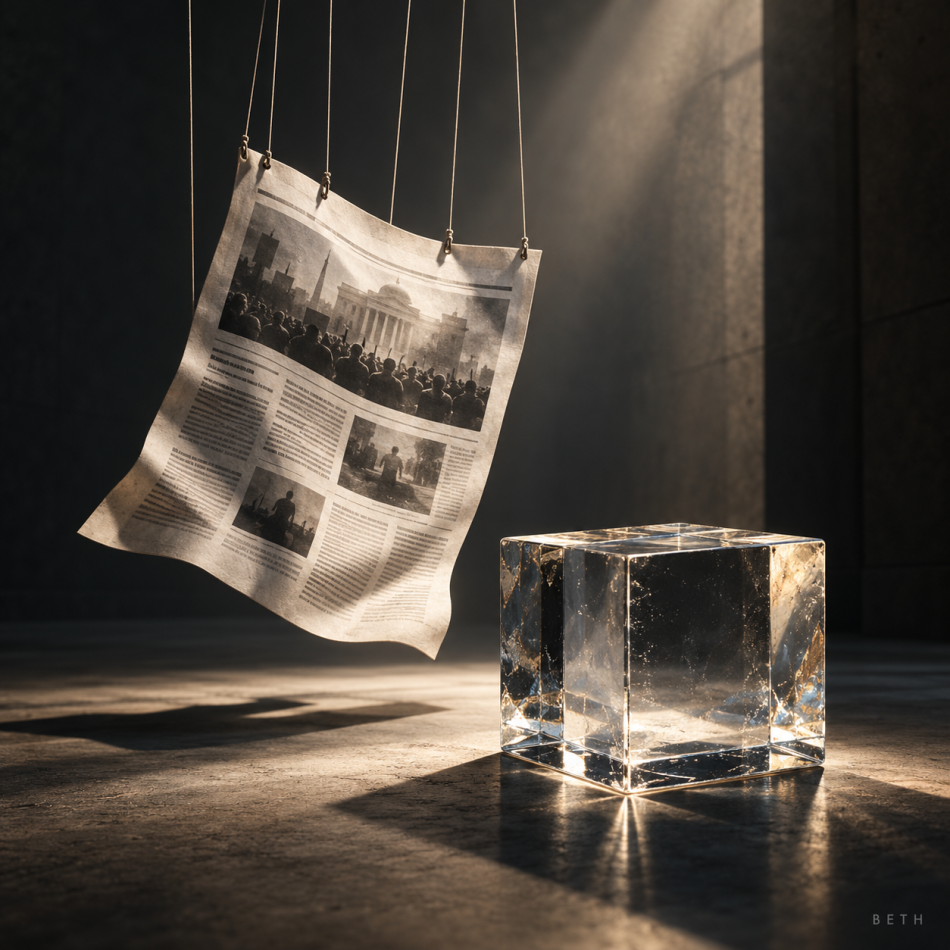



The Mind of War
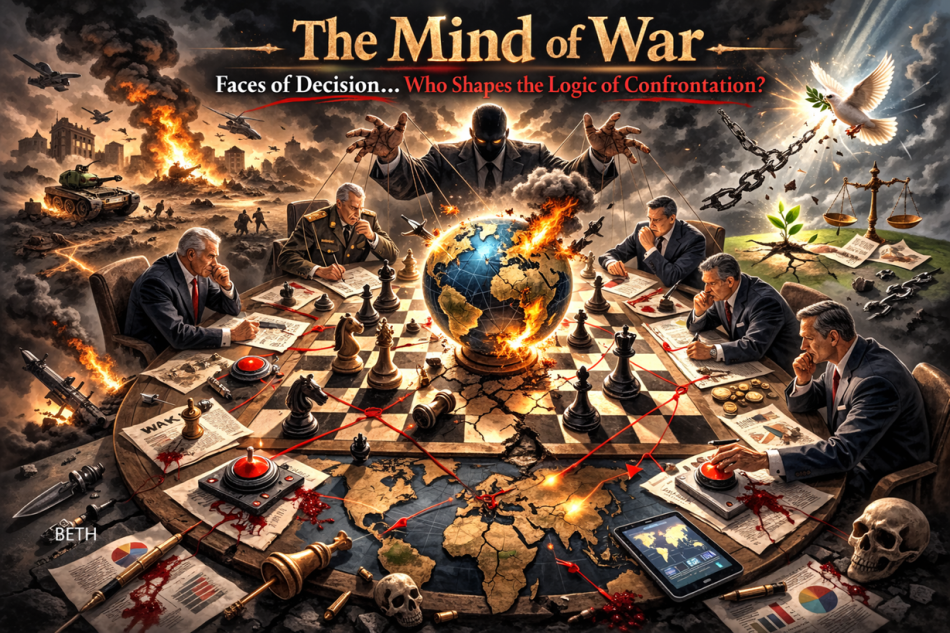
Faces of Decision… Who Shapes the Logic of Confrontation?
Prepared by Strategic Media Department – BETH Agency
Intro
War leaders are neither mythical monsters nor legendary devils as popular memory often portrays them—
nor are they angels of peace who simply lost their way.
They are human beings…
yet when seated at the decision table, the “human” within them transforms into a system of thinking.
Here the real question begins:
Do states go to war because leaders “love war”?
Or because the international system was built on the assumption that stability can only be imposed by force?
Is war a demonic act?
Or the outcome of a political logic that treats destruction as a “management tool” for the world?
Analytical Framework
Are War Leaders Human?
Yes.
But they are no longer “ordinary humans” when they press the button.
At the seat of power, a person becomes:
A calculator of interests
A manager of risks
A balancer between human losses and geopolitical gains
Here, individual values are often crushed beneath slogans such as:
“National Security”
“Deterrence”
“Preventing a Greater Chaos”
Or Are They Devils Who Don’t Understand Stability?
Demonization is an emotionally understandable moral label—
but it does not explain how wars are actually managed.
Reality is colder and more brutal:
In the minds of some leaders, war is not a moral collapse,
but a political tool to reshuffle the table when diplomacy fails.
And here lies the danger:
when war shifts from being an “emergency option” to becoming a “normal instrument of world management.”
Stability by Force: Illusion or Necessity?
Some leaders believe that stability can only be built by:
Striking the opponent before they grow stronger
Redrawing balances of power through force
Sending messages of fear to deter others
Yet history teaches:
Any stability imposed solely by hard power
carries within it the seeds of the next war.
Who Is Truly Responsible: The Leader or the System?
The smarter approach is not to condemn individuals alone,
but to dismantle the system that produces war leaders:
An international order built on deterrence rather than justice
An economy that profits from the arms industry
Media that mobilizes public consciousness before the missiles
Publics that sometimes applaud war when fed with fear
Often, the leader is:
a product of the system… not an exception to it.
Conclusion
War leaders are neither super-devils
nor humanitarians seeking global stability.
They are the outcome of a global political mindset
that sees hard power as the fastest way to manage balance
when reason and dialogue fail.
The real danger is not the existence of war leaders,
but a world that makes war an acceptable option for managing the international order.
Wars do not begin when missiles are launched…
they begin when the mind convinces itself that killing is a shortcut to stability.
Why This Report?
This report does not aim to morally judge war leaders,
nor to justify violence as a “political necessity.”
Its purpose goes further:
Deconstructing the Logic of War
How do decision-makers think when hard power becomes a “normal” option for managing the world?
How do international, economic, and media systems turn into environments that facilitate the decision to go to war?
Raising Awareness Before Taking Sides
Instead of asking: Who is to blame?
This report asks a deeper question:
What makes war possible—and acceptable—at a given moment?
Liberating the Reader from Emotional Readings
The report invites a rational reading of conflict:
distinguishing between individual actions and the systems that produce them,
between war rhetoric and the reality of interest management.
Expanding Understanding, Not Mobilizing Alignment
The goal is not political mobilization,
but building the ability to read events as clashes of projects, powers, and systems of thought—
not merely as simplified narratives of “good versus evil.”
This report is a tool of awareness, not a statement of allegiance.
The reader is not asked to applaud or condemn—
but to understand:
How war decisions are made…
and why stability becomes fragile when power is exercised without the logic of stability.
Conscious reading may not stop wars immediately,
but it prevents us from entering them with minds colonized by noise.