


Riyadh of Salman: From a City to a National Project
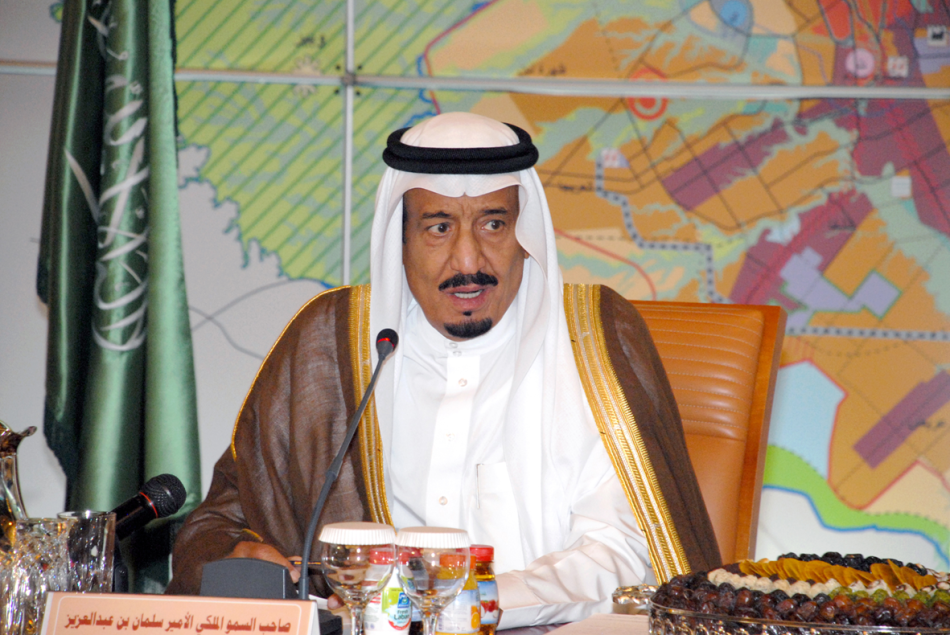
By Abdullah Al-Omira
Report Introduction – From Founding Day to the Mind of the State
On Founding Day, Saudi Arabia does not merely recall a distant historical moment; it revisits the very idea of statehood: how a political entity is built from apparent emptiness, and how authority is founded on stability rather than chaos.
From Diriyah—where the First Saudi State began in 1727—to Riyadh, which Imam Turki bin Abdullah chose as the capital, the Saudi trajectory reflects a conscious transition from the cradle of founding to the center of governance. Riyadh was not chosen for geography alone, but by state decision: a location at the heart of the Arabian Peninsula, and a city capable of evolving from a local settlement into a political capital.
Yet cities do not rise on history alone.
History grants legitimacy… leaders give cities their modern meaning.
This is why Riyadh’s transformation cannot be understood apart from the era of Salman bin Abdulaziz as Governor of Riyadh—the phase in which the capital moved from organic growth to a state-scale project, and from a walled city to a capital planned with the logic of the future. In this transformation, Riyadh was not managed as urban space, but as an integrated political and civic idea: an identity to be preserved, growth to be governed, and people placed at the heart of the equation.
This report is not a listing of projects; it is a reading of how capitals are built when the legitimacy of founding meets the genius of governance.
From Founding Day… to a city run with the mind of the state.
Riyadh: When the Future Becomes a Method
Riyadh did not grow by accident, nor did it become a capital merely through the passage of time. Decades ago, an early awareness emerged that a capital is not governed by the logic of the present—it is built with the logic of the future.
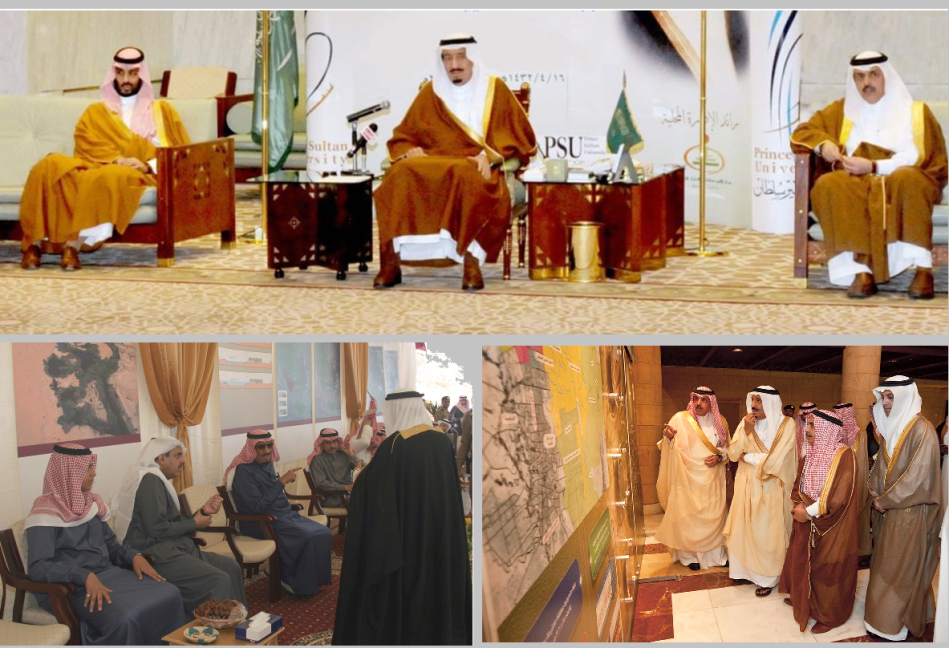
When King Salman bin Abdulaziz—then Governor of Riyadh—assumed responsibility for the city, he did not view it as a geographic space expanding outward, but as a state project requiring deep planning, historical memory, and executive will that goes beyond ideas on paper. From re-reading Riyadh’s history to safeguarding its architectural identity, and from organizing demographic and economic growth, an integrated vision took shape—one that made the capital a distinct model of urban governance: a vision that does not separate heritage from development, people from place, or planning from delivery.
This report is a concise synthesis of forty episodes produced nearly a decade ago. Revisiting this body of work revealed documentation worthy of presentation to future generations as a lesson in the intelligence of planning and follow-up, in a country known for stability and among the fastest in developmental transformation. This summary is neither a narrative of projects nor a dry record of administrative decisions, but a framework for understanding how the capital was made—and how Riyadh evolved from a traditional city into a national center, then toward a capital with regional and global roles.
From “Hajr Al-Yamamah” to a Capital: Continuity of Place
Riyadh was never a late arrival in history. It was “Hajr,” the capital of Al-Yamamah and a key station on caravan routes long before the modern era. With the emergence of the Saudi state, Riyadh shifted from a local center to a political capital, before entering a major phase of transformation following King Abdulaziz’s recapture of the city in 1319 AH—marking the beginning of unprecedented urban and social renewal.
Yet the structural transformation began in 1374 AH, when Prince Salman bin Abdulaziz assumed the governorship of Riyadh. The city moved from spontaneous expansion to comprehensive planning through an initial guiding plan and then strategic frameworks, transforming Riyadh from a walled city into a long-term urban project balancing people, economy, identity, and sustainability. Riyadh was not built as a city alone, but as a contemporary oasis in the desert and a financial, cultural, and human center planned for decades, not years.
The Capital: When Vision Becomes Work
Prince Salman bin Abdulaziz’s discourse on Riyadh was never mere historical narration; it was a philosophical summary of a city’s journey linking past to present and anticipating the future in one word: work. In his 1428 AH address, he retraced Riyadh’s path from becoming the capital under Imam Turki bin Abdullah, through the founding of the modern state by King Abdulaziz, and the phases of institutional and urban transformation under Kings Saud, Faisal, and Khalid, to the era of comprehensive planning that transformed Riyadh from a walled city into a long-term urban project.
The core transformation was not the scale of projects, but the method of work:
from spontaneity to planning,
from fragmented initiatives to institutional integration,
from dazzling dreams to measured realism.
Development rested on three pillars: strategic planning, inter-agency integration, and people before projects. From this logic emerged the High Commission for the Development of Riyadh as a regulatory, planning, and delivery authority bringing government entities, the private sector, and technical expertise into one body operating on “decisions that can be executed.” In investment philosophy, the stance was decisive: realistic projects that people truly need before flashy ones.
When Plans Stall—and the Mind Advances
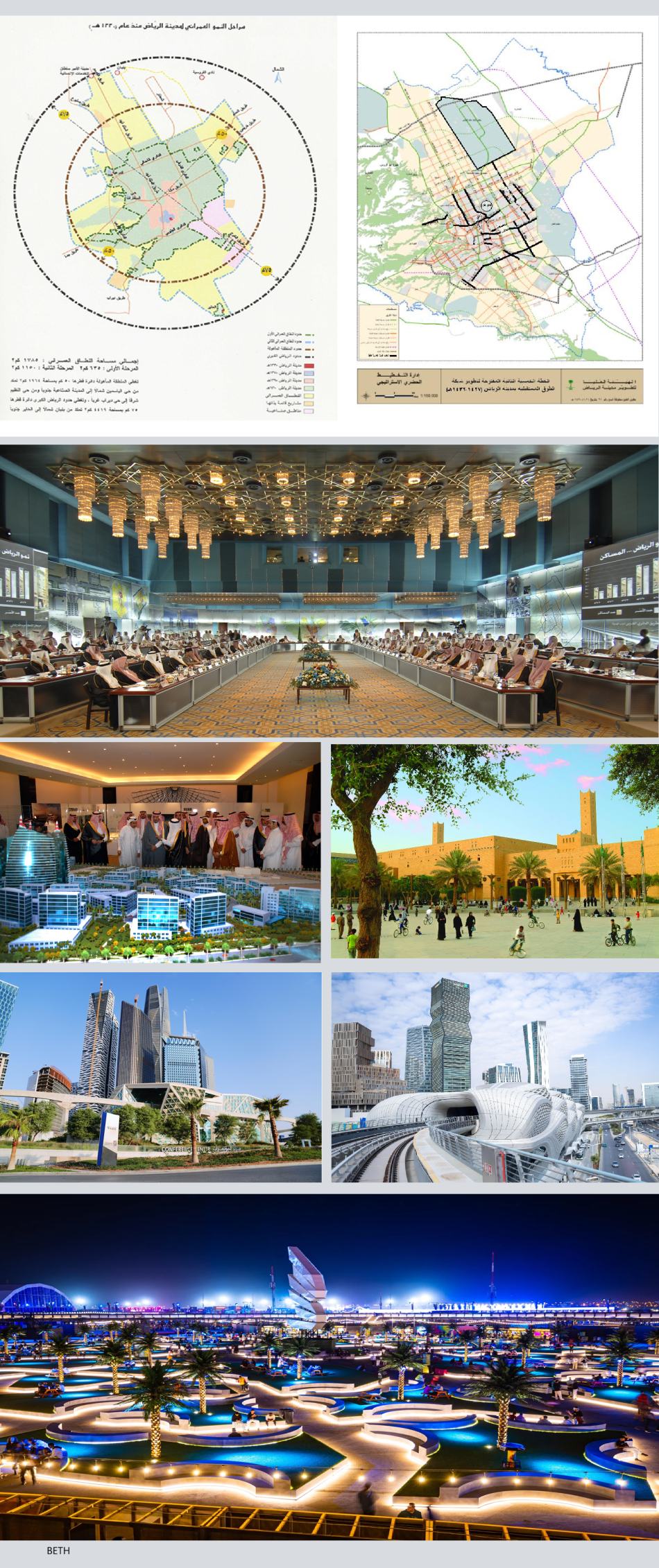
Riyadh’s first attempt to regulate urban growth came through the initial guiding plan (Doxiadis)—a pioneering step toward strategic planning, yet unable to withstand rapid economic and demographic acceleration. When the city exceeded the plan’s boundaries within less than a decade, the experience was repeated with a second master plan, revealing that the challenge lay not in the plan itself, but in the planning method.
The pivotal shift came with the High Commission for the Development of Riyadh, which moved the city from rigid blueprints to comprehensive strategic planning grounded in reading reality, anticipating the future, and tying decisions to implementation. The Commission’s approach included defining the urban boundary, phasing growth into manageable stages, building modern multi-sector data foundations, and empowering national talent while benefiting from global expertise without dependence. Thus, Riyadh moved from a city that follows growth to one that leads it.
In King Salman bin Abdulaziz’s reign, the “Riyadh Development Authority” was transformed into a royal body named the Royal Commission for Riyadh City by Royal Order issued in August 2019 (Dhul Hijjah 1440 AH). This institutional shift reflected a strategic upgrade in the governance of the capital, aimed at elevating Riyadh’s developmental and economic standing in line with the objectives of Saudi Vision 2030, under the chairmanship of His Royal Highness Crown Prince Mohammed bin Salman bin Abdulaziz, Prime Minister.
In the continuity of this vision, the capital proceeds along the path of realizing King Salman bin Abdulaziz’s aspirations—launched during his tenure as Governor of Riyadh—through an urban planning approach regarded among the most distinctive globally. The Diplomatic Quarter was envisioned as a miniature model of the modern capital, integrating human-centered planning, international character, and quality of life. Today, these aspirations continue through planning and execution, positioning Riyadh as an urban model for the Kingdom’s cities—civically and service-wise—an example of a capital governed with the mind of the state and built with a long-term method.
From Plan to Institution: The High Commission for the Development of Riyadh
By a Council of Ministers decision in 29 Jumada Al-Awwal 1394 AH, the High Commission for the Development of Riyadh was established to lead the capital’s comprehensive development, transforming planning from static documents into a continuous, updateable, and executable process. The Commission adopted seven integrated pillars led by strategic urban planning and produced a comprehensive strategic plan encompassing economy, housing, transport, environment, services, and culture over multi-decade horizons, becoming the supreme reference that aligns agencies and links policies to delivery programs. It also led the regional strategic plan for the Riyadh Region to achieve balanced development and ease pressure on the capital.
Beyond planning, the Commission delivered flagship programs such as the Diplomatic Quarter, Qasr Al-Hukm District, King Abdulaziz Historical Center, Historic Diriyah, Wadi Hanifah, Al-Thumamah Park, and traffic safety and architectural heritage programs. With this shift, Riyadh moved from “plans trying to catch up with growth” to an institution leading growth with long-term vision and sustained capacity for renewal.
Qasr Al-Hukm, Markets, and Memory: When the Heart Beat Again
The Qasr Al-Hukm District represented a conscious recovery of Riyadh’s political and symbolic heart. The palace was rebuilt in Najdi architectural spirit, Al-Masmak restored, and public squares developed to weave governance, faith, and commerce into a single urban fabric. The transformation was not merely architectural, but symbolic: from an isolated palace to a living urban heart.
In parallel, historic markets were revived—from Suwaiqah and Al-Dirah to Al-Zal and the squares of Al-Masmak, Al-Adl, and Al-Safah—returning economic function to the heart of memory. The King Abdulaziz Historical Center emerged as a public space integrating heritage with modern urbanism, making identity part of daily life rather than a closed museum.
The Diplomatic Quarter: Diplomacy as a City
The Diplomatic Quarter was conceived as the first integrated urban project with a global dimension in Riyadh—not merely a cluster of embassies, but a “city within the city” designed to accommodate diplomacy, housing, services, and the environment in a balanced urban fabric. It embodied the concept of a calm, secure city and offered an early model of how urbanism can serve politics without noise—transforming diplomacy from isolated buildings into an urban way of life befitting a capital opening to the world.
Housing, Transport, Economy, Knowledge, and Environment: A City System
Riyadh approached housing as a future challenge rather than a present crisis—moving from counting units to building human-scale neighborhoods that enhance belonging and quality of life. In transport, the city transitioned from road-led development to a multi-level public transport system that rebalances mobility and aligns urban planning with movement. Economically, Riyadh defined its role as a national financial, commercial, and cultural hub with a diversified, resilient base—alongside an early shift toward the knowledge economy through technology initiatives and smart-city frameworks.
Environmentally, sustainability moved from the margins to the core of planning through institutional frameworks and executable programs integrating environmental considerations into the comprehensive plan. In public space, open squares restored the city’s human dimension, linking recreation with identity, aesthetics, and sustainability.
Conclusion: Planning a City vs. Making the Future
When King Salman bin Abdulaziz served as Governor of Riyadh, he did not merely manage a city; he established a major capital with the mind of the state, not the eyes of a passing phase. He drew the future early—and then translated vision into delivered projects and functioning urban models. Today, from early plans to Saudi Vision 2030, Riyadh stands as a national vision laboratory. It is no longer only a city project, but a platform through which the Kingdom entered a new era with a distinct plan and strategy—Vision 2030 under the leadership of Crown Prince Mohammed bin Salman.
Here lies the difference between those who plan a city…
and those who make the future, then let it speak for itself.