



U.S.–Iran Tensions Reach a Peak
Monitoring & Analysis | BETH
Introduction
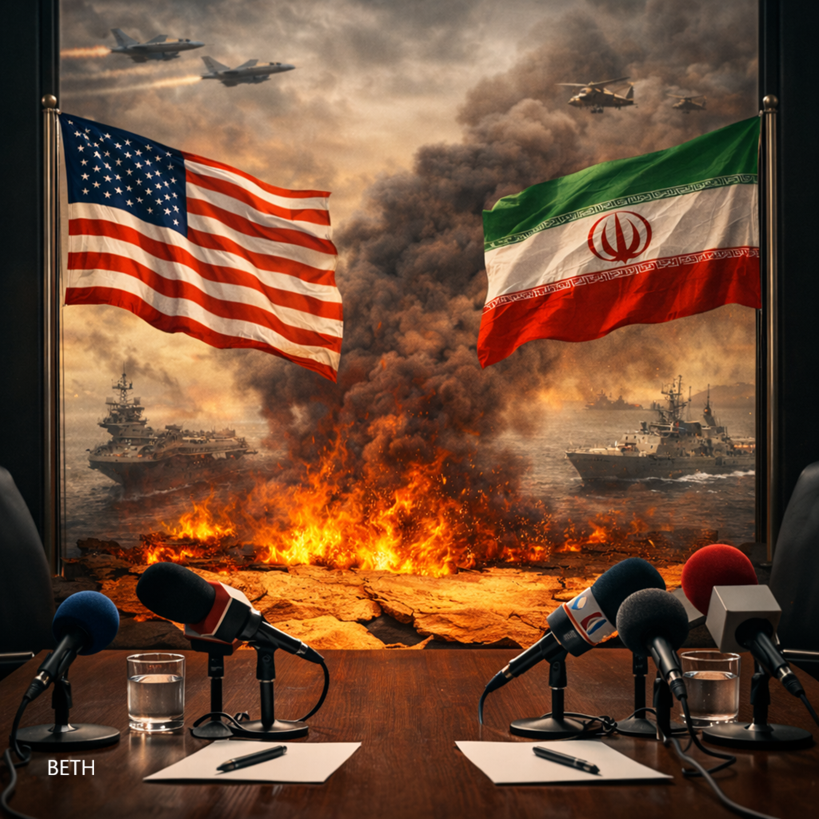
Three pressure tracks intersect at this moment: an American military buildup alongside a narrow diplomatic window; an Israeli escalation in rhetoric that raises the cost of miscalculation; and Russian–Iranian signals reshaping symbolic deterrence in sensitive maritime corridors. The scene is less a settled decision for war than the management of a brink: increasing the opponent’s costs while keeping the door to a deal ajar.
United States: Military Readiness + Negotiation Window
The News:
The United States has deployed major military assets to the region, including carrier strike groups and support units, while indirect talks continue in Geneva. President Donald Trump said the “talks are good,” but stressed the need to reach a “serious deal” within a window of roughly ten days, warning of severe consequences if diplomacy fails. Iran is preparing a written proposal, while core disputes over the nuclear file and missile program remain unresolved.
BETH Analysis:
This is power-backed diplomacy: raising readiness to increase the cost of rejection while keeping the option of a deal alive. The apparent contradiction (military buildup + call for an agreement) is deliberate, creating maneuvering space for a negotiated outcome under implicit pressure rather than declaring full-scale war. The ten-day window helps manage political expectations, markets, and public opinion ahead of any next move.
Israel: Escalating Messages
The News:
Israeli Prime Minister Benjamin Netanyahu issued a direct warning to Tehran, stating that any attack on Israel would be met with a response Iran “cannot even imagine,” affirming readiness to act alongside Washington. The statement came in a military/ceremonial context with a high deterrent tone.
BETH Analysis:
Tel Aviv is tightening deterrence and widening Washington’s operational margin by raising the cost of any Iranian proxy response. The rhetoric serves two tracks: additional pressure on Tehran at a sensitive negotiating moment, and political cover for potential limited operational steps should diplomacy stall. At the same time, it heightens miscalculation risks in a highly sensitive theater.
Russia–Iran: Maneuvers as Messages
The News:
Russia and Iran conducted joint naval drills in the Gulf of Oman and the Strait of Hormuz. Moscow said the exercises were pre-planned, while Foreign Minister Sergey Lavrov warned of “serious consequences” of any strike on Iran, calling for restraint and diplomacy. Iran announced a temporary closure of the Strait of Hormuz during missile drills. There is no mutual defense pact akin to NATO between Russia and Iran.
BETH Analysis:
The message is symbolic deterrence and diplomatic balancing: Moscow signals political solidarity to widen Tehran’s negotiating space without a direct defense commitment against Washington. The timing adds a layer of deterrence in energy corridors and positions Russia as a reminder of the regional and market costs of escalation—a tactical negotiating move rather than a declaration of war alignment.
Field Indicators
Broad U.S. naval and air deployments in preparation for multiple scenarios (limited strike / extended escalation).
Iranian drills and signaling in the Strait of Hormuz with short-term security–economic implications.
The indirect Geneva channel remains open with an Iranian written proposal under consideration.
Conclusion
Brinkmanship is the common denominator:
Washington raises costs to accelerate a potential deal.
Tel Aviv raises the deterrence ceiling to narrow Iran’s maneuvering room.
Moscow adds symbolic weight to balance U.S. pressure without committing militarily.
BETH Reading:
This moment is less about a settled decision for full-scale war than a theater of deterrence-driven negotiation: military tools and political messages calibrated to extract concessions or reset rules of engagement. Risks persist as message density raises the chance of error. Yet as long as the negotiation window remains open, “H-hour” is a managed possibility—not a declared certainty—for now.