



The United States × Iran: Drums of War Are Beating… But
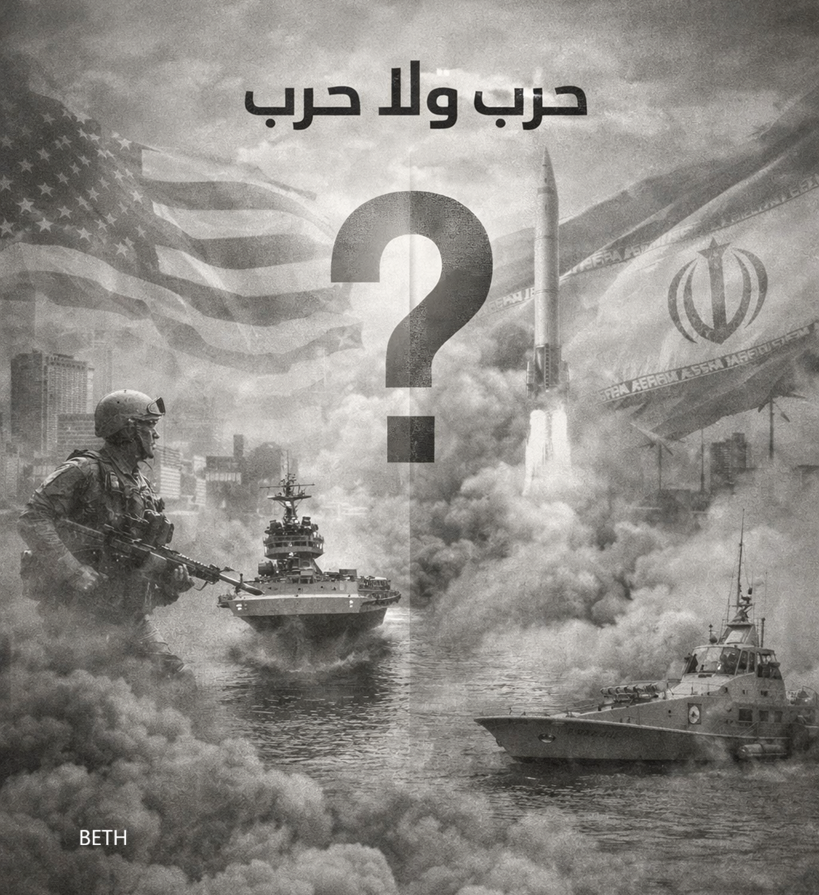
“Zero Hour” Is Not Certain Yet
Follow-up & Analysis | BETH
What is happening now?
Reports are intensifying about U.S. military readiness for potential strike options against Iran in the coming days, amid leaks pointing to “fully prepared” operational plans, while a final political decision has yet to be announced. In parallel, a not-fully-declared negotiation track is in motion, with indications of a written Iranian proposal being prepared to de-escalate tensions. The current scene combines calibrated military pressure with reciprocal deterrence messaging, alongside international warnings against the region slipping into a spiral of escalation.
What do we know… and what don’t we know?
What we know:
U.S. military readiness is in place, but no final execution order has been announced.
A parallel negotiation channel exists, along with international de-escalation and cautionary signals.
Iran is signaling regional retaliation in the event it is struck, raising the cost of any limited strike.
What we don’t know:
Whether readiness will translate into action within a near-term window.
The nature of any strike if it occurs: limited or sustained over time.
The ceiling of reciprocal responses and the boundaries of regional containment.
Three near-term scenarios
1) Limited / targeted strike
Objective: Raise costs and compel rapid concessions from Tehran.
Risks: Proxy retaliation, attacks on interests and bases, heightened maritime and energy tensions.
2) Sustained escalation (weeks)
Features: Gradual operations with a higher engagement ceiling and reciprocal deterrence signals.
Likely outcome: Regional political and economic attrition, market and energy volatility.
3) A last-minute “deal under pressure”
Features: An understanding/framework freezing a strike in exchange for tactical concessions.
Likely outcome: Temporary de-escalation that postpones, rather than resolves, the core conflict.
Does escalation mean “removing the hardline Iranian regime”?
Talk of toppling a regime through a swift military strike is premature. Historical experience suggests strikes often generate short-term internal cohesion rather than dismantle power structures. The more realistic outcomes involve behavior change, rules-of-engagement adjustments, or recalibrated deterrence—not immediate “regime change.” Any structural transformation inside Iran—if it occurs—would be a long, complex political process, not the result of days of airstrikes.
Beneath the surface of the “lake of threats”: BETH’s reading
Coercive diplomacy backed by force: Military preparations to raise negotiating leverage.
Regional deterrence engineering: Signaling limits to adversaries and reassurance to allies.
Domestic political calculations on both sides: Each seeks a “strong exit” that does not appear as retreat.
A war of messages and leaks: Shaping public sentiment and markets before action—or instead of action.
Executive takeaway
The drums of war are beating, but zero hour is not certain yet.
The region stands on the edge of a deterrence test: either rapid containment or a calibrated slide into broader escalation.
“Regime change” is a grand political slogan not delivered by limited strikes; the realistic outcomes are behavior modification, rules-of-engagement shifts, or a deal under pressure.
BETH’s assessment: The current posture is coercive leverage through the threat of force more than a decision for full-scale war—for now.