



A World Without a Fire Extinguisher
World | BETH – Strategic Thought Leadership Analysis
News Lead
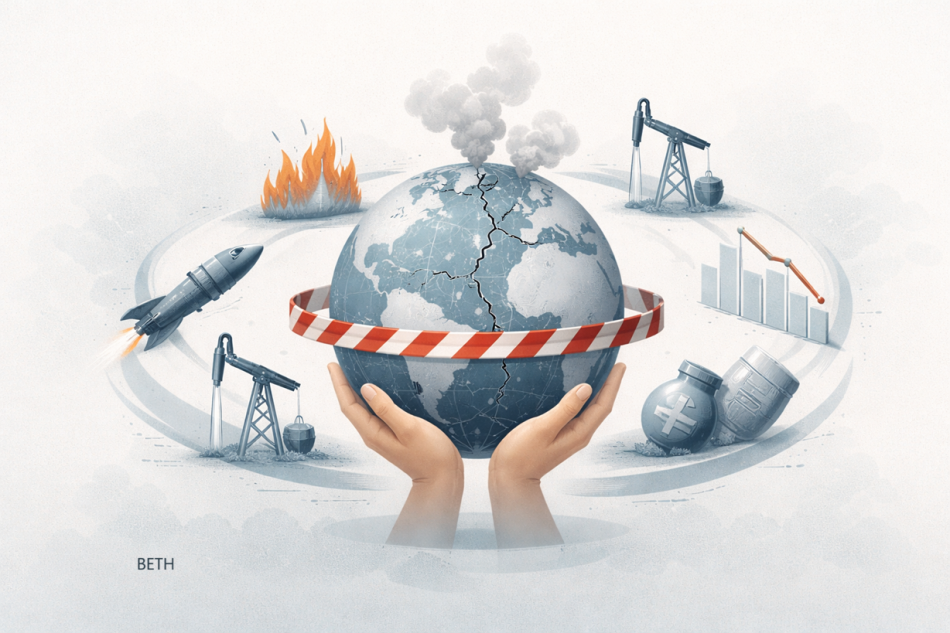
In a world where crises are accelerating and intertwining, international politics is no longer primarily focused on preventing explosions as much as it is on containing their fragments after they occur. From wars that are managed rather than resolved, to inflation that is contained instead of structurally addressed, from patched-up energy crises to frozen conflicts without final settlements—an emerging global pattern is becoming clear: crisis management as a permanent policy.
Why Is the World Shifting From Preventing Crises to Managing Them?
Managing Disorder Instead of Treating Root Causes
The international system increasingly favors short-term operational fixes—containment, de-escalation, freezing conflicts—over structural solutions that require high political and economic costs. The result: recurring crises whose root causes remain largely untouched.
Wars Are Managed… Not Decisively Ended
In major conflicts, the objective has shifted from ending wars to keeping them below the threshold of uncontrollable escalation. This prolongs conflicts and turns them into proxy-driven wars of attrition, where costs are distributed and decision-making is fragmented.
A Global Economy That “Numbs the Pain”
Inflation, supply-chain disruptions, and energy shocks are being treated through emergency instruments—temporary monetary tightening, short-term subsidies, ad hoc supply alliances—rather than through structural reforms in production systems and global economic governance. The world is treating symptoms, not the disease.
Why Are Crises Allowed to Grow Before They Are Addressed? (The Core Question)
Early prevention requires politically costly decisions, sovereignty trade-offs, and difficult international consensus. Post-crisis containment, however, is easier to market domestically as “smart damage control.” The bill is paid later—at a far higher cost.
From a Rules-Based Order to a ‘Marketplace of Power’
At a deeper level, the erosion of the rules-based international order is giving way to a system governed by temporary power balances and transactional deals. Those who wait for rules to protect them lose; those who protect their interests through real power survive.
Has the Idea of a “Global Order” Reached Its End?
BETH Perspective:
“We are not entering a new global order… we are witnessing the end of the very idea of order itself.”
The weakening of international institutions, the rise of transactional politics, and the commodification of principles in favor of situational power balances all signal a shift from binding global rules to negotiated arrangements dictated by power dynamics. This explains why wars last longer, economic crises recur, and definitive solutions fade—replaced by a chronic management of instability.
BETH Indicators (Snapshot)
Shift toward crisis management over prevention: High
Erosion of international rules: High
Recurrence of crises: High
Long-term cost of attrition: Rising
Likelihood of near-term definitive solutions: Low
BETH Conclusion
The world does not lack tools—it lacks the political will to prevent explosions before they happen. As long as the logic of “managing the fragments” prevails over “preventing the blast,” crises will continue to be managed, rotated, and normalized rather than resolved.
The global question is no longer: How do we contain the crisis?
But rather: Why didn’t we prevent it when prevention was still possible?