



AI Enters the Classified Rooms
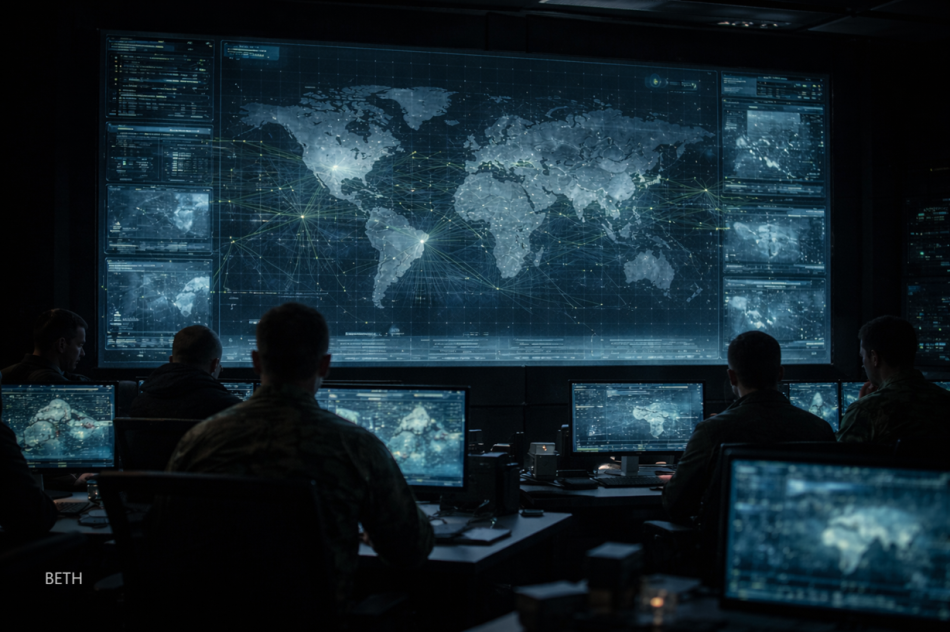
The Pentagon Redefines the Boundaries of Advanced Model Use
Washington | BETH – 12 Feb 2026
Follow-up & Analysis
The Scene
The Pentagon is pressing major artificial intelligence companies, including OpenAI and Anthropic, to make their models available on classified networks, going beyond the usual restrictions these firms impose on user access. The stated objective is to enable the military to leverage AI’s capabilities in analyzing and synthesizing information within highly sensitive operational environments, including military planning and weapons guidance.
What Does This Actually Mean?
We are witnessing a qualitative shift in the relationship between artificial intelligence and institutions of hard power.
AI is no longer merely an administrative or analytical support tool in open civilian environments; it has formally entered the realm of sovereign, high-sensitivity decision-making.
This entails three simultaneous shifts:
From “smart advisor” to “part of the decision room”
Deploying models on classified networks means they will be used closer to the center of decision-making rather than at the periphery. AI thus transitions from a general analytical tool to an invisible actor shaping military options.
Redefining ethical and technical constraints
The guardrails typically imposed by companies (restricting certain uses or limiting specific functionalities) become subject to negotiation with state security institutions. This raises a fundamental question:
Who sets the limits on AI use once it enters national security environments?
Shifting AI risk from the market to the state
In civilian contexts, errors or misuse are managed as commercial or ethical risks.
In military contexts, error can translate into sovereign miscalculation or unintended escalation.
How Will It Be Read Globally?
Militarily: A race toward “smart militarization.” Other states will seek to integrate national models or secure sovereign alternatives to avoid an AI-driven decision gap.
Politically: A widening divide between those who possess “sovereign intelligence” and those reliant on general-purpose commercial platforms.
Ethically: The return of fundamental questions about the limits of delegating life-and-death decisions to machines.
Technologically: The migration of AI from open environments into sovereign black boxes, where public scrutiny and transparency are significantly reduced.
What Does This Mean for the Future?
A changing model of military leadership: Commanders reading AI-generated outputs may decide faster—but will they grasp context more deeply?
Institutionalized reliance on algorithms: Over time, AI recommendations risk becoming implicit reference points that human decision-makers find difficult to override.
A new chapter in 21st-century warfare: Beyond missiles and drones, wars will increasingly be shaped by algorithm-assisted decision systems operating behind closed doors.
The BETH Angle
The issue is not whether the military will use AI.
The issue is who governs AI when it becomes embedded in the logic of war.
BETH Indicators (Quick Read)
Strategic shift: Very high
Potential global impact: High
Ethical/sovereign risks: High
Signal of a military-tech arms race: Clear
BETH Closing
When AI enters classified rooms, it does not merely change the shape of war—
it changes the very definition of decision-making.