



The Multiplication of Shocks… A Reading of Today’s Global News Brief
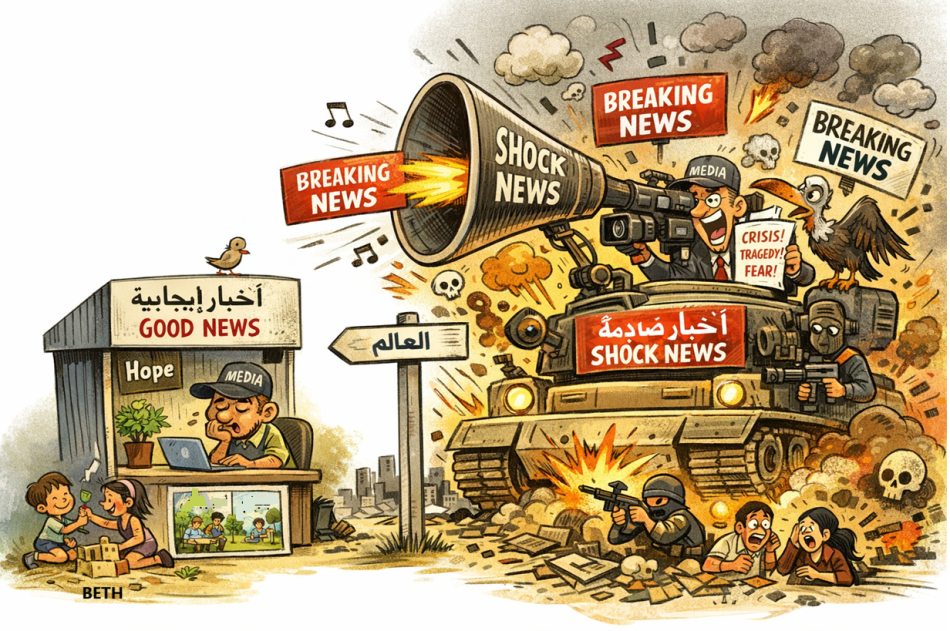
Follow-up & Analysis | BETH
General News Introduction
A mass shooting in Canada topped global headlines today after ten people, including the suspected shooter, were killed in an attack at a school in Tumbler Ridge, British Columbia. Authorities confirmed the assailant was killed after opening fire inside the educational facility. The incident has triggered widespread official and public reactions and reignited debates over community security and gun laws in Western societies.
This tragedy unfolds within a broader global scene where violence and security crises intersect with war and international military cooperation. Below is a brief overview of other major developments shaping today’s global news:
Eastern Ukraine: Reports of fatalities following a Russian airstrike, as President Volodymyr Zelenskyy seeks to bolster air-defense capabilities amid the ongoing war—underscoring the conflict’s escalation and its impact on civilians and critical infrastructure.
The United States and Africa: Washington’s announcement of plans to deploy around 200 troops to train Nigeria’s military in countering extremist groups reflects the continued U.S. security footprint in Africa, amid persistent terrorism-related challenges and regional stability concerns.
Analytical Reading | Contexts and Implications
Gun Violence in Western Societies… Why Does It Persist?
The school shooting in Canada is not an isolated event. It is part of a recurring pattern of gun violence that calls for a deeper examination of underlying factors:
The prevalence of firearms in certain societies
Social and psychological fragility
The erosion of dialogue and containment in polarized environments
The amplifying role of social media in hardening attitudes
These intertwined dynamics, combined with the digital media ecosystem, grant such incidents exceptional visibility—creating a perception that tragedy is becoming the norm rather than the exception.
The War in Ukraine… When Will It End?
The conflict in Ukraine continues to oscillate between escalation and stalemate. Airstrikes in the east and ongoing international support indicate that:
The war has yet to enter a serious negotiation track
Parties are still positioning for leverage before pursuing political solutions
Civilians remain the most vulnerable victims of a protracted confrontation
Strengthening air defenses has become a central pillar of Ukraine’s strategy, reflecting a growing recognition of modern warfare’s reliance on drones and aerial strikes.
The U.S. Security Presence in Africa… A Long Campaign?
The deployment of trainers to support Nigeria’s military against extremist groups signals that:
The U.S. continues to view parts of Africa as active security theaters
Counterterrorism efforts remain unresolved in key hotspots
Security partnerships with local forces are still deemed essential
This trajectory points to transnational security challenges driven by a complex mix of terrorism, poverty, and geopolitical competition.
Q&A | BETH’s Reading of the Multiplication of Shocks
Q: Why are shocking incidents multiplying in the global landscape?
A: The phenomenon is not driven by a single factor, but by the convergence of three overlapping trajectories:
The erosion of ethical and social norms in certain contexts, where dialogue and containment give way to polarization and anger.
The intensification of rival identities and antagonisms, fueled by economic and psychological pressures and continuous digital stress.
A media ecosystem that amplifies shock, as tragic news spreads faster—creating the impression that the world is becoming more violent at a pace that may exceed statistical reality.
Q: Is the media a cause or merely a mirror?
A: The media does not manufacture violence, but it can become an amplifier when tragedy consistently takes narrative priority over prevention stories and social successes. The issue lies not in coverage itself, but in the imbalance between conveying shock and cultivating awareness.
Q: What should be done?
A: The shift must be from reaction-driven media to prevention-oriented media:
Highlighting models of social resilience and success
Investing in solutions journalism, not only shock journalism
Supporting mental health policies and early prevention, and anchoring coverage in analysis rather than sensationalism
Conclusion
Violence does not multiply only in reality—
it multiplies in the narrative.
Rebalancing the media landscape—between what we show the world and what we teach it about reducing harm—is the first step toward mitigating the impact of recurring tragedies.