



Washington–Tehran Talks… Again and Again
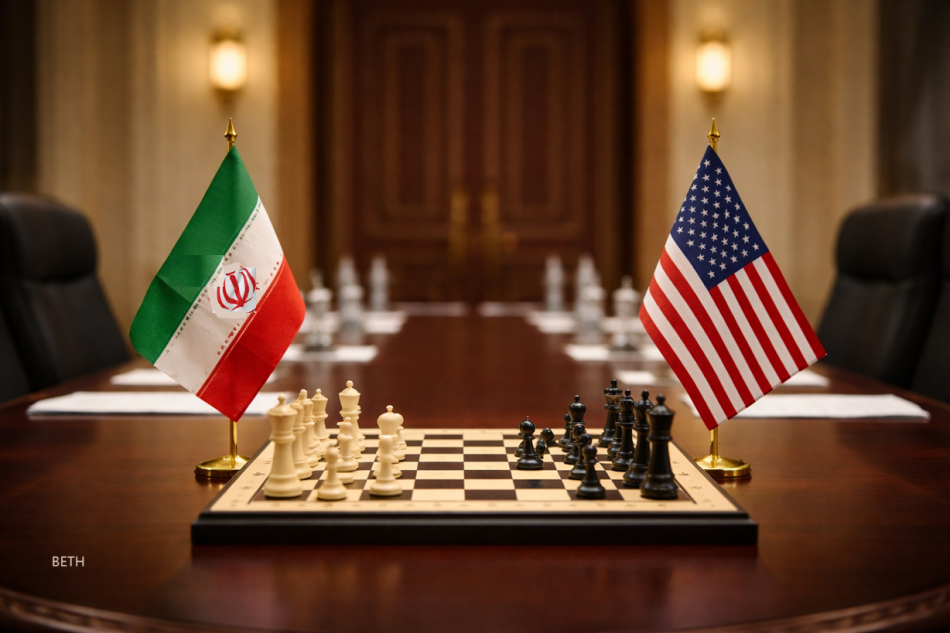
Coverage & Analysis | BETH
Brief News Introduction
Attempts to break the stalemate between the United States and Iran continue through intermittent negotiating channels, in a scene where progress remains slow and returns to near square one outpace any strategic breakthrough.
News | Today’s Latest Round
The first round of indirect talks between the United States and Iran concluded today in Muscat under Omani mediation, according to Iranian state media, with indications that consultations will continue in the coming days.
Iranian sources signaled preliminary understandings, while confirming that a second round will be held in Oman within days, amid divergent public positions—Washington keeping the military option on the table and Tehran stressing its readiness to defend itself.
Oman’s Foreign Minister Badr Albusaidi conveyed a negotiating framework from Iranian Foreign Minister Abbas Araghchi to U.S. Special Envoy for the Middle East Steve Witkoff, as part of Muscat’s mediation efforts to activate an indirect negotiating track on the Iranian nuclear file.
These talks aim to recalibrate outstanding issues—most notably the nuclear file, sanctions relief, and regional de-escalation arrangements. Informed sources said the round ended without a major breakthrough, with agreement to continue technical-level contacts amid clear gaps in expectations.
Analysis | Why “New… Yet Not New”?
1) Managing Time, Not Untying Knots
Repeated rounds function more as crisis management than resolution. Each side keeps the door ajar to avoid escalation, without altering the rules of the game.
2) Negotiations Under Domestic Constraints
Negotiating room is shaped by domestic politics:
In Washington, any move risks being framed as a concession.
In Tehran, flexibility carries internal political costs.
3) Messaging Over Outcomes
Rounds are used to send calming signals to regional and global markets, managing tensions without delivering a comprehensive deal.
4) The Region at the Table—Unspoken
Regional security, maritime dynamics, and networks of influence constrain technical nuclear progress. There is no nuclear track insulated from broader regional behavior.
What’s Different About Today’s Session?
Return to Technical Channels: Testing lower-risk spaces through technical committees rather than high-stakes political bargaining.
More Pragmatic Mediation Tone: Stabilizing rules of engagement rather than pushing for a grand bargain.
Time Pressure: In a tense regional context, keeping minimal communication channels open becomes an objective in itself—even without breakthroughs.
Conclusion
This is less progress than keeping the ball in play.
Negotiations manage risk rather than resolve it; rounds deliver procedural updates without strategic change.
The question remains: who is prepared to bear the cost of the first decisive move to change the direction of play?