


Media Between Theory and Practice
By Abdullah Al-Omira
Editor-in-Chief, BETH News Agency
Attracting global media experts is undoubtedly a positive step.
Not because their names are internationally recognized, but because the practical frameworks they bring—from newsroom management and narrative construction to impact measurement—represent where modern media is truly heading.
Yet, on the other side of the picture, an unavoidable question emerges:
Are we observing our local media practices with the same level of scrutiny?
The issue is not participation or visibility, but methodology and execution.
Presenting local “experiences” that largely mirror what audiences already see on a daily basis adds little value to the broader media conversation.
This is not a critique of youth or emerging talent.
On the contrary, young professionals are the future—but the future is not built on platforms alone.
It is built on method, discipline, and institutional clarity.
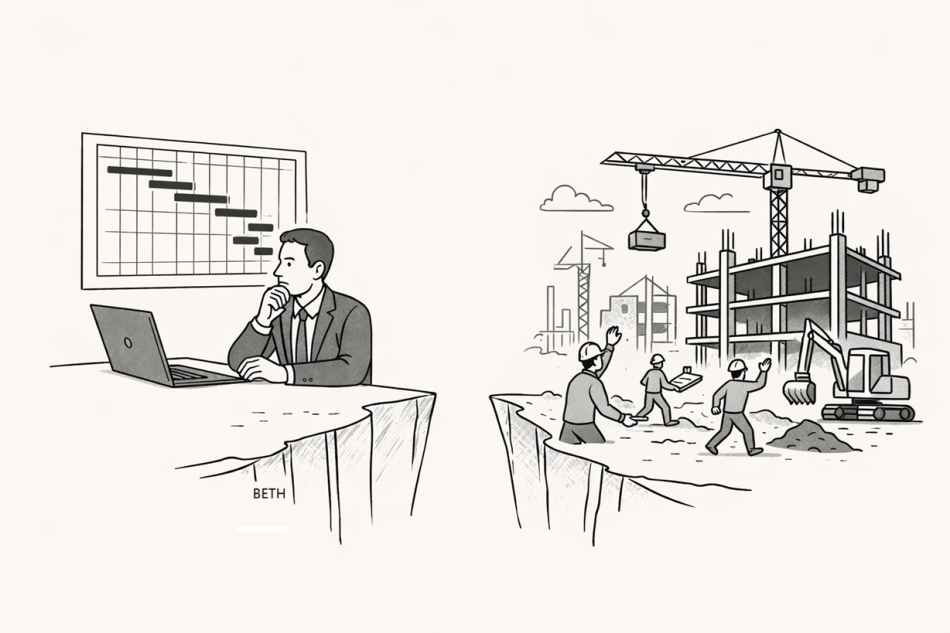
The real challenge today lies in narrowing the gap between local media practices and international media standards—not in ambition, but in execution.
The Challenge Is Not Theory, but Operational Translation
Any media forum can become a well-designed exhibition of ideas—and then fade away.
Artificial intelligence, digital transformation, and content strategies can be discussed endlessly without producing tangible change.
The core problem is simple:
Theory without structure does not lead to implementation.
Structure here is not a slogan.
It is a system that requires:
clear prioritization of what must change,
an actionable strategy with defined responsibilities and timelines,
and institutional capacities capable of absorbing development—through standards, tools, training, and performance measurement.
Without these elements, even the most successful events risk becoming narratives rather than outcomes.
Global Expertise Is Not Consumed—It Is Translated
Global experts offer more than inspiration.
They offer methodology.
Methodology is the difference between media that merely fills space and media that genuinely shapes understanding.
Today, the key questions are no longer what was said, but:
how it was framed,
why it was framed that way,
who it was meant for,
and what impact it produced.
These are the questions that should guide every press center and official platform.
Media Is No Longer Confined—and Misreading This Has Consequences
Modern media is not limited by geography or single platforms.
Messages travel, are reinterpreted, and ultimately judged in a global context.
Sending a message is not enough.
Understanding how it will be read, perceived, and trusted once it leaves the newsroom is what defines credibility.
A message that is misunderstood—or perceived as promotional rather than informative—loses its value and creates doubt that is difficult to reverse.
Numbers Do Not Equal Impact
High figures—millions of messages, views, or impressions—can be misleading.
The real question is not how widely a message was distributed, but what changed because of it.
Did understanding improve?
Did trust increase?
Did confusion decrease?
Did the message move from noise to conviction?
Audiences evaluate credibility before content.
If numbers appear inflated or visuals feel disconnected from reality, the message becomes a liability rather than an asset.
A Forum of Saudi Arabia’s Scale Must Be Measured by Impact
The Saudi Media Forum is an important initiative.
But importance alone is not enough.
What truly matters is measurement—not of attendance or exposure, but of institutional change:
in news framing,
narrative management,
verification quality,
response speed,
message clarity,
and the relationship between media and audiences.
Only then does a forum become a platform for transformation rather than presentation.
The Gap Is Not Capability, but Self-Centered Narratives
From close observation, the disparity between global media practices and some local outputs is not rooted in limited capacity.
It is rooted in self-referential communication—speaking inwardly while assuming global applause.
Effective media begins with one essential question:
How does the audience think?
When that question is ignored, even the loudest voice remains trapped in a closed loop.
The Central Question
Can the ideas and global experiences presented at such forums be converted into operational reality?
That is the real test.
The answer does not begin with more speeches, but with an institutional decision:
to move beyond theory toward execution—through training, standards, newsroom reform, and measurable impact.
Only then does the conversation evolve from repetition to progress.
Conclusion
BETH should not be underestimated.
After thirteen years of operation, the challenge is no longer understanding international audiences—it is ensuring that the local understanding of international media itself matures.
Our mission is global, but its success begins internally.
Official and self-contained narratives cannot simply be exported as they are.
International media is not about translating statements, polishing images, or imposing narratives.
It is about reframing messages so they are understood, trusted, and influential—without feeling imposed or promotional.
This is where the true difference emerges:
between media that is merely spoken,
and media that is genuinely understood.
__________
Image caption:
The gap between planning and execution: when the schedule looks perfect, but reality disagrees.