



When Media Discusses Its Future… Using the Tools of the Past
Follow-up & Analysis | BETH
Riyadh – Monday
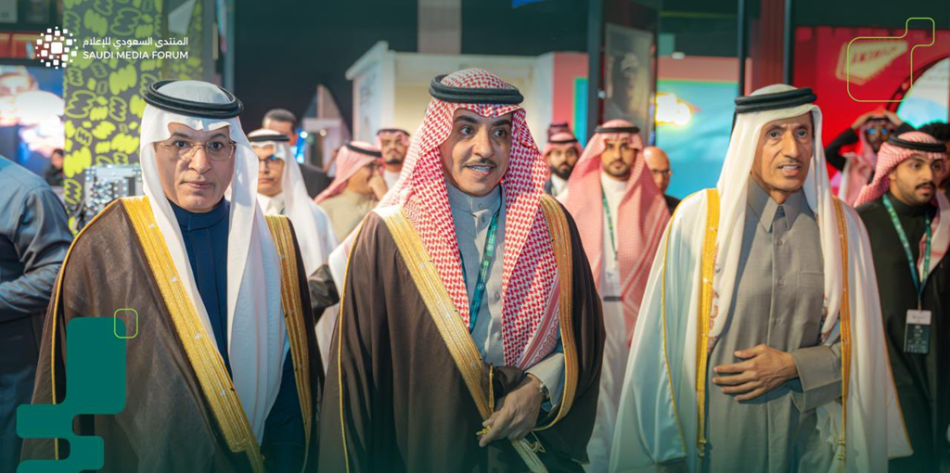
Under the patronage of King Salman bin Abdulaziz, Saudi Minister of Media Salman Al-Dosary inaugurated the Saudi Media Forum 2026, emphasizing a shift from expanding tools to building a values-driven, impact-focused media ecosystem. He highlighted Vision 2030’s role in establishing balanced media governance that aligns technology with human values and challenges the dominance of attention economics. The forum launched 12 strategic initiatives in AI and media innovation, hosting over 300 global leaders from 20 countries alongside the FOMEX exhibition—reinforcing Riyadh’s position as a global hub for shaping the future of media.
As the Saudi Media Forum 2026 officially gets underway, attention turns to an event intended to serve as a platform for anticipating the future of media—one that explores digital transformation, artificial intelligence, media investment, and the evolving role of journalism in shaping public awareness.
On the surface, the scene appears complete:
large-scale organization, high-level patronage, prominent speakers, and discussion themes aligned with the profound transformations reshaping the media industry both locally and globally.
Yet a closer analytical reading suggests that the forum’s real significance today lies not only in what is being discussed on stage, but in what the event itself reveals about the gap between media discourse and media practice.
A Media Forum… with a Questionable Media Management Model
In major international events, success is not measured by attendance figures alone, but by the ability of the media center to lead the narrative from the outset.
Clear pre-event briefings, a well-structured daily program, defined media messages, and easy access to information are baseline standards for professional media operations.
However, monitoring of the forum indicates noticeable shortcomings—up to the opening moment—in:
the availability of structured, pre-emptive media content,
clarity around the opening-day program, and
the transformation of operational schedules into publishable journalistic material.
As a result, journalists find themselves searching for basic information rather than focusing on analysis and interpretation—a striking contradiction for an event designed specifically for media professionals.
Big Questions… Limited Editorial Framework
The forum raises undeniably important questions, including:
the future of media in the age of artificial intelligence,
the relationship between media and investment,
digital transformation and content production, and
credibility and the fight against misinformation.
The issue, however, is not the relevance of these topics, but the absence of a coherent editorial framework capable of translating them into a unified media narrative that is clear, accessible, and impactful for audiences.
The difference between a successful event and an influential one lies not in the number of sessions, but in how messages are curated, connected, and presented as part of a single, intelligible story.
Media Still Treated as a Statement, Not a Conscious Industry
The follow-up also reveals that some aspects of the organization continue to approach media as:
the publication of official statements,
the documentation of activities, or
the accumulation of names and titles.
Globally, however, media has moved beyond this stage toward:
managing understanding,
building narratives, and
guiding public discourse through strategic, anticipatory thinking.
Those who fail to recognize this shift risk discussing the future using tools that no longer belong to it.
What Does the Forum Truly Reveal?
Beyond direct criticism or evaluation, the Saudi Media Forum 2026 reveals neither a shortage of ideas nor a lack of talent.
Rather, it highlights a persistent challenge: the editorial management of the media narrative itself.
This challenge is not unique to the forum, but becomes especially visible when the event in question is dedicated to discussing the future of media.
Analytical Conclusion
The Saudi Media Forum represents a genuine opportunity—not only for dialogue, but for reflection.
Reflection on the relationship between:
what we want to say,
how we say it, and
who manages the message.
Media impact is not measured by what is said on stage,
but by how the narrative is shaped before, behind, and beyond the spotlight.
In an era of rapid transformation, one principle remains constant:
those who do not master the management of media cannot lead its future.