



U.S. – Iran: Pricing Deterrence Before Crossing the Lines
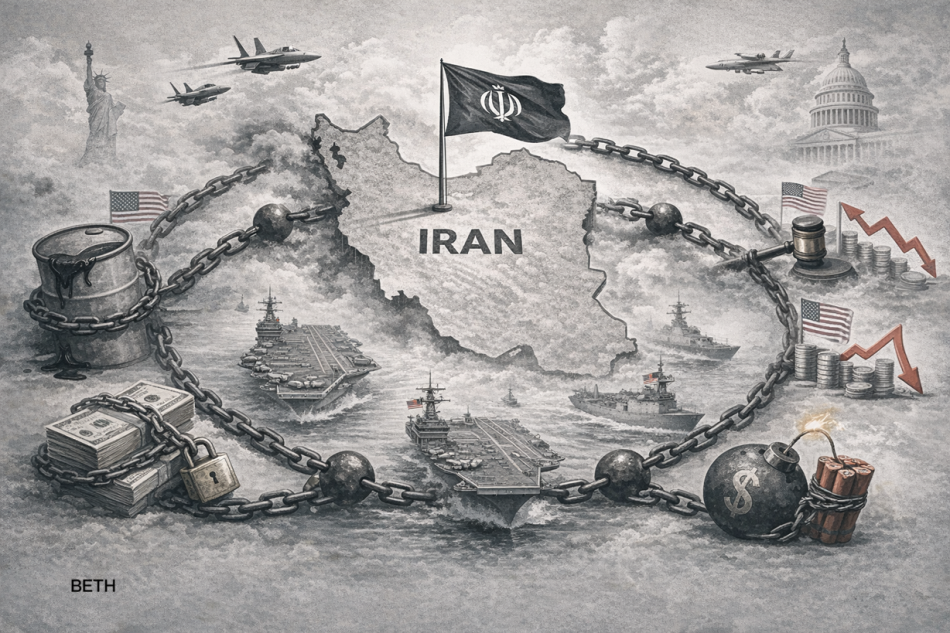
Monitoring & Analysis | BETH
First: Key Military and Political Developments
Targeted New U.S. Sanctions
Washington announced an additional package of sanctions targeting Iranian security figures and financial entities, signaling a shift from broad pressure to selective, high-cost pressure.
Iran’s Dual Message: Negotiation Without Defense Concessions
Tehran expressed readiness for a “fair” dialogue while firmly excluding any discussion of its defensive and missile capabilities, maintaining full military readiness.
Escalating Rhetoric and Internal Linkages
Iranian leadership accused Washington and its allies of “fueling tensions,” amid mounting internal and economic pressures inside Iran.
Calculated Military Movements Without Engagement
Iran announced naval drills and movements near sensitive maritime routes, met by enhanced U.S. naval presence—reinforcing a deterrence equation without triggering confrontation.
Quiet Regional Mediation
Gulf states issued clear calls for de-escalation, activating backchannel diplomacy to contain any unintended incident.
Second: Market Impact (Oil, Equities, Risk)
Oil and Energy
A rise in geopolitical risk premiums on Brent crude, without sharp price spikes.
Markets are pricing a “containable tension” scenario rather than full-scale war.
Any maritime incident could trigger rapid—though likely temporary—price increases.
Equities
Limited volatility across U.S. and global indices.
Defensive and energy sectors attract hedging demand.
Investors favor caution over exit, reflecting confidence in containment.
Insurance and Shipping
Gradual increases in shipping insurance costs on certain routes—an early warning indicator ahead of any larger escalation.
Third: What Intelligence and Global Analysis Indicate
No confirmed indicators of an imminent war decision, but preparedness for deterrence and containment scenarios is evident.
The prevailing assessment: both sides aim to raise the cost for the other without crossing red lines.
The real risk lies not in political intent, but in a minor field incident that could be politically and media-wise interpreted as major escalation.
Continued economic pressure seeks behavioral adjustment, not regime collapse in the near term.
Analytical Reading | BETH
What we are witnessing is neither a fast track to war nor an easy return to an agreement—but a phase of “deterrence pricing”:
Washington raises the cost of time for Tehran.
Tehran raises the cost of any potential strike across the region and maritime corridors.
Markets observe—without panic.
Mediators operate quietly.
Conclusion
U.S.–Iran tensions are at their highest politically,
yet remain below the threshold of war.
The current equation:
Pressure without resolution,
deterrence without confrontation,
and global vigilance over a small mistake—
that could carry a high price.
BETH | A calm reading beyond the escalation