



Red Sea Global Achieves Landmark Sustainability Milestones with Prestigious LEED Certifications
Tabuk | BETH – January 22, 2026 (03 Sha’ban 1447 AH)
Red Sea Global has recorded a series of unprecedented achievements in sustainable design and operations, after several of its assets were awarded globally recognized LEED certifications.
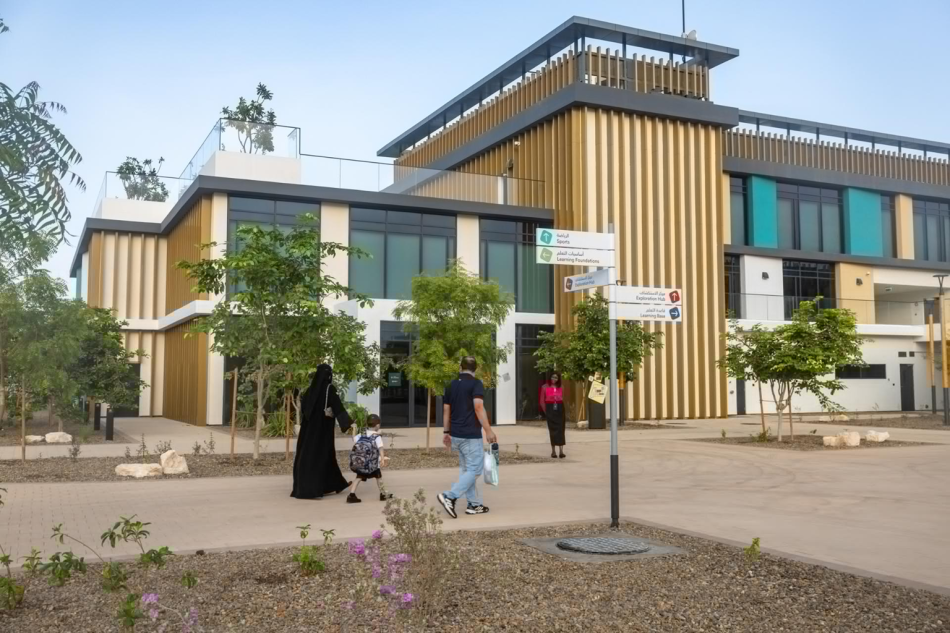
Among the most notable accomplishments, Red Sea International Airport received the LEED Platinum certification, becoming one of only four airports worldwide to achieve this highest rating. Meanwhile, Turtle Bay International School earned LEED Platinum certification with the highest score ever recorded under the LEED v4 Schools (BD+C) rating system.
In a parallel achievement, the company’s Central Distribution Center was awarded LEED Gold, ranking it among the most sustainable storage facilities in the region. In addition, the master plans for Turtle Bay and the Amaala Staff Village received LEED Platinum certification for Communities.
Commenting on the achievement, Red Sea Global’s Chief Sustainability and Environment Officer Raed Albasseet said that the certifications go beyond technical recognition, reflecting a deeply embedded approach that places sustainability at the core of all operations. He noted that this includes full reliance on renewable energy, advanced water reuse systems, circular waste management that converts waste into resources, and low-emission mobility solutions.
Albasseet explained that the airport’s certification underscores its advanced sustainability framework, which includes 100% renewable energy operations, high-efficiency energy management systems, and the use of sustainable aviation fuel for seaplane operations. He added that the achievement crowns years of integrated collaboration across teams and reflects the company’s holistic approach to developing infrastructure that delivers long-term environmental, social, and economic value.
He further stated that Turtle Bay International School achieved 92 points, the highest score globally under LEED v4 for Schools. Only 15 schools worldwide have reached this level, making it the first educational facility locally to achieve this distinction and setting a new benchmark for sustainable education, advanced architectural design, and regenerative learning environments.
As for logistics facilities, the Central Distribution Center earned LEED Gold after scoring 73 points, positioning it among the most sustainable storage facilities in the Middle East and reflecting the company’s commitment to reimagining industrial design through smart energy management, optimized material use, and enhanced operational efficiency.
With Amaala receiving LEED for Communities (Planning and Design) certification, the destination is now part of a global reference framework for sustainable urban planning and large-scale development, encompassing environmental and social dimensions, economic development, urban resilience, governance, and quality of life.
This certification places the project among an exclusive group of only 45 projects worldwide to receive LEED for Communities certification, including 16 Platinum-rated projects, among them Phase One of the Red Sea Destination. It also marks Amaala’s first LEED certification, establishing a solid foundation for its positioning as a global model for responsible development and a benchmark for the future of sustainable communities.
The Red Sea Destination is a cornerstone of Vision 2030, currently hosting nine luxury resorts open to guests. Shura Island, the heart of the destination, began welcoming visitors last year with the opening of its first 11 resorts.
Red Sea Global has also recently announced the upcoming opening of Amaala, its luxury wellness and regenerative tourism destination, carefully designed to host no more than 1.5 million visitors annually to preserve its pristine environment.
Both the Red Sea and Amaala destinations operate on 100% renewable energy, contributing to the reduction of up to one million tonnes of CO₂ equivalent annually—the equivalent of removing two million cars from the roads for an entire year.