



The Agreement Between the Syrian Government and the Syrian Democratic Forces: Details of a Major Turning Point
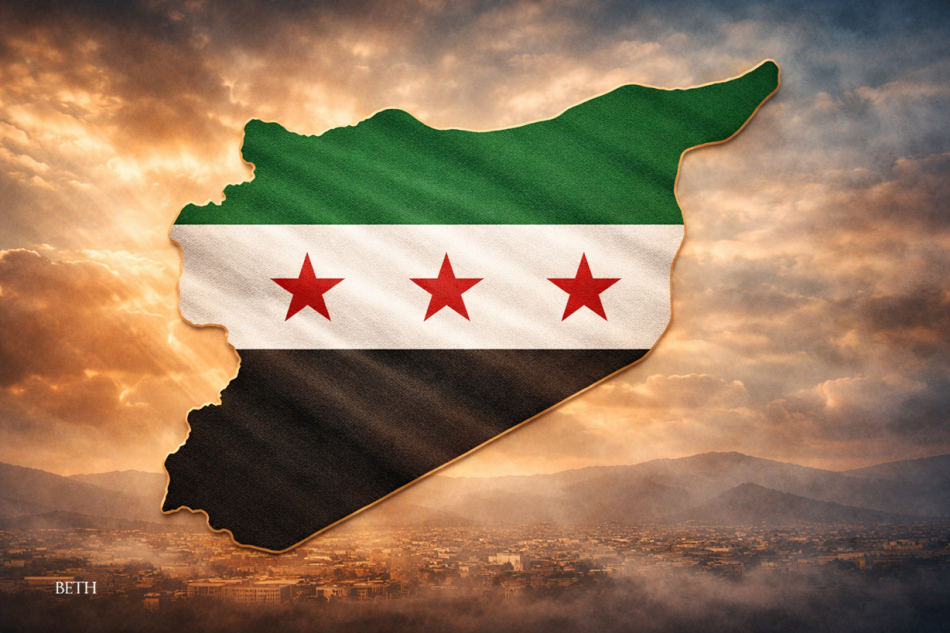
Riyadh | Damascus – BETH
On January 18, 2026, a ceasefire and full integration agreement was announced between the Syrian government and the Syrian Democratic Forces (SDF), marking one of the most significant political and military shifts in the course of the Syrian crisis in recent years.
The agreement, reached after a complex negotiation process, goes beyond a temporary field de-escalation. It lays out a new framework for reorganizing authority, administration, and security in northeastern Syria, effectively ending more than a decade of military and administrative separation.
Key Provisions of the Agreement
1) Comprehensive and Immediate Ceasefire
The agreement stipulates a complete halt to hostilities across all fronts and contact lines between the Syrian Arab Army and the SDF, ensuring immediate stabilization on the ground.
2) Military Redeployment
SDF forces, in all their formations, are to withdraw east of the Euphrates River as part of broader security and military reorganization measures.
3) Transfer of Strategic Areas to the Syrian State
This includes Raqqa, Deir ez-Zor, oil and gas fields, and border crossings, all returning to the central administration of the Syrian government.
4) Integration of Civil Institutions
All civilian institutions in al-Hasakah Governorate will be integrated into the Syrian state’s administrative structure.
5) Military and Security Integration
SDF personnel will be individually integrated into the Syrian Ministries of Defense and Interior following security vetting, with ranks and employment rights granted accordingly.
6) Special Arrangements for Kurdish Areas
Heavy military presence will be removed from Ayn al-Arab (Kobani), and a local security force composed of residents will be formed under the administrative authority of the Ministry of Interior.
7) Removal of PKK Elements
The SDF commits to expelling non-Syrian leadership and members affiliated with the Kurdistan Workers’ Party (PKK) from Syrian territory.
8) Prisons and Counter-Terrorism File
Responsibility for ISIS detention facilities and camps will be transferred to the Syrian state, which will assume full security and legal accountability.
9) Local Representation and Political Track
Local representation in al-Hasakah Governorate is guaranteed, with figures from the SDF participating in civilian and security roles within state institutions.
What Does the Agreement Mean Politically?
The agreement represents a strategic shift in the Syrian conflict landscape:
Formal termination of armed confrontation between Damascus and the SDF
Restoration of resource-rich strategic areas to state authority
Reduction of military and administrative fragmentation
Opening a new path toward institutional reunification of Syria
International Reactions
Regional and international actors welcomed the agreement, describing it as a pivotal step toward restoring Syrian state unity. The United States characterized it as a turning point in the political settlement process.
Saudi Position: Clear Support for Syria’s Unity and Stability
The Saudi Ministry of Foreign Affairs expressed the Kingdom’s welcome of the ceasefire agreement and the full integration of the Syrian Democratic Forces—both civilian and military—into the Syrian state, praising the efforts of the United States in facilitating the agreement.
Saudi Arabia voiced its hope that the agreement would contribute to:
Enhancing security and stability
Rebuilding state institutions
Enforcing the rule of law
in a manner that fulfills the aspirations of the Syrian people for development and prosperity.
The Kingdom reaffirmed its full support for the Syrian government’s efforts to strengthen civil peace and preserve Syria’s sovereignty and territorial integrity.
High-Level Political Contact Reflects the Moment’s Significance
In a related development, His Royal Highness Prince Mohammed bin Salman bin Abdulaziz Al Saud, Crown Prince and Prime Minister, received a phone call from His Excellency President Ahmad Al-Shar’ of the Syrian Arab Republic.
The call addressed:
Bilateral relations between the two countries
Opportunities to enhance cooperation across various fields
Regional developments
A number of issues of mutual interest
BETH Summary
What has occurred between the Syrian government and the SDF is not merely a security arrangement, but a redrawing of authority and sovereignty in one of Syria’s most complex conflict zones.
With regional backing, a clear Saudi stance, and high-level political engagement, the Syrian file is entering a new phase—one defined by:
Rebuilding the state… not managing division.