


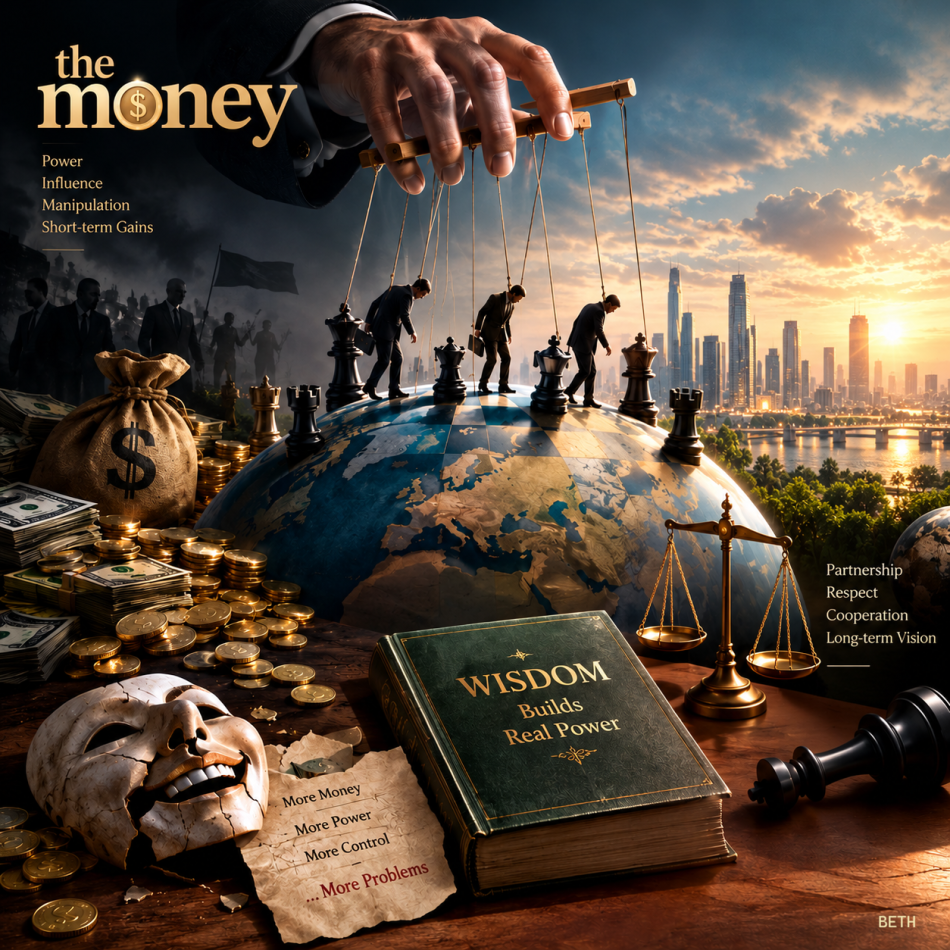
The Meaning Crisis in the Age of Artificial Intelligence Enters a Political Phase
Analysis | Strategic Media Management – BETH
Introduction
As artificial intelligence accelerates beyond its technical boundaries, the world is witnessing a deeper and more complex shift:
a transition from a purely technological debate to a political, ethical, and civilizational confrontation.
What was once a question of efficiency and innovation has become a matter of responsibility, authority, and meaning.
Governments, courts, universities, and media institutions are now asking the same uneasy question:
Who is truly in control?
Why Now?
Across Europe and the United States, intense debates are unfolding around three core issues:
Should artificial intelligence be allowed to make autonomous decisions?
Who bears responsibility for AI-driven errors or harm?
Where does human accountability begin—and where does it end?
These questions are no longer theoretical.
They are shaping legislation, influencing judicial systems, and redefining the boundaries between human judgment and algorithmic power.
BETH Perspective: When Technology Advances Faster Than Ethics
From a strategic standpoint, the core challenge is not technological.
It is civilizational.
Technology evolves through speed and iteration.
Ethics evolve through reflection, consensus, and lived experience.
When one outpaces the other, imbalance emerges.
Artificial intelligence is not replacing human values—but it is exposing how fragile, undefined, or neglected those values have become.
Analysis: A Crisis of Meaning, Not of Machines
The current disruption does not stem from AI’s intelligence, but from humanity’s hesitation to define:
What decision-making should remain human
What values must never be automated
Where moral responsibility cannot be delegated
In this sense, artificial intelligence is less a threat to humanity than a mirror—reflecting uncertainty about identity, purpose, and authority.
The Central Question
Is artificial intelligence redefining what it means to be human?
Or is it revealing the absence of a clear human definition in the first place?
The more algorithms advance, the more urgent the question becomes:
Who leads values in the future—the human conscience or the algorithmic logic?
Conclusion | A BETH Reading
The world is not facing a technological crisis.
It is facing a crisis of meaning.
Those who will shape the future are not necessarily those who build the most advanced systems,
but those who succeed in aligning innovation with ethics, power with responsibility, and speed with wisdom.
In the race between humans and algorithms,
the true challenge is not who thinks faster—
but who defines what is worth thinking about.
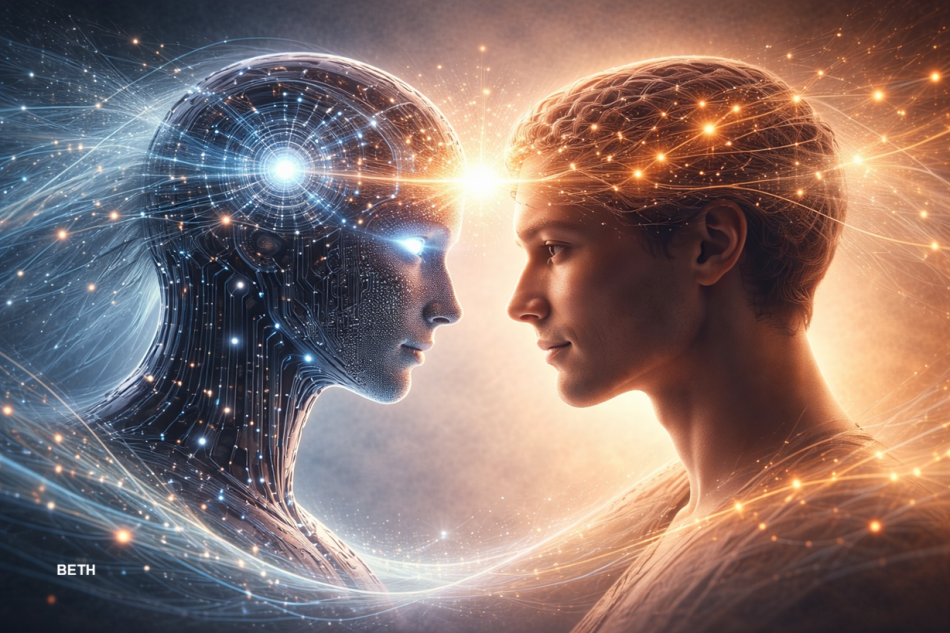
Image: A state of harmony between humans and artificial intelligence, revealing a conflict over meaning—not a collision of tools.