



What’s the Airbus Story?
🛫 Analytical Report – BETH
Airbus, the European aircraft manufacturer, issued on Friday a recall notice that may include up to 6,000 A320 aircraft, following an incident related to flight control monitoring.
The company said that after discovering that “intense solar radiation” may affect “sensitive data” linked to the operation of flight-control elements, it became necessary to inspect a large number of A320 aircraft before allowing them to continue operating.
The company, headquartered in Toulouse, explained in a statement — without going into details — that the issue was identified through the analysis of a recent incident involving an A320 aircraft, according to the German news agency (DPA).
These recommendations are expected to cause operational disruptions for passengers and customers, while Airbus has not announced the exact number of aircraft that will require inspection.
In coordination with aviation authorities, Airbus requested that airlines take preventive measures to protect the software or hardware… or both.
Earlier, the company said it had received a major order during the Paris Air Show to purchase 100 aircraft from the Vietnamese carrier “VietJet Air,” which is the company’s largest deal this year, after delivering 78 aircraft last month.
The order was finalized on October 10 following a memorandum of understanding signed in June at the exhibition. The estimated value of the single-aisle A321neo aircraft is about $13 billion, although the company does not disclose detailed prices.
Airbus also expects the aircraft fleet in the Middle East to more than double, reaching 3,700 aircraft by 2044.
Why can’t what’s happening be ignored?
When Airbus — the European aviation giant and the manufacturer of the world’s best-selling commercial aircraft — issues a decision to recall six thousand A320 aircraft at once, this is not merely a technical incident.
It is an industrial earthquake affecting airlines, passengers, regulators, and global market confidence.
But… before we understand what is happening now, we must know how Airbus reached this point.
First: The story of Airbus… How the company that broke Boeing’s monopoly was born
In the 1960s, the world was living under an almost complete American monopoly over the aircraft industry, led by Boeing.
European countries — France, Germany, Spain, and Britain — felt that their industrial future was slipping away.
So they decided to form an unprecedented industrial alliance…
This is how Airbus was born.
Key milestones in its rise:
1972: First flight of the A300 — the world’s first wide-body, twin-engine aircraft.
1987: Launch of the A320 — the aircraft that would change the rules of the game.
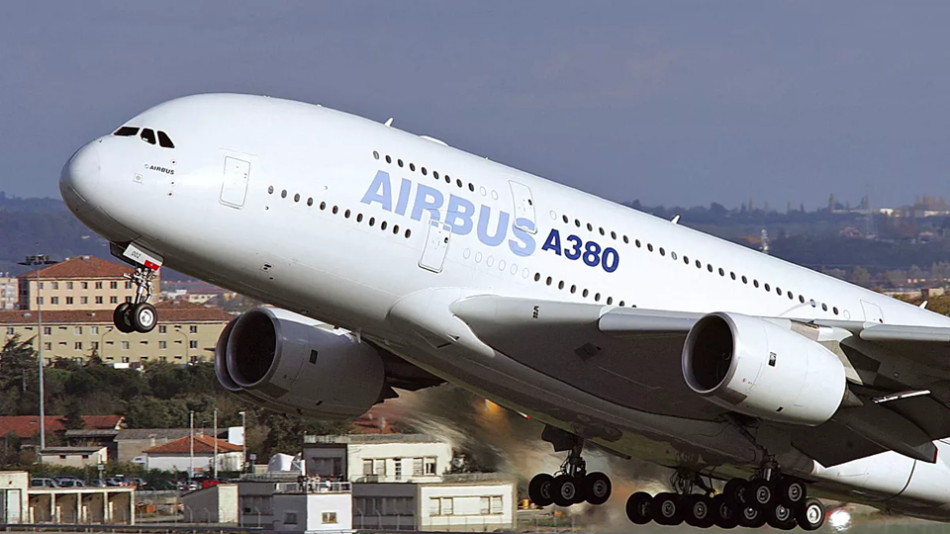
2005: A380 — the largest passenger aircraft in history.
2010–2020: Dominance of the A320neo in the market, and surpassing Boeing in sales for the first time in history.
In short:
Airbus is not a company… it is a massive European project to restore industrial sovereignty.
Second: Why is the A320 specifically at the heart of the problem?
Because it is:
The most widespread aircraft in the world
(more than 11,300 aircraft in service)
The most relied upon by low-cost airlines
The backbone of air transport in Asia, the Middle East, and the Americas
The aircraft that flies the most daily around the world
It is simply:
the main engine of the global aviation industry.
That is why any defect — even a small one — turns into a planetary crisis.
Third: What actually happened? And why the massive recall?
The core issue:
Extreme solar radiation affected sensitive data that control part of the flight-control system.
The original incident was with a JetBlue flight from Mexico to New Jersey on October 30:
The aircraft suddenly lost altitude
Injuries among passengers
Emergency landing in Florida
FAA investigation began
Discovery that the problem was linked to software + possibly hardware
And after analyzing the data:
Airbus found that thousands of aircraft use the same version of the electronic system.
⚠ Therefore, the company issued an immediate order:
A return to an older version of the software + inspection of hardware if needed.
And this is the first time the company acknowledges that:
Solar radiation can corrupt flight-control data.
A shocking fact — but true.
Fourth: How did airlines around the world react?
1) India — complete suspension
A full ban on operating A320 aircraft until all modifications are completed.
2) Japan — 65 flights canceled in one day
3) New Zealand — severe disruptions for A320neo flights
4) American Airlines — the world’s largest operator
340 aircraft need repairs.
Each aircraft requires two hours — if hardware replacement is not needed.
5) Avianca Colombia
70% of its fleet affected — 100 aircraft.
Stopped ticket sales until December 8.
6) Lufthansa, EasyJet, IndiGo
Temporary grounding of the affected aircraft.
Fifth: How did Saudi Arabia handle it?… A professional model
Saudia
Began reviewing the A320 fleet systems
No schedule changes unless necessary
Direct communication with affected passengers
Flynas
Recalibration of software for some aircraft
Limited delays
Flyadeal
Adjusted technical and software parameters
Full return to normal operations on Sunday, Nov 30
Direct communication with passengers via SMS and email
Notable point:
Saudi Arabia did not cancel flights… it managed the crisis without major disruptions.
Sixth: Why is this considered the biggest recall in Airbus history?
Includes half of the global A320 fleet
Affects the busiest travel weekend in the U.S.
Comes weeks after A320 surpassed Boeing 737 globally
May require hardware changes for more than 1,000 aircraft
Occurs during a sensitive period of competition between Boeing and Airbus
Some analysts called it:
“The most disruptive event since the grounding of the Boeing 737 MAX.”
Seventh: How will Airbus fix the problem?
So far, the company is following a strategy of three steps:
Return to the previous version of the software
A temporary solution that prevents interference with solar radiation.
Inspection of the SPOILER CONTROL COMPUTER units
A very sensitive unit that controls altitude management.
Hardware replacement for aircraft with high flight hours
(may include 1,000–1,500 aircraft)
Working with Thales to develop higher protection against cosmic radiation
Issuing a comprehensive software update within 8 weeks
The equation now is:
Fast temporary fix + fundamental solution within weeks.
The bigger question:
Will these steps be enough to reassure the market?
Conclusion: Is Airbus facing a “Boeing moment”?
The answer: No… but the crisis is serious.
The issue is technical, not structural
The solution is known and can be implemented
But the number of affected aircraft is huge
And the timing is extremely sensitive
However, the most important lesson:
The modern aviation era is more dependent than ever on software, not engines.
And every software glitch is now capable of grounding half the world’s fleet.
And here comes the essential question:
Can companies keep up with the “fragility” of technology against natural phenomena?
We will see… and the sky will answer.