



The world heads to Belém… and the loudest voice isn’t the states
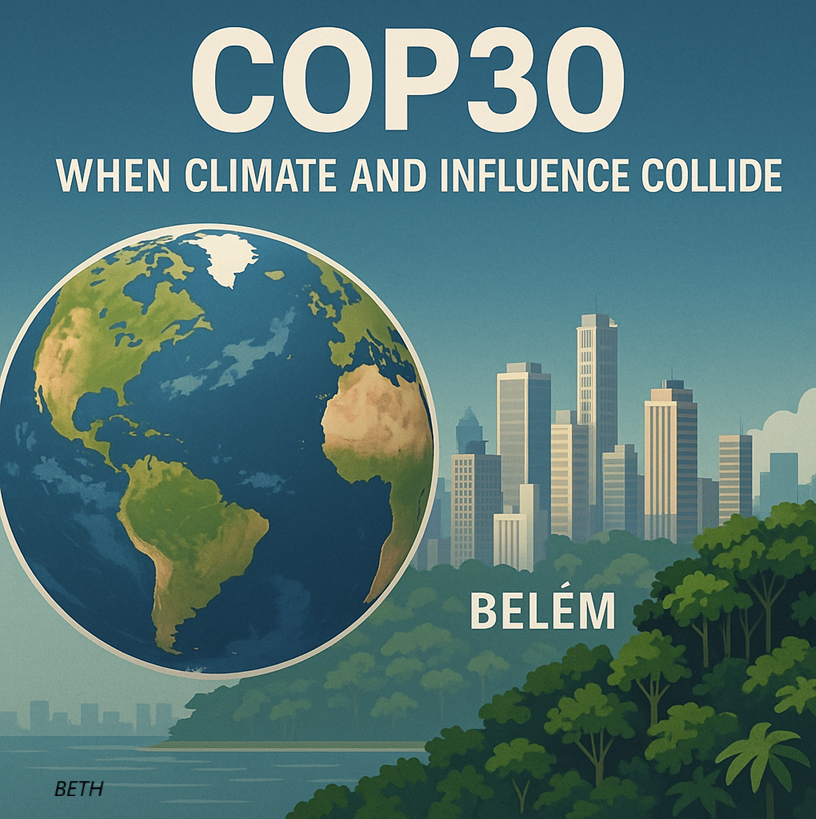
COP30… when the climate balance shifts and global power is redrawn
Prepared and analyzed by BETH | Riyadh
Amid the Amazon forests and street protests, the COP30 climate summit opens in Belém, Brazil, in a pivotal moment unlike any previous summit.
This time, the presence is not governmental only… but the presence of nature itself, the voice of Indigenous peoples, and the geopolitical shifts slipping into every negotiation table.
As the climate crisis escalates, the configuration of major powers in the environmental file is changing:
China advances, the United States retreats, and Brazil aims to become the capital of the “planet’s future.”
BETH Global Analysis
China moves to the front seat… in Washington’s absence
In one of the most striking scenes, the Chinese delegation emerged as the most active participant at the summit, capitalizing on the United States’ absence from many key sessions.
What does this mean?
Beijing wants to lead the world’s “climate economy.”
The climate file is turning into an arena of influence rather than purely scientific debate.
Countries of the Global South will lean toward China… as it is the present partner, not the absent one.
The environmental world is changing… and whoever leads financing leads the future.
Indigenous protests: the Amazon speaks… and the world stays silent
The protests surrounding the conference are not “marginal”; they are a direct message to the international community:
The Amazon can no longer endure.
Protesters are demanding environmental veto power over industrial and agricultural projects in the forests—an indicator of new weight that never existed in previous summits.
Symbolism of the moment:
The largest forest on Earth is screaming… while states negotiate on paper.
Brazil wants to play the role of “climate godfather”
Hosting the summit in Belém is not merely an organizational decision.
It is President Lula’s attempt to place Brazil at the heart of environmental decision-making.
Brazil’s messages:
“Without the Amazon… the world cannot win the war on climate.”
“Whoever wants to save the planet… must start here.”
It is a new climate diplomacy—based on geography of forests, not the economics of factories.
Threat to ocean currents: the danger no one wants to hear
Iceland’s report on potential disruption of the North Atlantic Current puts the world before a serious question:
Are we on the verge of a climate shift that could reshape Europe’s climate entirely?
This is not just an environmental report…
It is a national security warning for several countries.
The Middle East will pay a price
Although the summit is held in Brazil, its reverberations will reach the Arab region:
Shifts in rainfall and temperature patterns
Rising global food costs
Disruptions in agricultural supply chains
Increased pressure on water resources
More severe heatwaves in the Gulf
Therefore…
The climate file is no longer environmental, but economic and security-driven.
BETH Conclusion – Who leads the future?
This year’s COP30 is not a conference…
It is a silent battle among global powers over the “economy of the planet” for the next century.
China advances
America retreats
Brazil positions itself in the middle
Indigenous peoples raise the voice of the Earth
And Arab states search for a “safe zone” amid an approaching climate storm