



Israel Between Judaism and Democracy: A Reading in History and the Future
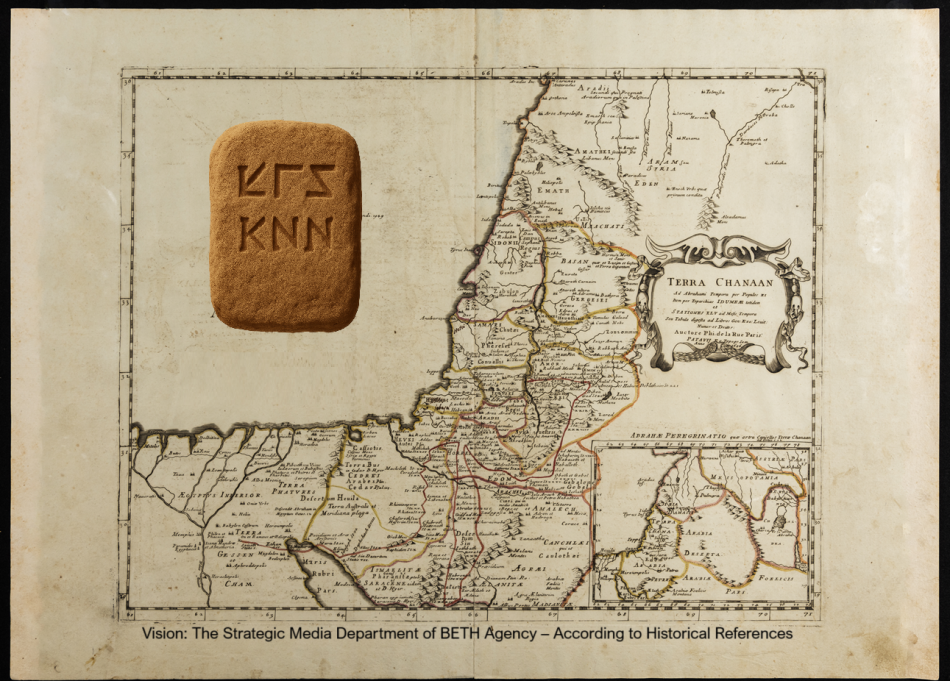
Prepared and Analyzed by: The Strategic Media Department – BETH Agency
Introduction
In a region where myths intersect with facts, and history with politics, Israel stands before an existential question unresolved since its establishment: Is it a Jewish state or a democracy? And what is its true history on the Arab land of Canaan? And how does this contradiction reflect on its future and its relationship with Arabs and Palestinians?
Demographic Composition
Western Jews (Ashkenazim) form the traditional elite that dominated state institutions, the army, and the economy.
Eastern Jews (Sephardim and Mizrahim), who came from Arab and Islamic countries, often suffered social and political marginalization, but their proportion in society is steadily increasing.
Arab Jews/Mizrahim carry a clear Arab cultural background and are slowly integrating into centers of influence.
Arab Palestinians inside Israel represent about 20% of the population, remaining outside the definition of the "Jewish state," but within the equation of "democracy," which both expands and collides at the same time.
The Jewish-Democratic Equation
Israel proclaims itself a "Jewish and democratic state," but it faces a structural contradiction:
Judaism means numerical superiority and ethno-religious identity.
Democracy means equality among all citizens, whether Jews or Arabs.
This contradiction opens the door to internal conflict between preserving the Jewish character and pressures for political equality.
Return to History
The Canaanite Arabs founded the first urban civilization on this Arab land more than 3,000 years ago.
Successive historical empires ruled the same land, and the land of Canaan remained a crossroads of civilizations.
The ancient Hebrew state was only one of several states that rose and fell on the land of Canaan.
The Open Future
Demographically: The birth rate among Arab Palestinians is higher than that of Jews, imposing a long-term challenge to the "pure Jewish" character of the state.
Politically: The "two-state solution" is receding, while calls for a bi-national state are increasing – threatening the idea of the "Jewish state."
Regionally: The deeper the historical awareness that Palestine was the land of Canaan/Arabs before Israel, the more the traditional Israeli narrative becomes subject to destabilization.
BETH in Sensitive Areas
With this report, BETH re-raises the questions avoided by traditional media:
Can Israel reconcile Judaism with democracy?
What is the impact of demographic reality on its future?
And how can reading history – from Canaan to Israel – reshape the present and the future?
What is the occasion of this report? And what is the goal?
📌 Occasion:
The report comes as part of a series of analytical studies presented by BETH Agency within its mission: to re-read history and link it to reality and the future, while highlighting pivotal issues shaping the region’s trajectory.
📌 Goal:
Deeper understanding: Providing an objective reading of the demographic and intellectual composition and its true structure in Israel between Judaism and democracy.
Re-reading history: Highlighting the historical roots extending from the Canaanites to the present, and that the land witnessed the presence of several civilizations and states.
Future foresight: Analyzing the demographic and political balance, and its impact on the future of Palestine and Israel, and on the region as a whole.
Neutrality and realism: Conveying facts in a calm and neutral language, away from agitation or bias, so the report remains a reference for analysis, not for debate.
🔎 Regarding what is circulated about Arab Jews (Mizrahim):
There are media and academic estimates that sometimes indicate that Jews of Arab and Eastern origins form a majority in Israeli society, and some sources raise the percentage to 70% of all Jews.
But:
This percentage is widely disputed; official Israeli statistics usually combine Ashkenazim (Westerners) with Sephardim/Mizrahim, making the estimate difficult.
Some independent studies suggest the percentage is closer to 50–60%, noting that the integration of new generations (mixed marriages between Ashkenazim and Mizrahim) increases the ambiguity.
Therefore: saying that Arab Jews constitute 70% is a commonly circulated narrative, but not officially fixed, although it reflects an important reality: that the Western elite character that founded Israel is no longer the absolute majority.
Between the Jewish State and the Presence of Arabs
🔎 From a strategic perspective:
The Jewish character of the state:
Since its establishment in 1948, Israel has defined itself as a "Jewish state," and this requires – in the Israeli political consciousness – maintaining a clear Jewish majority. Any increase in the proportion of Arabs (Muslims and Christians) inside Israel is viewed as a threat to this definition.
Demographic concerns:
Israeli studies themselves talk about the "demographic bomb," i.e., the higher birth rates among Arab Palestinians compared to Jews. This makes numbers an issue of national security in Israel, not just a social issue.
Related policies:
Attempts to pressure Arabs inside Israel (20% of the population).
Indirect displacement policies through siege and economic pressure in Gaza and the West Bank.
Settlement projects that empty the land of Palestinians and fill it with Jews.
All of this converges toward one direction: consolidating a Jewish majority in number and identity.
Clarification
🏺 Before the Emergence of Classical Arabic
Northwest Semitic languages: such as Canaanite and Aramaic.
Ancient North Arabian languages: such as Thamudic, Lihyanite, and Safaitic, all found in inscriptions discovered in northern Arabia.
Ancient South Arabian languages: such as Minaean, Sabaean, Qatabanian, and Himyaritic, in Yemen, Hadramawt, and Oman.
📜 The Common Language
All of these languages belong to the Semitic family, which originated in the Arabian Peninsula and spread to the Levant and Mesopotamia.
Before Islam, Arabs did not speak one unified language, but rather multiple dialects, collectively referred to today as Ancient Arabic languages.
🌟 The Rise of Arabic
Classical Arabic (Fusha) developed in northern Arabia, particularly in Mecca, Medina, and Najd, shortly before Islam.
The Qur’an came to unite these dialects, making Classical Arabic the unifying language for all Arabs, while other Semitic languages declined.
📌 Thus: Before Classical Arabic, the inhabitants of the Arabian Peninsula spoke ancient Semitic dialects (both South and North Arabian, in addition to Lihyanite, Safaitic, and Thamudic).
Classical Arabic is essentially the culmination and natural evolution of those languages
From the Canaanites to Moses: A Historical Narrative and Religious Roots
The Canaanites entered the land of Palestine (then known as the Land of Canaan) during the third millennium BCE, between 3000 and 2500 BCE approximately, migrating from the Arabian Peninsula and establishing their civilization in that region.
As for Jacob (Israel), he was Jacob son of Isaac son of Abraham (peace be upon them). He was closely related to Ishmael, Abraham’s elder son, since Ishmael was Jacob’s uncle.
The Prophet Ishmael – peace be upon him – is regarded as the forefather of the Arabized Arabs (Adnanites), from whom came the tribes of the Hijaz such as Nabt and Qedar, leading ultimately to Prophet Muhammad (peace be upon him).
Traditionally, Arabs trace their origins back to the Arabian Peninsula, divided into two main groups:
Pure Arabs (Qahtanites): considered the original Arabs, descending from Ya‘rub ibn Qahtan in Yemen.
Arabized Arabs (Adnanites): descendants of Ishmael son of Abraham, who learned Arabic from the Qahtanites and settled in the Hijaz.
From the perspective of genetic genealogy, Arabs share a distinctive genetic marker (J1) associated with the Semitic region as a whole.
Later came Moses, son of Amram, son of Levi, son of Jacob, son of Isaac, son of Abraham (peace be upon them), who represented a pivotal moment in the history of the Abrahamic religions.
Judaism, like Christianity and Islam, is a monotheistic faith that draws its teachings from the Torah, the foundational text revealed to Moses.
Historical sources suggest that the Torah was revealed to Moses during the reign of Pharaoh Thutmose III, in the fifteenth century BCE, specifically between 1450 and 1400 BCE.
The chronological gap between the Canaanites and Moses is vast; the Canaanites had already settled the land of Canaan thousands of years before Moses, while Moses was associated with leading the Israelites in their attempt to enter the land of Canaan at a much later period.
The Land of Canaan within the Arab Sphere
In any case, the land of Canaan today lies within the Arab sphere.
The Arab world extends over a vast landmass across Asia and Africa, stretching from the Atlantic Ocean in the west to the Arabian Gulf in the east, covering nearly 6,000 kilometers in length, and from the borders of Turkey in the north to South Sudan in central Africa in the south, with a width of about 4,000 kilometers.
The people of this region share a globally unique phenomenon: a single unifying language — Arabic. This linguistic unity has no parallel in Europe, the Americas, or any other region of the world.