


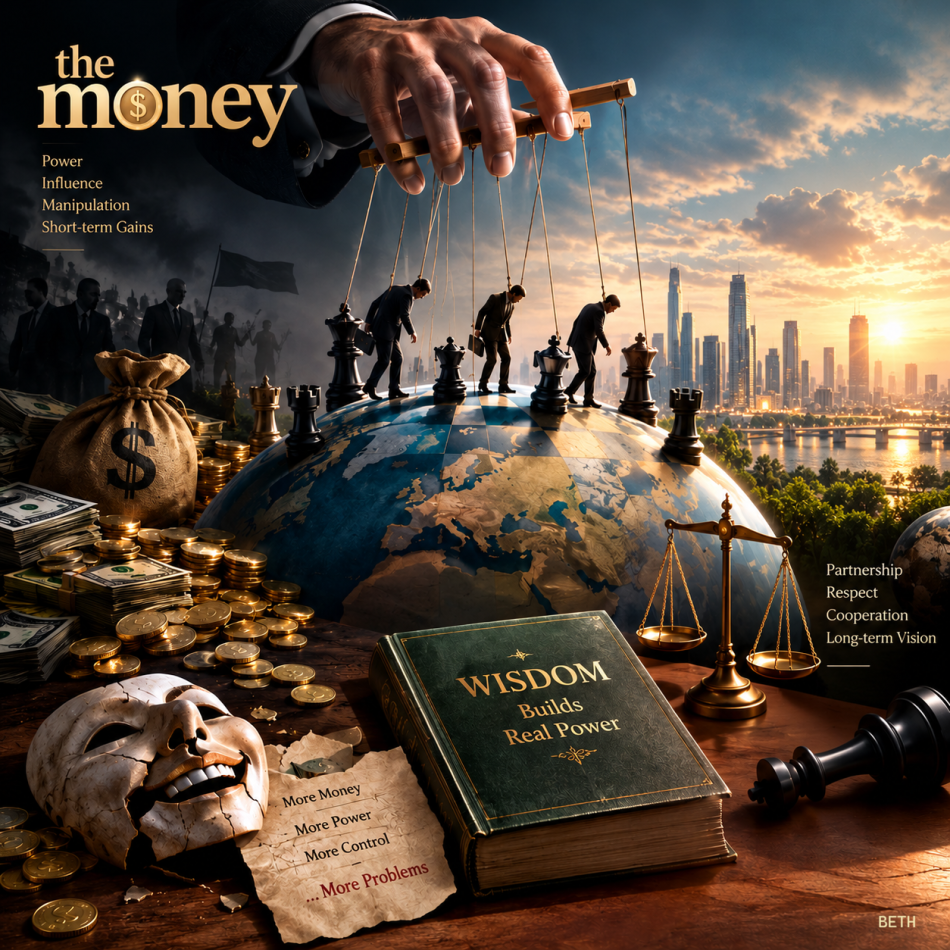
Press, Power & Censorship
BETH Special Report
Introduction
In today’s era of global openness, where freedom is a widely celebrated slogan, the essential question remains: Is freedom truly absolute, or is it relative—constantly regulated, monitored, and reframed?
In this special feature, Moroccan researcher Youssef Aqrqash explores the historical tension between journalism, authority, and censorship. His essay is followed by a modern commentary from BETH, highlighting how freedom is shaped in the current media landscape.
Full Essay – By Youssef Aqrqash*
Press, Power, and Censorship
The concepts of journalism, power, and censorship may seem familiar to the general public, yet the intricate intersections between them are often less understood. Their common thread, and point of divergence, is freedom—famously defined by Montesquieu as “the right to do everything permitted by the laws.”
According to this definition, freedom is the right to act as long as it does not contradict the law. In practice, however, freedom becomes relevant precisely when our rights clash with what the law arbitrarily prohibits—such as the need for permits to hold a gathering, organize a protest, or publish writing. Why does authority insist on blocking activities so far from its core functions?
The clash between press and authority is hardly new. Since the birth of journalism in the 17th century, it has faced both suppression and co-option. At times, governments shut down publications or persecuted journalists; at other times, they absorbed the press into their own machinery, using it as a tool of propaganda and control. The first official newspaper in France, La Gazette de France (1631), dedicated its pages to glorifying royal policies, and when lacking material, it would publish notes on the weather—anything to keep serving the state.
Persecution of journalists is equally historic. John Milton (1608–1674), in his celebrated tract Areopagitica, opposed licensing laws imposed by the British Parliament. He suffered greatly for his resistance. His essay’s very title evoked the Areopagus—the ancient Athenian council—symbolizing free debate. Licensing laws, he argued, had nothing to do with progress; they were simply instruments of silencing.
Others paid a higher price. John Twyn, a British printer, was executed in 1663 for publishing a pamphlet deemed treasonous because he refused to reveal its author. He was charged with high treason and brutally executed—hanged, drawn, and quartered.
Who Watches Whom?
The struggle between press and power is not incidental—it is intrinsic. Journalism exists to monitor authority, while authority, by its nature, seeks to monitor everything under its domain, including the press itself.
Power wields legislation, courts, police, and prisons—enough to erase journalism entirely. What it lacks, however, is moral courage; hence its constant need for justification. Journalists, by contrast, possess no such machinery. Their weapon is the pen—and the courage to wield it. Thus, the conflict is less about law than it is about willpower: the will to act (power) versus the will to speak truth (press).
This is why the press sometimes aligns with authority, echoing its rhetoric, even sanctifying its actions. Aligning with the strong is not exclusive to journalism; it is deeply human. Folk tales illustrate this instinct. In one story, a village lost its fire and sent a young girl to retrieve it from a monster’s cave. Confronted with the beast, she cleverly responded with courage, and he spared her life. The moral: humans often side with the powerful, unless extraordinary bravery breaks the pattern.
History confirms what Spanish philosopher Ortega y Gasset once wrote: “The law that is obeyed is always the law of the strongest.” The press, when confronting authority, often faces the same dilemma: comply, resist, or outwit.
*Researcher from Morocco
BETH Commentary – Modern Perspective
What the author highlights is more than a historical narrative; it opens a window onto the nature of freedom itself.
In the past, censorship was an external figure—a government officer claiming editors “did not know the limits of freedom.” This censor, often lacking journalistic insight, cared little for content, focusing only on boundaries.
Today, in a world of openness, the role of gatekeeper has shifted inward. It is now the journalist who must be the conscience of state and society.
Armed with knowledge, expertise, and awareness of how audiences think across cultures, the journalist can create content that speaks globally—without violating national principles or harming the community.
Freedom in modern media is not the absence of restriction, but the ability to build narratives on facts, presented in refined languages that respect the audience. With depth, integrity, and creativity, journalism becomes a platform of trust and enjoyment—appearing free, without the visible shackles of crude censorship.
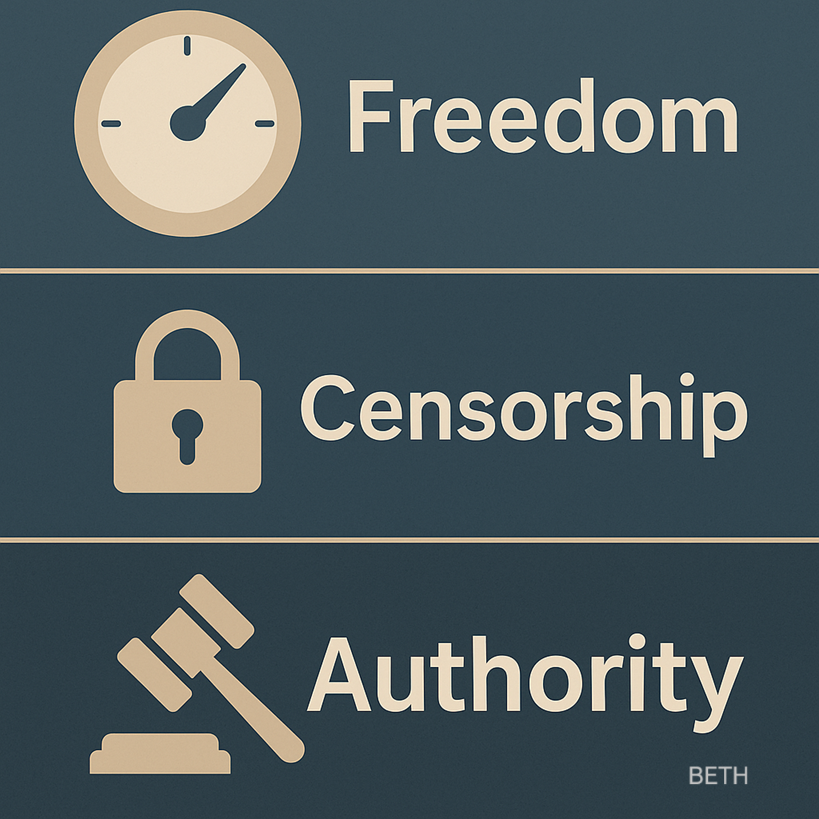
Closing Thought
In past centuries, censorship was about visible red lines. Today, in an age of global media and digital algorithms, the challenge is subtler: to practice freedom responsibly, as a journalist who is both the watchdog of truth and the conscience of society.
✍️ BETH – Special Reports Unit