



United States & Israel: Similar Foundations… and a Shifting Equation?
BETH | Prepared & analyzed by the Strategic Media Directorate
Executive Summary
U.S. sympathy toward Israel is not a passing impulse; it is a narrative-interest structure built over decades: the frontier myth and exceptionalist/covenantal mission, plus the military–industrial–tech complex and shock memory. While the two states share formative parallels, their bond is not existential; it is a policy–industrial coupling that can be re-calibrated. The equation doesn’t flip overnight; it moves toward conditionality as reputational, legal, and economic costs rise. The new balance point lies where U.S. material interests with Arab partners (clean energy / corridors / investment / tech) meet a durable emotional attachment to Israel—hence a “smart American balance.”
1) Similar Foundations: Why do two narratives “understand” each other?
Frontier Myth: Both the U.S. and Israel wove a founding imagination of a people “making the wilderness bloom” and securing borders through technology and power.
Exceptionalism / Covenant: A moral–missionary contract that treats security and strength as extensions of virtue.
Migration & Threat: Migrant societies cohere around a story of permanent risk that justifies advanced security mobilization.
Security–Tech Testbed: Israel functions as a live lab (C-UAS, cyber, sensing, AI) whose economic returns flow to U.S. firms.
Differences that prevent full identity: Wider U.S. federalism/judiciary/demography; a continental-scale economy; and a growing domestic space for critique in academia and media.
2) Are the two states’ fates existentially linked?
No existential coupling: The United States is highly resilient; its survival does not hinge on any single alliance.
High policy–industrial coupling: Israel relies on U.S. finance, weaponry, tech, and diplomatic cover (including veto power). Decoupling is costly for both—but not existential for the U.S.
Bottom line: The bond is strong yet adjustable; change arrives as conditions, not as a clean break.
3) The “Smart American Balance”: Interests with Arabs… Emotion with Israel
Economy & Investment
With Arabs: energy & the clean-energy transition; trade corridors and supply chains; markets and finance (SWFs, listings, tourism).
With Israel: knowledge economy/cyber/defense; R&D partnerships; links with tech companies.
Security & Geopolitics
With Arabs: secure sea lanes (Horn of Africa–Red Sea–Gulf), counter-terrorism, and regional de-escalation.
With Israel: qualitative military edge and tight intel cooperation.
Image & Emotion
With Arabs: soft power via arts/sport/education; the narrative of economic transformation.
With Israel: Holocaust memory, “shared values” rhetoric, and legacy lobbying infrastructures.
How Washington manages the balance: It tries to convert ties with Arab partners into measurable material gains (finance/energy/corridors/tech) while preserving symbolic–emotional ties with Israel. As ethical and legal costs (civilians/settlements) rise, support shifts from absolute to conditional.
4) Will the Equation Change? (Inflection Drivers)
Generational turnover inside the U.S.: younger cohorts are more critical, especially at the human-rights/academia/corporate nexus.
International & institutional law: ICJ/ICC tracks, congressional scrutiny, and export-control conditions can impose conditionality.
Tech-economy calculus: If reputational costs to firms/universities outweigh partnership gains, influence will be re-allocated.
A new media environment: Platform algorithms reshape empathy flows beyond legacy narratives.
Conditional regional deals (Normalization 2.0): Any real Saudi–Israeli breakthrough needs a marketable Palestinian track in Washington.
Likely outcome: No sudden flip, but a gradual re-calibration—continued security support + rising political/legal constraints + expanding material interests with Arabs.
5) Does the “theory” flip? (12–24-month scenarios)
Systemic Continuity (Baseline): Strong U.S. support alongside open bridges to Arab partners—coexistence of emotion and interest.
Conditional Re-calibration (Likely): Aid/arms tied to humanitarian–legal benchmarks; expanded U.S.–Gulf interests (energy/logistics/AI) as a counter-weight.
Theory Flip (Low-prob/ shock): A major regional war, or a U.S. domestic legal crisis on a Watergate scale, rewires alliances—unlikely but not impossible.
6) Dashboard — Tracking “Sympathy Levels”
Monitor monthly:
Congressional votes on aid/constraints.
White House language (curves: condemn / urge / condition / warn).
Arms-export conditions (humanitarian compliance clauses).
U.S. public opinion ages 18–29 (the generational gap).
Corporate/academic stances (withdrawals, statements, travel policies).
Platform behavior (reach of civilian/field narratives).
Conditional-normalization signals (esp. the Saudi–Palestinian track).
Reputation cost in reference media + boycott indicators.
7) Practical Implications for BETH (How to engage smartly)
From “values” to “numbers”: Always present measurable impact—corridors, investment, jobs, local content, emissions—so emotion converts into a material case.
Execution stories, not slogans: Host foreign press field tours inside projects (energy/tourism/tech/sport) with open data.
Triangulate the narrative: Every story should link Saudi–Arab–Global (e.g., Red Sea security = European supply-chain reliability).
Soft-power stack: Sport/art/education as de-risking channels for the region’s image.
Use the language of a “smart balance” (not zero–one): Saudi Arabia adds and tilts, it doesn’t negate.
8) Direct Answers to Your Questions
Similarity of formation: Strong across frontier/exceptionalism/threat, with differences that prevent full identity.
Existential linkage? No—policy–industrial coupling that can tighten or loosen.
Balancing interests and emotions? Toward a dual equation: Arab material interests + Israel’s symbolic capital, managed through conditions.
Change or flip? Accretive and conditional change; flips are rare and require major shocks.
9) Suggested Visuals
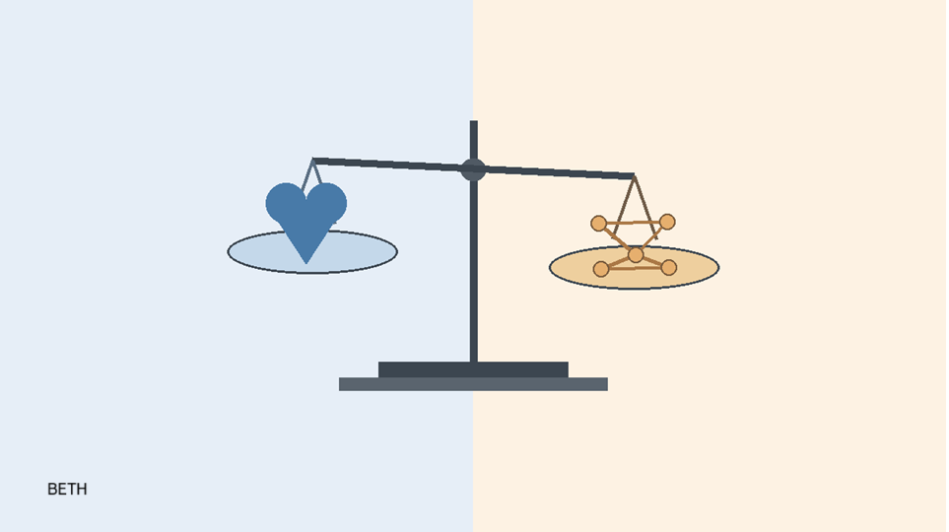
Balance Map (dual wheels): “Interests” (energy/corridors/investment/AI) vs. “Emotion” (memory/values/lobby).
Indicator board with green/red arrows for conditionality.
Timeline aligning key decisions/quotes with field events.
10) Push + Title
Title: From Absolute Sympathy to Conditional Support
Push:
🇺🇸🤝🇮🇱 U.S. sympathy toward Israel is a narrative–interest structure, not a passing decision. Rising ethical/legal costs are pushing a conditional re-calibration—while U.S. material interests with Arab partners gain weight. #BETH
Conclusion
The equation doesn’t flip with a leap; it is re-engineered through conditions. Those who master the language of conditions and numbers will write the next narrative.
In the deeper layers, power architectures resemble each other more than we admit: coalitions of interest, security setting the tempo, and an economy–media loop reproducing the base. Different frameworks do not erase similar outcomes. And the reality is: the existential staying power is stronger with the Arabs in particular, where corridors, markets, and energy security intersect on an irreplaceable foundation.
Two Open Questions
Are there other drivers of sympathy?
Which additional forces—cultural, religious, linguistic, diaspora networks—might matter, and how can we measure their impact rather than merely describe them?
Is the sympathy mutual?
To what extent does a reciprocal (emotional or interest-based) sympathy exist, and when does it shift from one-way sentiment to conditional partnership or even mutual critique?
Editorial Closing
We surface sensitive debates not to provoke, but because real journalism articulates what people are already thinking—to confirm or to correct—grounded in evidence and proportion. We remind, not erase: there is a difference between reviving land and seizing it, and between building peace and perpetuating harm. Peace is the cornerstone of life and legitimacy, not its opposite. We recall land, memory, and law—together—because justice cannot be built on selective victims or selective history.
In brief
We articulate what people think and test it against evidence, not emotion.
We distinguish between history as a unifying memory and history as a pretext for exclusion.
We measure, not incite: numbers, indicators, and clear conditions for peace and justice.
We reject generalizations and surface contextual differences, even in the most sensitive issues.
We do not call to erase anyone; we remind that peace is the baseline and law is the shared language.